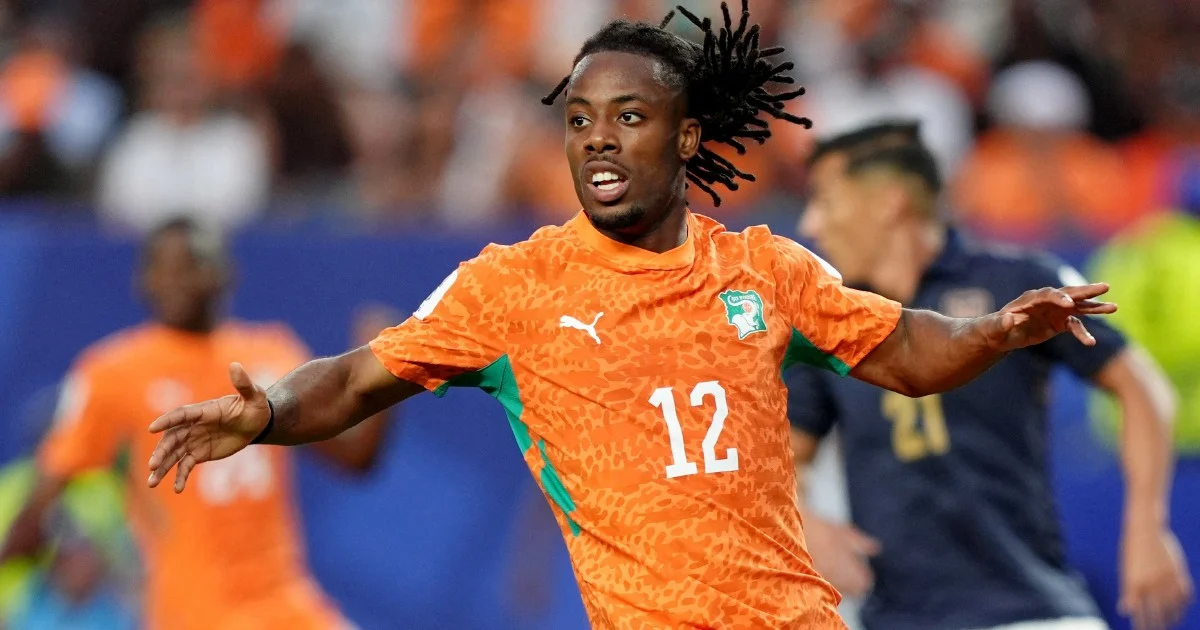
Ivory Coast forward Elye Wahi, who lined up as a starter in his country's World Cup triumph against Ecuador on Sunday, was taken into custody last month in connection with a match-fixing probe being conducted by French law enforcement, according to reporting from The Athletic released on Wednesday. The arrest represents a significant development in what appears to be a broader investigation into suspected spot-fixing arrangements within European professional football.
Wahi's detention came as authorities in France expanded their inquiries into potential manipulation of sporting events. Spot-fixing, a particular form of match manipulation that targets specific moments or outcomes within a game rather than the result itself, has become an increasing concern for football governing bodies across Europe. The practice is particularly dangerous because it can compromise the integrity of competitions while remaining difficult to detect through conventional monitoring methods.
The timing of the arrest, occurring in May, placed it several months before the World Cup match in which Wahi participated as a starting player. This temporal distance raises questions about the nature of the allegations and whether authorities had gathered sufficient evidence regarding his involvement before permitting him to compete internationally. The decision to allow him to play suggests either that his role in the alleged scheme was peripheral, that the investigation remained ongoing with insufficient grounds for formal charges, or that the detention was precautionary rather than definitive.
Elye Wahi plays as a striker and has been developing his career within French football structures, making him particularly relevant to investigations conducted by French authorities. His profile as an emerging talent in European football adds another layer to the concerning pattern of young players potentially being drawn into fixing arrangements. Criminals often target less established players who may face financial pressures or lack the support systems available to more established stars, making them vulnerable to recruitment into illegal schemes.
The Ivory Coast national football team's successful campaign at the World Cup highlights the contrast between sporting achievement and the shadow of legal troubles that can accompany international competition. While the national team advanced through their matches, including the victory over Ecuador that featured Wahi in the starting eleven, the underlying investigation continued working through its procedural phases in France. National team selections frequently proceed independently of domestic legal matters, particularly when players have not been formally charged with offences.
Spot-fixing investigations across European football have intensified in recent years as betting syndicates have become more sophisticated in their approach to manipulating outcomes. Rather than attempting to fix entire matches, which requires coordinating numerous players and officials, criminals increasingly target specific moments such as corner kicks, penalty decisions, or goal-scoring opportunities. These narrower manipulations prove easier to arrange while still generating profitable betting returns for criminal networks operating across multiple jurisdictions.
French authorities have been particularly active in investigating potential corruption within their domestic leagues and involving French players operating abroad. The investigation into Wahi's case appears to form part of this broader enforcement initiative. The involvement of a player competing at international level signals that the investigation has reached beyond lower-tier domestic competition to examine conduct among more prominent athletes with higher visibility and potentially greater earning capacity.
The Athletic's disclosure of Wahi's arrest came through investigative reporting rather than official police announcements, suggesting that details of ongoing inquiries may not have been made immediately public. Such investigative journalism serves an important function in holding football's integrity accountable, particularly when authorities move slowly in processing cases or when details remain officially unreported despite active investigations. The timing of the publication, weeks after the World Cup match, indicates that news organisations had been pursuing verification of the arrest before confirming details.
For Malaysian and Southeast Asian football observers, the case underscores the global nature of match-fixing threats. While Asian football has been particularly vulnerable to spot-fixing operations, European investigations demonstrate that no region or level of professional football remains immune from corruption attempts. The involvement of international players and tournaments reminds local football communities that preventative measures and educational initiatives about betting integrity require sustained investment regardless of a competition's prestige or domestic profile.
Wahi's situation also illustrates the complexities facing national football associations when players face legal troubles in foreign jurisdictions. Selection committees must balance sporting merit against reputational and disciplinary considerations. The decision to include him in the Ecuador match suggests that either the national federation determined that his participation was appropriate pending formal charges, or that authorities had not yet formally accused him of offences warranting suspension from international duty.
The investigation's continuation and its scope remain unclear from available reporting. Whether Wahi faces formal charges, what specific allegations authorities are examining, and how the investigation might conclude remain outstanding questions. Such uncertainty reflects the ongoing nature of match-fixing probes, which often take extended periods to develop evidence, interview witnesses, and build prosecutorial cases sufficiently robust to withstand legal challenge.
As European football continues grappling with integrity threats, cases like Wahi's serve as reminder that protecting sporting competitions requires vigilant law enforcement, cooperative international frameworks, and willingness from organisations and media to investigate and report suspicious activities. The incident also highlights how young players in particular may require greater protection and guidance regarding the risks posed by criminal elements seeking to compromise their careers and sporting integrity.