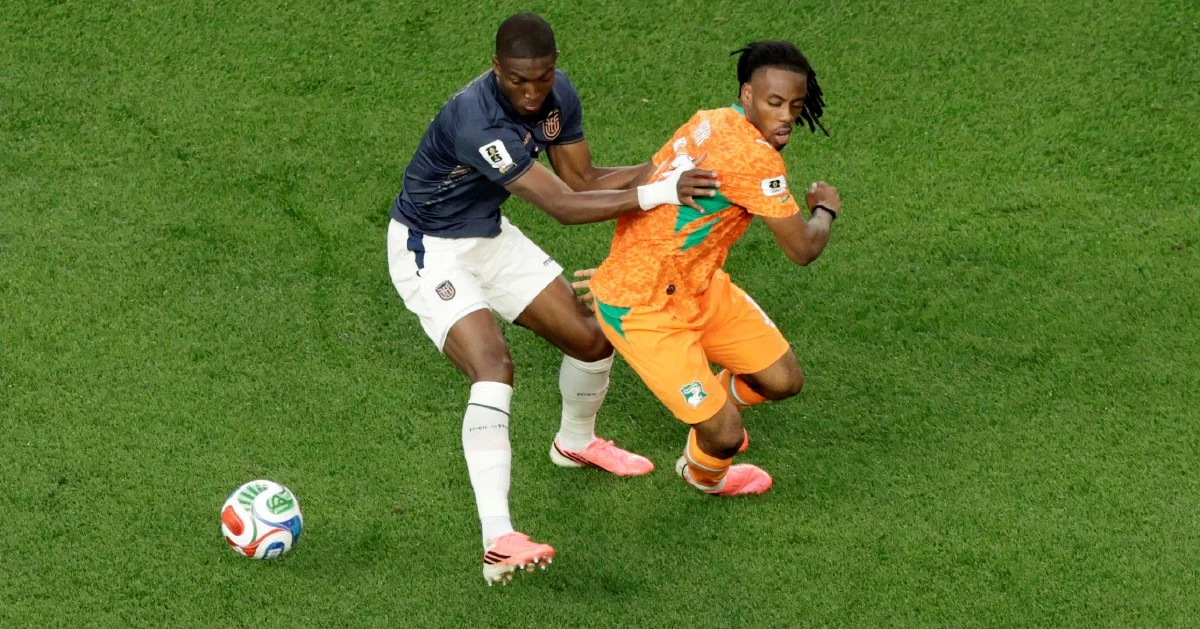
The Ivorian Football Federation announced Thursday that striker Elye Wahi will remain in France rather than join the national squad for this weekend's World Cup encounter with Germany in Canada. The decision follows a day of turbulent developments that connected the Ligue 1 player to an ongoing investigation into suspected match manipulation within French professional football, casting a shadow over the Elephants' preparations for a crucial fixture in their qualification campaign.
Wahi, who competes for a top-flight French club, became ensnared in the corruption inquiry when authorities linked him to irregularities surrounding a domestic league match. The precise nature of his alleged involvement remains undisclosed, though French sporting authorities are examining potential breaches of match integrity that would represent serious violations of football governance. The speed with which the federation acted—barring him from international duty within hours of the investigation becoming public—suggests the gravity with which Ivorian officials view the situation and their determination to protect the national team's reputation during a competitive World Cup phase.
Such developments underscore the persistent vulnerability of global football to corruption networks that exploit vulnerabilities within domestic leagues and international competitions. While Africa has historically been scrutinised for match-fixing concerns, this investigation demonstrates that suspicious activity can emerge from Europe's supposedly more regulated environments. The involvement of a player preparing for international duty raises uncomfortable questions about the adequacy of vetting mechanisms and whether clubs adequately monitor potential misconduct by squad members engaged in selection processes.
For Malaysia and Southeast Asian footballing nations, the Wahi situation carries instructive value. Regional football bodies continually grapple with allegations of match-fixing and spot-fixing, particularly in lower divisions and youth competitions where enforcement remains inconsistent. The Ivorian federation's swift response—prioritising institutional integrity over short-term competitive advantage—offers a template that AFC member nations might emulate when facing similar crises. Too often, clubs and federations in the region have delayed investigations or sought quiet resolutions that prioritise commercial interests over transparency.
The timing proves particularly inopportune for Ivory Coast's World Cup ambitions. Losing a key attacking player to administrative exclusion, rather than injury or suspension, represents an unusual complication for squad planning. Germany represents a formidable opponent, and the Elephants had presumably structured their tactical approach around Wahi's availability. His absence will force the coaching staff toward hastily arranged alternatives, potentially disrupting formation continuity and team cohesion during a high-stakes encounter where marginal advantages matter considerably.
The broader context involves Ligue 1's ongoing battle against corruption. French authorities have intensified scrutiny of match-fixing following several high-profile cases in recent seasons. These investigations extend beyond individual players to encompassing networks involving betting syndicates, criminal enterprises, and occasionally even coaching staff. That Wahi became implicated suggests investigators possess credible evidence rather than mere speculation, though presumptions of innocence remain fundamental pending formal charges.
International football's response mechanisms remain imperfect. Players are vulnerable to coercion or inducement from sophisticated criminal networks operating across borders, yet detection systems often arrive belatedly. When investigations do surface, determining appropriate penalties requires balancing individual justice against institutional consequences. The FIF's decision effectively presumes guilt before adjudication concludes, though governing bodies typically argue that protecting competition integrity supersedes provisional due process considerations.
For Asian football observers, the case illuminates how corruption investigations transcend continental boundaries and affect qualification campaigns spanning multiple continents. Southeast Asian nations, particularly those competing in World Cup preliminary rounds, should note that any player involvement in match-fixing allegations will likely trigger withdrawal from international competition. This understanding should inform clubs and players regarding the stakes attached to maintaining absolute integrity, regardless of pressure from external criminal elements.
The investigative dimension warrants attention as well. French authorities' capacity to identify suspicious match conduct and connect it to specific players reflects technological advances in transaction monitoring, communications analysis, and financial tracing. Similar investigative frameworks exist in Southeast Asia, though implementation varies considerably across national football associations. Malaysia's own football governance bodies might strengthen monitoring protocols to preempt similar situations rather than responding reactively.
Wahi's case also reflects the tension between player welfare and institutional accountability. If coerced into match-fixing involvement, the player remains a victim despite formal culpability. Yet federations cannot distinguish reliably between coercion and willing participation without exhaustive investigation, leaving them with crude tools—exclusion—that may injure innocent players or conversely shield guilty ones who escape detection entirely.
The incident arrives amid broader scrutiny of professional football's integrity. Match-fixing remains football's most corrosive problem, undermining competitive credibility and eroding fan confidence across all levels. That a player preparing for the World Cup—arguably football's most prestigious tournament—could become entangled in such allegations suggests corruption operates at elite levels rather than exclusively among struggling lower-division players.
Looking ahead, the unfolding investigation will likely influence Wahi's career trajectory regardless of its ultimate conclusions. French clubs may distance themselves from controversy, while international opportunities diminish. For Ivory Coast, the immediate challenge involves regrouping without a key forward and executing an effective game plan against formidable opposition. The broader lesson extends throughout global football: no institution, no competition, and no player sits beyond corruption's reach. Only sustained vigilance and credible consequences deter it effectively.

