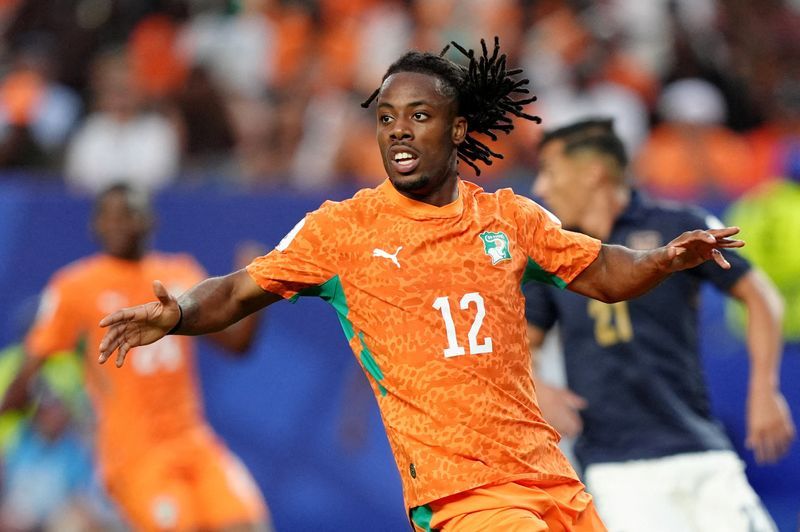
Ivory Coast forward Elye Wahi will miss this weekend's World Cup encounter with Germany in Toronto after the Ivorian Football Federation announced on Thursday that the player would not join the travelling squad to Canada. The decision comes one day after French authorities flagged the Nice player in connection with an investigation into suspected sports corruption linked to unusual betting patterns detected around a yellow card he received during a Ligue 1 fixture last month.
The federation's statement emphasised that administrative clearances required for Wahi to enter Canadian territory have not yet been processed, presenting a bureaucratic hurdle that has prevented his participation in the fixture. Rather than casting doubt on the player's integrity, the FIF framed the absence as a matter of travel documentation and border requirements, signalling their continued backing despite the controversy swirling around his name.
Authorities in France identified anomalous wagering activity centred on a caution Wahi collected while playing for Nice in the French top division. The specificity of the betting pattern—centred on a single yellow card rather than match outcome or broader scorelines—suggests the investigation is focused on whether individuals with knowledge of disciplinary decisions sought to profit through insider information or manipulation.
The federation's public posture remains deliberately supportive. In their official communication, the FIF stated they retain complete confidence in Wahi and stressed that they have not received any formal legal notification regarding the player. This distinction between media reports of an investigation and official legal proceedings carries weight in institutional contexts, allowing the federation to maintain loyalty while acknowledging the emerging circumstances. The organisation characterised this as a particularly challenging period for the player, framing their response as protective rather than distancing.
Wahi's role within the Ivorian national team setup has been significant, and the federation's language reflects reluctance to abandon him during early-stage inquiry proceedings. By describing him as an important member of the squad, the FIF left the door open for future participation once travel authorisation is resolved or the investigation concludes. However, the immediate practical effect is his sidelining for a critical World Cup qualifier—a competitive void that must now be filled by alternative attacking options.
The match itself carries considerable importance for both nations' qualifying ambitions. Ivory Coast opened their Group E campaign with a slender 1-0 victory over Ecuador, establishing themselves as contenders but without overwhelming superiority. Germany, conversely, announced their intent with a devastating 7-1 demolition of Curacao, signalling formidable attacking prowess and defensive organisation. The absence of Wahi, regardless of its stated justification, removes a capable forward from Ivory Coast's attacking arsenal precisely when they face their stiffest Group E opposition.
From a regional perspective, this situation highlights the increasing intersection between African football and European regulatory frameworks. Ivorian players competing in major European leagues like Ligue 1 operate under different jurisdictional oversight than domestic competitors, creating scenarios where national team participation intersects with foreign legal processes. The travel authorisation issue—whether genuine or contextually convenient—reflects real complexities around player movement when investigations are underway.
The betting corruption investigation itself underscores broader concerns about match integrity in European football. Yellow cards, traditionally seen as incidental disciplinary outcomes, have emerged as potential targets for corrupt manipulation due to their relative predictability in certain situations and the opacity of referee decision-making. The French authorities' detection capability suggests enhanced monitoring systems are identifying suspicious patterns that might previously have escaped attention.
For Wahi personally, the timing compounds competitive pressure. Missing international duty during a World Cup qualifier could affect his squad status and playing opportunities within the national team hierarchy. Simultaneously, the investigation backdrop creates reputational complexity regardless of investigation outcomes, as football's court of public opinion often renders verdicts swiftly and unforgivingly.
The federation's choice to retain Wahi in the United States rather than permitting his independent return to France suggests strategic positioning—maintaining a form of custody while preserving the fiction of collaborative administrative processing. This arrangement keeps the player within the delegation's orbit while maintaining technical compliance with Canadian border entry denial.
Looking forward, the trajectory of the betting investigation and French authorities' conclusions will determine whether this represents a temporary precautionary absence or a longer-term competitive exclusion. For now, Ivory Coast must prepare for Germany without one of their attacking options, while Wahi faces a period of uncertainty that extends beyond mere sporting considerations into the realm of professional integrity and legal scrutiny.