Jalan Burma stands as one of George Town's most compelling thoroughfares, offering visitors a seamless blend of architectural heritage, gastronomic excellence, and cultural layering that defines Penang's enduring appeal. The road, stretching nearly 5km from the heritage zone's margins to the genteel neighbourhood of Pulau Tikus, presents an accessible narrative of the island's past while serving as a culinary pilgrimage route for food enthusiasts seeking Michelin recognition without pretension. What makes Jalan Burma particularly significant is how it encapsulates the very essence of George Town itself—a place where history remains not merely preserved in museums but actively woven into the fabric of contemporary life.
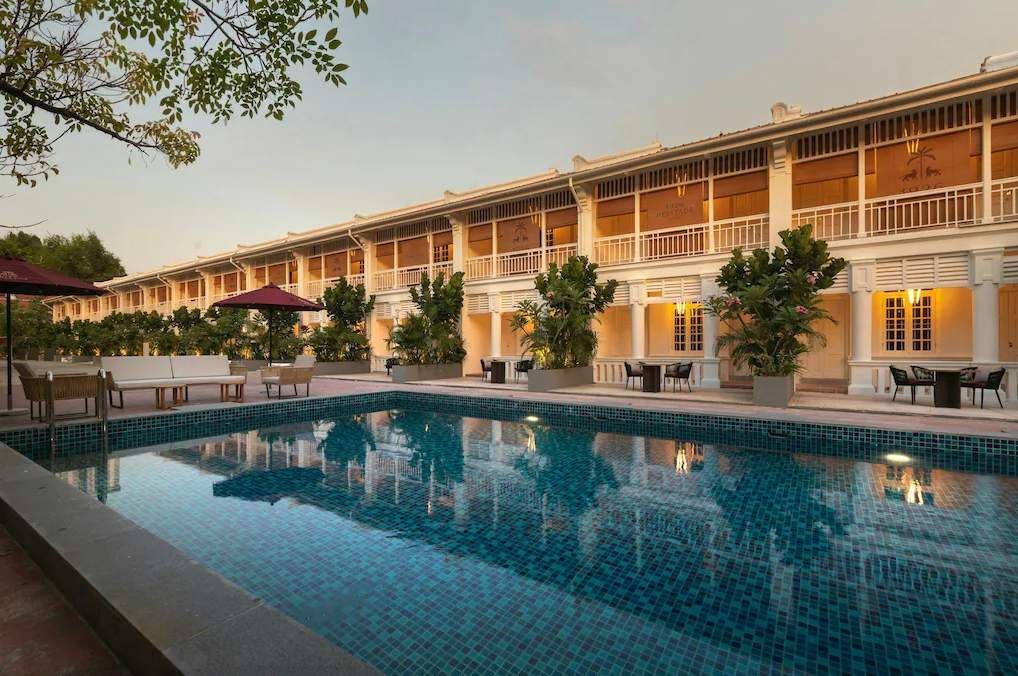
The street's most visible architectural landmark is the Penang Heritage Hotel, a building that reached its centennial milestone in 2026, having been constructed in 1926. The hotel represents a fascinating chapter in Penang's colonial narrative, originally designed as residential quarters for British administrators and local government officials. Its Anglo-Malay architectural vocabulary reflects the particular aesthetic sensibilities of early twentieth-century George Town, when such hybrid design approaches were common among institutional buildings serving the colonial administration. The original structure comprised 24 interconnected link houses, a typology that remains distinctive to the state and speaks volumes about how space was utilised and subdivided during that era.
The transformation of these link houses into hotel accommodation occurred relatively recently, in 1999, when the Penang Development Corporation undertook the conversion project. Rather than demolishing and rebuilding, the developers chose to adapt the existing structures, resulting in 78 rooms and suites distributed across the original 24 properties. The hotel now offers six distinct room categories, ranging from the Heritage Room designed to accommodate solo travellers to the Straits Suite, which represents the most spacious offering. This preservation-through-adaptation approach has become increasingly valued in heritage tourism, as it maintains the building's essential character while meeting contemporary hospitality standards.
Immediate proximity to this heritage hotel lies the real draw for many visitors—a concentration of Michelin-recognized food establishments that exemplify Penang's status as a gastronomic destination of regional significance. Penang currently boasts 74 Michelin-acknowledged eateries, a remarkable number for a Malaysian city that reflects the rigorous standards applied by the guide's assessors. Of these, two establishments have earned the coveted one-star designation, indicating cuisine of exceptional quality. A further 33 venues have received Bib Gourmand recognition, a classification that identifies restaurants delivering excellent value and outstanding food in simpler settings—precisely the type of venue that appeals to travellers seeking authentic culinary experiences without fine dining formality. The remaining 39 establishments appear on the Michelin Selected list, representing worthy destinations that merit exploration.
Among the Bib Gourmand-listed establishments operating near the heritage hotel is Green House Prawn Mee & Loh Mee, a stall whose reputation extends well beyond casual diners. The original location operates from within Restoran Old Green House, though a secondary outlet called Green House Prawn Mee/Law Mee Corner exists further along Jalan Burma towards Jalan Penang, near Komtar. Local consensus generally directs serious food seekers to the original venue, reflecting the particular value that Penang residents place on provenance and consistency. The distinction between the two locations illustrates how food culture in George Town operates—reputation, lineage, and word-of-mouth recommendation often matter more than commercial expansion or brand standardisation.
The street's culinary appeal extends beyond individual stalls to encompass the entire ecosystem of hawker culture that defines eating in Penang. Duck Blood Curry Mee, located mere doors from the heritage hotel, represents another point on the gastronomic map that attracts visitors seeking the more adventurous dimensions of regional cuisine. For many tourists accustomed to curated dining experiences, the appeal of such venues lies not merely in the food itself but in the multisensory experience of eating in shared spaces. The visual spectacle of watching cooks prepare meals with practiced efficiency, combined with the complex aromatic environment created when dozens of different dishes cook simultaneously in close proximity, generates an immediacy and authenticity that fine dining establishments, despite their technical excellence, frequently cannot replicate.
The historical significance of Jalan Burma itself deserves substantial consideration, as the road's nomenclature evolution encodes Penang's multicultural past. Originally known by various names in different languages—Jalan Tarek Ayer or Water Cart Road in Malay, and Gui Chia Chui in Hokkien, both referencing the bullock carts that transported water through the city in earlier centuries—the road eventually acquired its current designation following the nineteenth-century establishment of a Burmese settlement in the adjacent Pulau Tikus neighbourhood. An information board positioned below the Komtar Octopus Pedestrian Bridge provides a simplified historical narrative for visitors unfamiliar with George Town's complex toponymic landscape.
The Burmese cultural presence remains tangible along Jalan Burma and its surrounding lanes. The Dhammikarama Burmese Temple, established two centuries ago, continues to function as a significant religious and cultural institution, while nearby street names such as Rangoon Road, Mandalay Road, and Moulmein Close perpetuate the linguistic and cultural memory of this community. For visitors navigating George Town according to thematic interests—whether heritage, food, or specific cultural communities—Jalan Burma offers the advantage of enabling multiple narratives simultaneously, allowing a single walk to encompass colonial administrative history, contemporary culinary excellence, and enduring migrant community heritage.
Navigating George Town for many tourists follows predictable patterns determined by major landmarks, commercial concentrations, and the well-defined boundaries of the Unesco-listed heritage zone. Beach Street, Armenian Street, Lebuh Carnavon, Lebuh Chulia, and Pengkalan Weld form the core of this protected district, where restored and well-maintained historical buildings line streets now dominated by souvenir shops, art suppliers, and vintage merchants. However, this conventional tourist geography misses the deeper layers of the city that roads like Jalan Burma reveal—spaces where heritage remains functionally embedded in contemporary commercial and residential life rather than cordoned off as museum space.
The pedestrian experience of walking Jalan Burma requires modest preparation but rewards effort substantially. The road is generally safe and well-trafficked, though certain sections lack dedicated pedestrian pathways. Most visitors approach the walk strategically, establishing targets—perhaps the heritage hotels, specific food stalls, or cultural landmarks—rather than attempting to traverse the entire 4km-plus distance. The Penang heat necessitates practical considerations: borrowed umbrellas from hotel properties, refillable water bottles, and small towels become essential equipment. Notably, even the water dispensing systems in contemporary Penang hotels reflect the cosmopolitan standards of a destination accustomed to international visitors, with high-tech filters offering connectivity features that typify modern hospitality infrastructure.
The evening dining experience at Root House by Gen, the modern Chinese restaurant located within the Penang Heritage Hotel, provides conceptual closure to a day structured around Jalan Burma's offerings. The progression from hawker-style Michelin-recognised stalls to a contemporary fine dining establishment within a heritage building encapsulates the peculiar sophistication of Penang's food culture—one that refuses hierarchical distinctions between street food and restaurant dining, instead celebrating excellence across multiple registers and price points. After consuming six courses in deliberate conversation, the return to hotel rest becomes not merely necessary recovery but a fitting conclusion to immersion in Penang's relentless culinary abundance.
Beyond Jalan Burma itself, the broader George Town experience encompasses venues like the Hin Bus Depot, a marketplace that activates on weekends to accommodate local vendors selling curios, artwork, homemade clothing, and services including caricature drawing. The same spaces host homemade food and beverage stalls where visitors consume meals while enjoying live music performances. This ecosystem of casual commercial activity, where professional and amateur producers operate adjacent to one another, reflects the particular character of Penang—a place where heritage preservation coexists comfortably with contemporary entrepreneurship, where Michelin recognition validates the same streets that host informal weekend markets, and where walking a single arterial road can encompass colonial architecture, contemporary haute cuisine, and centuries-old cultural institutions in seamless succession.

