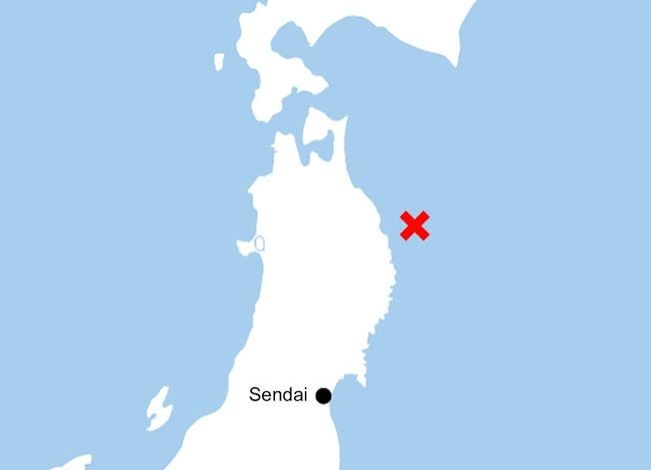
Japan's northern region experienced a powerful 7.2-magnitude earthquake on Thursday morning, centred in waters off Iwate prefecture on the main island of Honshu. The tremor, which struck at 7:30 am local time, sent waves of shaking across hundreds of kilometres, reaching metropolitan Tokyo despite the considerable distance. The Japan Meteorological Agency initially reported the magnitude as 6.9 before revising upwards to 7.2, locating the epicentre at a depth of 44 kilometres beneath the seafloor. Despite the considerable force of the quake, authorities found no evidence of casualties, and damage assessments revealed only minor disruptions rather than the structural destruction that such seismic events can inflict.
The tremor's effects were felt acutely in neighbouring Aomori prefecture, where the shaking registered at the upper sixth level on Japan's seven-point Shindo intensity scale—a rating at which people typically struggle to maintain their footing and unsecured furniture becomes a hazard. Eyewitness accounts from residents portrayed scenes of everyday domestic disruption: kitchen cupboards in homes and shop displays disgorged their contents onto floors, while picture frames tumbled from walls. Mutsumi Shimohata, a 61-year-old food processing employee in Hashikami, Aomori, described the experience with characteristic understatement, noting that her smartphone's earthquake alert activated almost instantaneously as the shaking began. Though her home sustained only minor damage, her workplace office suffered more consequential effects, with the automatic door system failing and ceiling panels collapsing—prompting her employer to instruct staff to remain home on standby.
Emergency services in the affected prefectures fielded multiple distress calls as the earthquake disrupted normal operations across the region. Hashikami and Hachinohe fire departments received at least four emergency calls reporting various incidents, including reports of individuals trapped within lifts and structural damage preventing doors from functioning. A tanker truck overturned during the tremor, though details regarding any spill or injury were not immediately reported. Schools in the immediate vicinity implemented precautionary closures; administrators at a primary school in Hashikami decided to temporarily shut down operations to ensure student safety and allow for thorough damage assessments of the facilities. The cautious response reflects deeply ingrained protocols developed over decades of earthquake experience.
Transportation networks sustained disruption, though the effect remained contained. Several services on Japan's celebrated shinkansen bullet train network were suspended as a safety measure, preventing potential derailment or passenger injury. However, footage from Hachinohe city showed that overall traffic patterns returned to normal relatively quickly, with traffic lights continuing to function as designed and road networks remaining passable. The Japan Meteorological Agency issued no tsunami warning following the offshore earthquake, sparing the coastline from the compound hazard that submarine tremors often present. This absence of a secondary tsunami threat meant that evacuation procedures could be avoided, minimizing disruption to daily life beyond the immediate shock of the shaking itself.
Government officials moved swiftly to coordinate response efforts and reassure the public. Prime Minister Sanae Takaichi ordered all relevant ministries and government agencies to maintain close coordination with local authorities in affected prefectures, establishing a command structure for any additional response requirements. In a public statement via the X platform, Takaichi urged residents in areas experiencing strong shaking to remain vigilant for the possibility of powerful aftershocks, recognising that earthquake sequences often continue with secondary tremors following major events. The Nuclear Regulation Authority, monitoring facilities across the region, reported no abnormalities at nuclear power stations, a critical assurance given Japan's ongoing sensitivity regarding atomic energy safety following previous disasters.
Government spokesman Minoru Kihara provided official confirmation that no information had surfaced indicating human casualties, though he cautioned that damage assessment remained ongoing. His measured statement acknowledged the continued monitoring of the situation, reflecting the institutional caution that Japanese authorities exercise when significant seismic events occur. The absence of reported deaths stood in stark contrast to the potential consequences—at the Shindo intensity levels experienced in Aomori, structural failure, injuries from falling objects, and widespread disruption would ordinarily be expected. The relatively benign outcome appeared attributable to several factors: the earthquake's offshore location, the depth of the epicentre, and the robust building standards that Japan's construction codes mandate.
This seismic event must be understood within the broader context of Japan's extraordinary exposure to earthquakes. The archipelago occupies one of the Earth's most tectonically unstable regions, positioned atop four major tectonic plates along the western edge of the Pacific Ring of Fire—the horseshoe-shaped zone encircling the Pacific Ocean that generates roughly 75 percent of the world's volcanic activity and major earthquake activity. With a population of approximately 125 million inhabitants concentrated across a relatively compact island nation, Japan experiences hundreds of seismic tremors annually and accounts for roughly 18 percent of all earthquake activity globally. Most quakes remain mild, but the inherent unpredictability of seismic severity—dependent on factors including location, depth, and geological substrate—means that the nation maintains perpetual seismic readiness.
Memory of catastrophic seismic events remains fresh in the Japanese consciousness and shapes contemporary policy responses. The devastating 9.0-magnitude earthquake and consequent tsunami of March 2011 killed or left missing approximately 18,500 people and triggered the meltdown of the Fukushima nuclear facility, creating a national trauma that continues influencing discussions of disaster preparedness and nuclear energy policy. More recently, on April 20 of this year, a 7.7-magnitude earthquake struck Japan's north, injuring at least ten people and shaking tall buildings substantially in Tokyo. That event prompted seismic authorities to issue an extraordinary advisory warning residents and officials of elevated risk for earthquakes measuring magnitude 8.0 or greater—a cautionary notice that, while ultimately lifted after one week, signalled the genuine unpredictability and danger inherent in Japan's geological setting. The current earthquake, while producing only minor damage, thus registers as another reminder of the seismic hazards that the nation perpetually manages.
For Malaysian and regional observers, Japan's response to this seismic event offers instructive lessons regarding earthquake preparedness, building resilience standards, and coordinated governmental response mechanisms. Malaysia itself sits outside major active tectonic zones, facing significantly lower earthquake risk than Japan, yet portions of the nation—particularly East Malaysia—experience occasional tremors. The sophisticated early warning systems, robust building codes, and rapid institutional coordination demonstrated by Japanese authorities represent international best practices that have evolved through generations of seismic experience. Furthermore, Japan's sustained investment in earthquake science, public education, and infrastructure resilience provides a model for how nations in tectonically active regions can minimise human casualties and economic losses. The Thursday earthquake, despite its considerable magnitude, caused no deaths and only minor structural damage—an outcome reflecting not luck but rather decades of accumulated scientific knowledge and institutional commitment to disaster mitigation.

