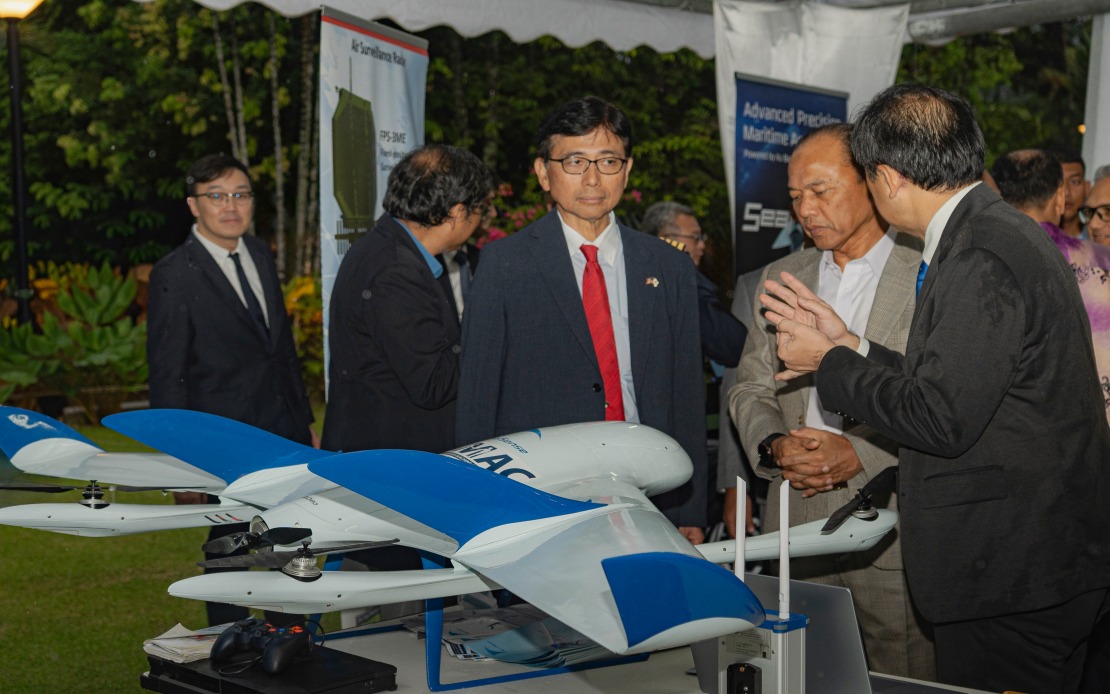
Japan is ready to substantially expand its security and defence partnerships with Malaysia, according to remarks by Japan's Ambassador to Malaysia Noriyuki Shikata, underscoring Tokyo's growing commitment to Southeast Asia amid shifting global power dynamics. The announcement came during the 72nd Japan Self-Defence Forces Day Reception in Kuala Lumpur on Wednesday, where Shikata emphasised that Prime Minister Sanae Takaichi and Malaysian Prime Minister Datuk Seri Anwar Ibrahim had reaffirmed their determination to deepen strategic cooperation centred on defence and security during Anwar's recent visit to Japan earlier this month. This momentum reflects a broader Japanese strategy to strengthen ties with key Indo-Pacific partners as traditional maritime trade routes face increasing scrutiny and geopolitical competition intensifies.
The bilateral relationship between Tokyo and Kuala Lumpur has undergone significant institutional transformation in recent years. Japan and Malaysia formally elevated their relationship to a Comprehensive Strategic Partnership in 2023, a designation that positions Malaysia alongside other strategic partners in Tokyo's regional architecture. With the approaching 70th anniversary of their diplomatic relations next year, both governments appear determined to use this milestone to consolidate gains and chart an ambitious agenda across multiple domains. Shikata explicitly committed to expanding cooperation in defence and security, signalling that military-to-military engagement will form a cornerstone of Japan's Malaysia policy moving forward.
A critical dimension of this partnership centres on protecting vital sea lanes and maintaining freedom of navigation in contested waters. The Japan Maritime Self-Defence Force and the Royal Malaysian Navy conduct regular bilateral exercises designated MALPAN, conducted in the strategically significant South China Sea and Strait of Malacca. These waters remain crucial arteries for global commerce, with trillions of dollars in trade passing through annually, making their security paramount for both nations and the broader region. In April, the exercise expanded to include the Royal Malaysian Air Force, representing a qualitative deepening of military-to-military cooperation that extends coordination from maritime to air domains. These practical training exercises serve multiple purposes: building institutional trust between defence establishments, developing interoperability in joint operations, and demonstrating resolve to maintain international law and open shipping routes.
Japan's approach aligns with its Free and Open Indo-Pacific strategy, a vision aimed at preserving a rules-based regional order and preventing any single power from achieving hegemonic control. The ambassador highlighted that both Tokyo and Kuala Lumpur have agreed to deepen synergy between Japan's FOIP vision and ASEAN's own Outlook on the Indo-Pacific, creating complementary frameworks that reinforce stability and shared prosperity. This convergence of strategic visions is particularly significant for Malaysia, as it allows the country to balance great power competition while maintaining its non-aligned credentials within ASEAN. By positioning Malaysia as a bridge between Japanese strategic interests and ASEAN consensus, both capitals are advancing a multilateral approach to regional challenges that transcends bilateral ties.
Beyond traditional military exercises, Japan has inaugurated a new tool for deepening security partnerships through its Official Security Assistance programme, launched in 2023. Malaysia was among the very first countries to benefit from this initiative, which represents a strategic pivot toward providing practical military capabilities rather than relying solely on diplomatic engagement. In 2024, Japan provided unmanned aerial vehicles and rescue boats to Malaysia, tangible assets that enhance operational capabilities across multiple domains. Under the OSA 2025 framework, Japan plans to deliver equipment for ceasefire monitoring to the ASEAN Observer Team and will provide a diving support vessel to the Royal Malaysian Navy, addressing specific operational requirements identified by Malaysian defence planners. These contributions extend beyond bilateral defence to support ASEAN-led peacekeeping and regional stability efforts, magnifying the strategic impact of Japanese assistance.
The defence industry dimension represents an emerging pillar of cooperation that could yield long-term strategic dividends. Ten Japanese companies participated in Defence Services Asia 2026 in Kuala Lumpur, showcasing advanced military technologies and equipment to Malaysian procurement officials and regional defence markets. During the same event, Japan and Malaysia signed Terms of Reference to establish a bilateral defence industry dialogue, a institutional framework designed to facilitate technology transfer, joint development projects, and commercial partnerships. This dialogue mechanism signals both governments' intent to deepen industrial cooperation beyond simple equipment purchases, potentially creating joint manufacturing capabilities or developing indigenous solutions tailored to Southeast Asian operational requirements. For Malaysia, such partnerships offer pathways to technological advancement while maintaining relationships with a trusted, like-minded partner.
The timing of these announcements reflects broader anxieties about regional security trajectories. Japan's emphasis on de-escalation, international law, and keeping sea lanes secure carries implicit reference to contemporary flashpoints, particularly tensions in the South China Sea and concerns about unilateral actions that might upset the regional balance. Malaysia, as a South China Sea claimant state itself, faces persistent tensions between economic interests in Chinese markets and security concerns about freedom of navigation and territorial integrity. By deepening partnerships with Japan, Malaysia signals that it will not remain passive in the face of regional pressures, while simultaneously maintaining the diplomatic flexibility ASEAN emphasises. This balancing act requires sophisticated statecraft, and Japan's strategic partnership provides Malaysia with additional institutional options.
Armed Forces chief General Tan Sri Malek Razak Sulaiman's presence at the reception underscores the high-level attention Malaysia's military leadership accords to this partnership. The participation of top defence officials from both countries in ceremonial and substantive engagements reflects genuine institutional commitment rather than rhetorical posturing. Regular defence dialogue at the highest levels creates channels for candid discussion of shared concerns and coordinated responses to emerging threats. This permanent institutional framework, combined with operational cooperation through exercises like MALPAN, creates multiple layers of engagement that reduce misunderstanding and build the kind of trust necessary for meaningful security partnerships.
Looking ahead, the trajectory of Japan-Malaysia security cooperation will significantly influence regional stability dynamics. As Southeast Asian nations navigate competing pressures from major powers, partnerships with countries like Japan offer middle-sized states leverage to shape outcomes rather than simply react to events. Japan's explicit commitment to working even more closely with Malaysia, backed by concrete military assistance, training cooperation, and defence industry partnerships, suggests Tokyo views Malaysia as a crucial partner in maintaining regional equilibrium. For Malaysian policymakers, this deepening relationship with Japan complements existing ties with other partners and reflects the pluralistic approach to security that has characterised ASEAN's traditional doctrine. The anniversary celebrations planned for next year will likely showcase the maturity of this partnership and potentially announce new initiatives that further enmesh Japanese and Malaysian security establishments.

