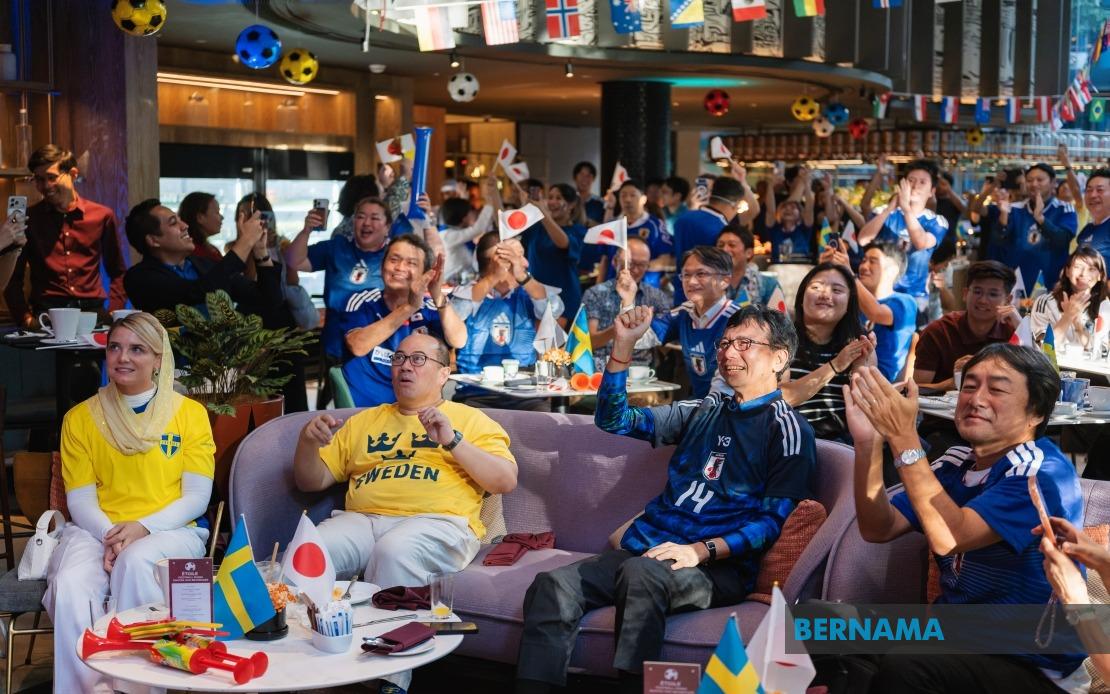
A gathering that blended international diplomacy with sporting passion unfolded in Kuala Lumpur on Friday as more than 100 guests assembled to witness Japan's encounter with Sweden in the 2026 FIFA World Cup Group F. The event, orchestrated by the Japanese Chamber of Trade and Industry, Malaysia (JACTIM) in partnership with the Japanese Embassy in Malaysia, demonstrated how football transcends formal protocol to create meaningful moments of connection between nations and cultures.
The occasion attracted an impressive roster of attendees spanning multiple sectors and nationalities. The diplomatic community turned out in force, with ambassadors and high commissioners—or their representatives—from the United States, Canada, Australia, New Zealand, Mexico and the European Union present to share in the viewing experience. This breadth of representation underscored football's unique capacity to draw together officials and dignitaries who might otherwise interact within more rigid ceremonial frameworks. Additionally, representatives from 30 Japanese companies operating in Malaysia joined the gathering, reflecting the strong commercial ties between Japan and the country and the role of business networks in fostering bilateral relationships.
Among the distinguished guests were members of Kelantan's royal household, with YM Tengku Muhammad Faiz Petra and his wife, Che Puan Sofie Louise Johansson Petra, attending as special invitees. Their presence highlighted how football events can bridge cultural and governmental institutions, bringing together figures from different spheres of Malaysian society united by a common interest in international sport.
The match itself, contested between two nations with contrasting football traditions and aspirations, ended in a stalemate at 1-1. While neither team secured victory, the result reflected the competitive equilibrium that often characterises World Cup qualifiers at this stage of the tournament. Japanese Ambassador to Malaysia Shikata Noriyuki remarked that both squads demonstrated considerable resolve and respect for one another throughout the ninety minutes, qualities he identified as hallmarks of genuine sporting competition.
For the Japanese diplomatic mission, organising such events serves a purpose extending well beyond entertainment. The screening functioned as a deliberate platform to cultivate goodwill and deepen friendship between Japan and Malaysia through the universal language of sport. This strategic approach to cultural and diplomatic engagement recognises that shared enthusiasm for football creates an informal setting where relationships can develop more naturally than traditional official channels might permit.
The venue chosen for the spectacle—a hotel in Kuala Lumpur—had been specially configured to maximise the viewing experience. A 200-inch screen dominated the dedicated viewing area, ensuring that guests could follow every movement of play with clarity and immersion. This attention to technical detail reflected the organisers' commitment to creating an environment conducive to genuine enjoyment rather than merely fulfilling a ceremonial obligation.
The atmosphere during the screening reportedly remained lively and congenial throughout the match, with supporters engaging in good-natured cheering and banter. Such informal settings often prove more effective at building interpersonal connections than formal state functions, allowing participants from different countries and professional backgrounds to interact as fellow enthusiasts rather than representatives of their respective institutions.
For Malaysia, events of this nature carry particular significance given the country's positioning within Southeast Asian football and its ongoing efforts to strengthen multilateral relationships across the region and beyond. Japan's participation in major tournaments like the FIFA World Cup represents a benchmark of footballing development and infrastructure investment that regional nations often reference when developing their own sporting ambitions. By facilitating public engagement with Japan's World Cup campaign, JACTIM and the embassy create opportunities for Malaysian football supporters to connect with one of Asia's most prominent footballing nations.
The 2026 FIFA World Cup, scheduled to take place across the United States, Canada and Mexico, represents a significant moment in global football. Japan's qualification and participation in this expanded tournament reflects the nation's sustained investment in player development and coaching infrastructure. Group F, which includes Sweden alongside Japan, contains teams with substantial footballing pedigrees and established World Cup track records, making the competition particularly compelling for fans invested in the tournament's outcomes.
The decision to screen matches in public settings rather than restricting viewership to official facilities democratises access to international football and extends the reach of diplomatic engagement beyond elite circles. Malaysians from various backgrounds—whether connected to Japan through business, cultural interests or simple football enthusiasm—could participate in celebrating the occasion, thereby broadening the pool of people exposed to Japan's sporting endeavours and cultural presence.
Looking forward, such collaborative initiatives between chambers of commerce, diplomatic missions and local communities may become increasingly common as nations recognise football's utility as a soft power tool. The modest investment required to organise public screenings generates substantial returns in terms of goodwill, media coverage and interpersonal connection. For Malaysia, being a venue for such gatherings reinforces the country's status as a cosmopolitan centre where international communities can convene and celebrate shared interests.
The Japan-Sweden screening ultimately exemplified how modern diplomacy increasingly leverages cultural and sporting occasions to achieve political and commercial objectives. By bringing together government officials, business representatives and ordinary citizens around a common focal point, JACTIM and the Japanese Embassy created a moment where national interests and personal enjoyment aligned seamlessly, producing outcomes that traditional diplomatic channels might struggle to replicate.

