The care crisis facing Japan's rapidly ageing society has prompted an extraordinary and deeply unsettling proposal from an unlikely source: Yo Kusakabe, a retired geriatrician from Osaka who has drawn international attention with a film adaptation of his 2003 novel exploring the radical idea of elective amputation for elderly patients. Released last month to immediate controversy, "Haiyoshin (Useless Body)" has forced a reckoning with uncomfortable truths about a nation struggling to support nearly one-third of its population aged 65 and older, while facing an estimated shortfall of approximately 570,000 caregivers by 2040.
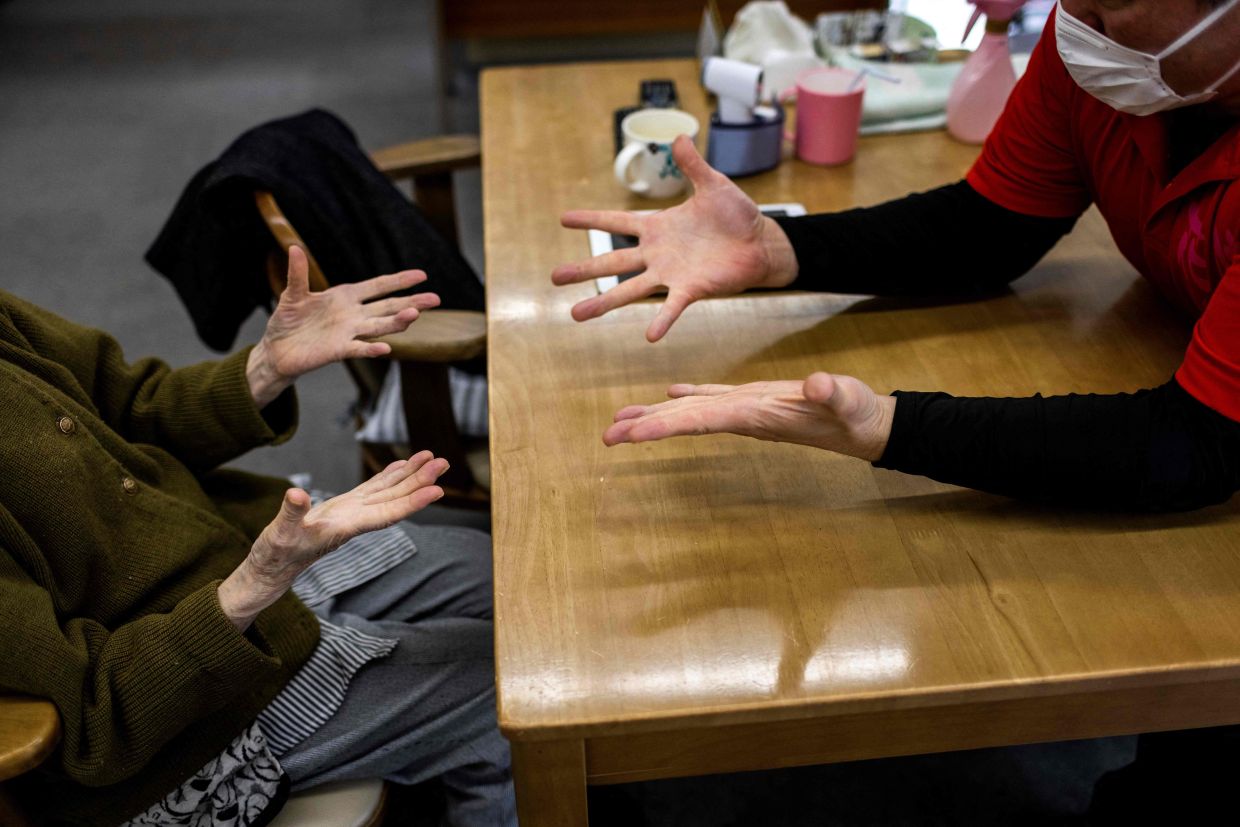
Kusakabe's central thesis, presented through a fictional narrative about a young physician advocating for "A-care (Amputation Care)," operates from a utilitarian logic that challenges conventional medical ethics. The 70-year-old argues that removing immobilised limbs from severely disabled patients would substantially ease the physical and emotional burden on caregivers, whose ranks are thinning whilst demand surges. He presents the proposition not as sadism but as pragmatism: paralysed arms and legs that hang uselessly, snag on clothing, require extensive bathing assistance, and weigh down frail bodies represent an impediment to care quality. In his view, a female caregiver struggling to lift an obese male patient or experiencing chronic back pain from constant lifting might find the calculus of amputation worth considering—provided the patient consents.
The novel itself, dismissed as "unfilmable" when first published over two decades ago, carries unflinching depictions of the care sector's structural failures: chronic staff shortages, overwhelmed family members bearing impossible loads, and elderly patients subjected to neglect and abuse. These fictional scenarios reflect a grimmer reality unfolding in contemporary Japan. Public broadcaster NHK's 2016 investigation documented that care-related homicides—a phenomenon so prevalent it has acquired its own Japanese term, "kaigo satsujin"—occurred roughly once every fourteen days. These are not random murders but tragedies born of desperation, stress, and the fracturing of caregivers pushed beyond human limits.
Kusakabe's film has proven polarising among viewers, with online reviewers variously describing it as "shocking," the year's "most controversial film," and "terrifying madness." Yet the response has not been uniformly dismissive. Some critics acknowledged that whilst amputation appears brutal and ethically indefensible on its surface, the underlying argument contains uncomfortable validity. This ambivalence reflects a broader unease: Japan's care system is deteriorating, and conventional solutions are insufficient to the scale of the challenge.
Central to Kusakabe's narrative is the premise that elderly patients themselves might benefit from amputation, at least initially. From his decades as a geriatrician, Kusakabe recalls patients expressing genuine desire to be rid of crippled limbs that served no function except to generate pain, restrict movement, and sometimes convulse unpredictably. In the film, amputees experience improved agility and freedom from suffering, shown playfully tossing balloons and maneuvering wheelchairs with surprising dexterity. The movie thus poses a philosophical question about dignity in end-of-life care: is dignity preserved by forcing immobile arms through pyjama sleeves amid excruciating pain, or by eliminating that pain altogether through radical means?
Kusakabe frames this as a matter of personal autonomy and quality of life. If a patient explicitly requests amputation, and that choice eases caregiver burden whilst gaining family acceptance, he contends that outside parties have no legitimate claim to override such a decision. This argument invokes principles of informed consent and bodily autonomy that hold considerable weight in bioethical discourse, even as the specific application remains repugnant to mainstream medical practice and public sensibility.
Yet Kusakabe acknowledges that such rationalist end-of-life decision-making does not govern contemporary Japanese medical practice. Insurance heavily subsidises feeding tubes and intravenous drips for patients aged 75 and older, incentivising aggressive life-prolongation regardless of patient quality of life or likelihood of meaningful recovery. Families, unable to contemplate withholding intervention from dying relatives, often unknowingly subject parents and spouses to prolonged suffering justified by the cultural imperative to "do something." This approach stands in stark contrast to Scandinavian palliative care models, where Sweden and Denmark routinely forgo artificial feeding when elderly patients stop eating naturally.
For Malaysia and other Southeast Asian nations facing similar demographic transitions, Kusakabe's provocation carries cautionary relevance. South Korea, Taiwan, and increasingly Malaysia itself are experiencing rapid population ageing, with projections suggesting care workforce shortages in coming decades. The ethical frameworks and policy choices Japan makes now will likely inform regional approaches to this universal challenge. Kusakabe's analysis suggests that cultural attitudes—particularly Asian societies' traditional emphasis on filial duty and life preservation at all costs—may actually exacerbate care crises by creating expectations that systems cannot sustainably meet.
Kusakabe himself recognises that Japan's particular cultural context renders radical solutions like amputation ill-suited to practical implementation. Japanese society, he observes, maintains a philosophical conviction that keeping dying patients alive is categorically correct, regardless of consequences. This cultural rigidity, combined with the nation's inability to embrace bold, rational approaches to end-of-life care, suggests that amputation will remain fictional speculation rather than medical reality. Yet his film succeeds in its implicit purpose: forcing uncomfortable questions about whether current end-of-life practices genuinely serve patient interests or simply perpetuate suffering whilst devastating caregivers.
The narrative arc of "Haiyoshin" ultimately undermines Kusakabe's central thesis through tragic reversal. Initial enthusiasm for amputation-based care collapses when a devastating event shatters the main character's confidence in the procedure's efficacy. This narrative pessimism mirrors Kusakabe's own measured assessment: systemic change in how Japan approaches elderly care will not emerge from radical surgical interventions but from fundamental shifts in philosophy, policy, and cultural acceptance of mortality. Whether Asia's rapidly ageing societies possess the philosophical flexibility and political courage to embrace such transformation remains an open question, one that Kusakabe's controversial film has made impossible to ignore.