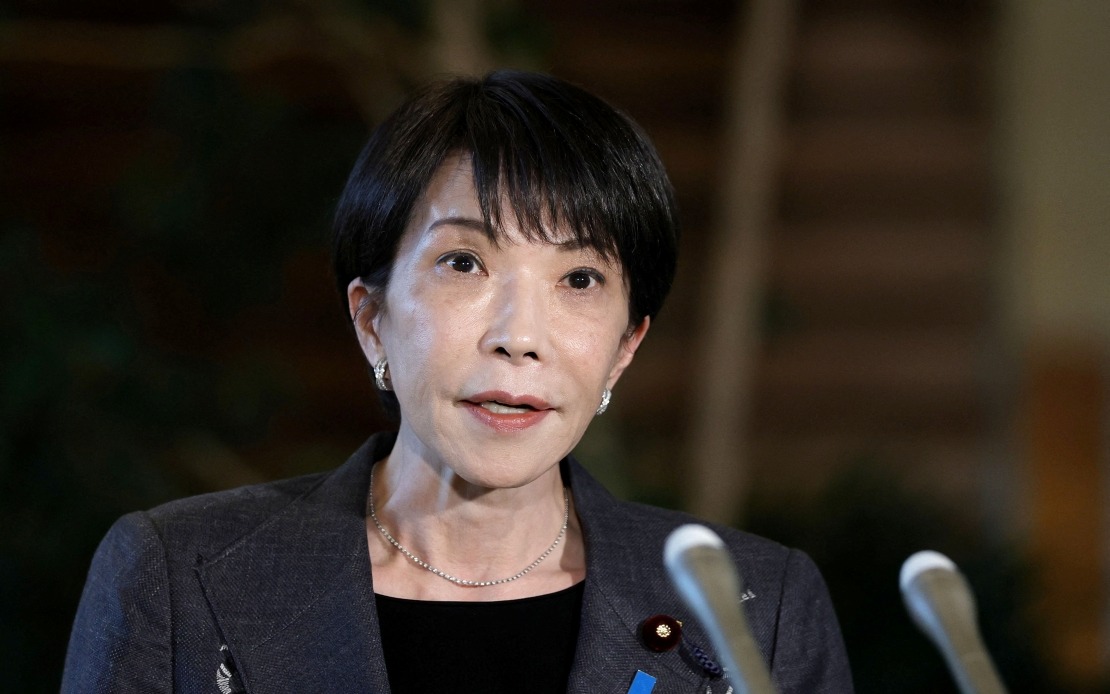
Prime Minister Sanae Takaichi has made an explicit commitment to reverse Japan's planned reduction in consumption tax on food products, promising to restore the levy to its standard 8 per cent rate after just two years of relief. The declaration, delivered during parliamentary questioning on Monday, represents a significant clarification on one of Japan's most contentious fiscal policies heading into the coming years and signals the government's struggle between delivering on electoral promises and safeguarding the nation's already precarious economic fundamentals.
The pledge follows her ruling Liberal Democratic Party's decision last week to propose a consumption tax reduction to 1 per cent on food and beverages beginning in April 2027, rather than eliminating the tax entirely as the LDP had campaigned on during February's lower house election. This retreat from a zero-rate commitment reflects the practical and political complications that emerged once the party began detailed planning with coalition partners and fiscal experts. The adjustment also underscores growing nervousness among policymakers about Japan's capacity to absorb sustained revenue losses while managing its already unsustainable debt burden.
Opposition lawmakers have questioned whether any government would politically survive restoring such a tax once households become accustomed to lower prices. During parliamentary debate, Ken Tanaka from the opposition Democratic Party for the People pointed out that reversing a tax cut would inevitably be perceived as a tax increase by the public, potentially triggering significant backlash and damaging the administration's credibility. Takaichi's direct response, though intended to reassure fiscal hawks, may struggle to convince skeptics who doubt whether any government would have the political will to follow through when the moment arrives.
The broader context reveals Japan grappling with competing economic imperatives that are increasingly difficult to reconcile. The nation has endured decades of deflation followed by recent inflationary pressures that have squeezed household purchasing power, particularly affecting lower-income families who spend disproportionately on food and essential goods. Campaign promises to reduce this burden resonated strongly with voters and helped the LDP maintain its parliamentary dominance. Yet Japan simultaneously faces what economists describe as the worst fiscal position among Group of Seven nations, with government debt exceeding 250 per cent of GDP and yields on Japanese government bonds surging to multi-decade highs.
The technical obstacle of updating retail cash register systems nationwide has also complicated the government's original commitment. Converting payment terminals to accommodate a zero per cent rate would require extensive coordination across the retail sector, involving significant costs and implementation delays. By settling on a 1 per cent rate instead, the LDP aims to minimize disruption while still providing meaningful relief to consumers. This pragmatic compromise does, however, require additional compensation mechanisms to honour campaign commitments, leading the party to propose supplementary cash handouts totalling 600 billion yen annually to offset the difference between the 1 per cent rate and a zero rate.
The proposal emerged from cross-party discussions within Japan's national council on taxation and social security, which has been deliberating on these issues for months. The LDP's interim report, expected to be finalized later this month, will provide the blueprint for implementation. Takaichi has signalled enthusiasm for moving forward quickly once the council completes its work, suggesting the government views rapid implementation as important for demonstrating responsiveness to public concerns about living costs. The timing for April 2027 gives the administration roughly two years to prepare systems and smooth implementation before the tax rate reduction takes effect.
The proposed annual cash handouts of 600 billion yen, equivalent to approximately 3.7 billion US dollars, represent a significant fiscal commitment that the government would need to find or borrow to fund. While less disruptive than a zero per cent rate from an administrative perspective, this approach effectively transforms the tax cut into a spending programme, with different implications for government finances and fiscal management. Critics argue that temporary cash handouts lack the permanence and psychological impact of a lower tax rate, yet they also offer more flexibility for future adjustment or termination if fiscal conditions deteriorate further.
Japan's fiscal situation has intensified concerns among international investors and credit rating agencies, particularly as the Bank of Japan has gradually tightened monetary policy and reduced its support for government bond markets. Weak yen exchange rates have compounded these concerns, making imported goods more expensive and potentially undermining the anti-inflationary benefits of domestic consumption tax cuts. Policymakers must balance the political necessity of supporting household incomes against the economic reality that Japan cannot indefinitely sustain mounting debt without consequences for interest rates, currency stability, and ultimately economic growth.
For Southeast Asian observers, Japan's fiscal predicament offers cautionary lessons as regional economies navigate post-pandemic recovery and manage expectations about government support. The broader pattern reveals how electoral commitments made during periods of public anxiety can constrain policy options for years afterward, particularly when those commitments conflict with fundamental fiscal constraints. Malaysia and other regional economies facing their own debt challenges can observe how Japan's policymakers attempt to square this circle through compromises like reduced rather than eliminated tax rates.
The two-year sunset clause itself may reflect deeper ambiguity within the government about the sustainability of permanent tax relief. By designing the measure as explicitly temporary, officials preserve the theoretical option to reverse it, even while acknowledging the political difficulty Takaichi herself has recognized. This framing allows the government to claim fiscal responsibility while still delivering on promises, though the credibility of such assurances will ultimately depend on whether Takaichi's successor administration genuinely implements the restoration when the period expires in 2029. The coming months will clarify whether this compromise can satisfy both fiscal conservatives concerned about Japan's debt trajectory and voters demanding relief from inflation.

