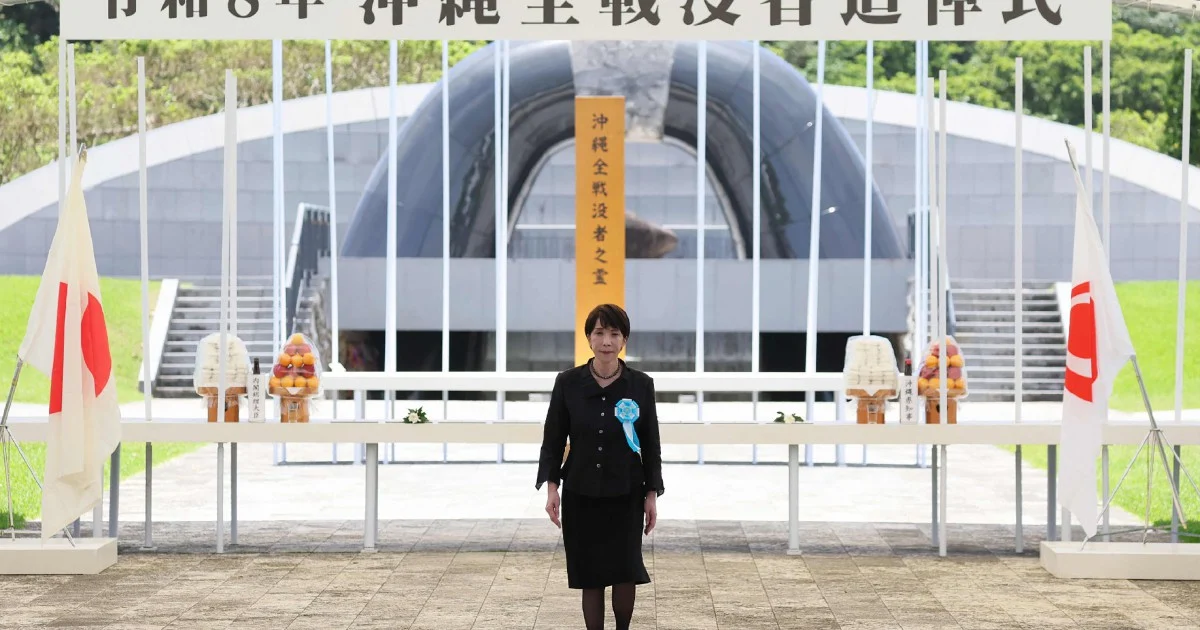
Japanese Prime Minister Sanae Takaichi encountered sustained heckling from protesters at a World War II commemorative event in Tokyo, with television coverage documenting the confrontation. The disruption underscores the persistent tension between Japan's postwar pacifist identity and the current administration's strategic pivot toward expanded military capabilities.
The incident reflects deeper fractures within Japanese society over the nation's defence posture. Supporters of Japan's historic pacifism—enshrined in the Constitution's Article 9—view the government's military expansion initiatives as a dangerous departure from principles established after 1945. This constitutional commitment has defined Japan's international reputation for nearly eight decades, making the shift particularly contentious among voters who associate militarism with wartime atrocities and civilian suffering.
Prime Minister Takaichi's administration has pushed forward with policies designed to strengthen Japan's defence infrastructure amid growing regional security concerns. These measures include increased defence spending, relaxed restrictions on weapons exports, and broader interpretations of constitutional rights to self-defence. The government frames these changes as necessary responses to China's military modernization, North Korea's weapons programmes, and evolving security threats in the Indo-Pacific region.
Opponents argue that military expansion represents a fundamental betrayal of Japan's postwar social contract. Activists at the memorial ceremony expressed concern that commemorations of war casualties are being instrumentalized to justify militarization rather than promote peace. This symbolic dimension carries particular weight in Japan, where WWII memory remains politically charged and shapes national identity discussions.
The contrast between official commemoration and protester dissent reveals a nation grappling with strategic necessity and historical responsibility. Unlike Germany, which has maintained strict pacifist commitments through European integration frameworks, Japan faces a distinctly different geopolitical situation. Regional powers, including China and Russia, have substantially expanded military capabilities, creating genuine security pressures that complicate pacifist arguments.
Younger Japanese generations, who have no direct memory of wartime devastation, show more acceptance of military strengthening than older cohorts. Generational divides in attitudes toward defence policy increasingly shape national debates. Polls indicate that while majorities support stronger defence capabilities, significant minorities remain deeply opposed to militarization and the constitutional changes required to fully support expanded defence operations.
International dimensions add complexity to the domestic debate. American security commitments through the Japan-US alliance have traditionally underwritten Japanese security, reducing pressure for autonomous military expansion. However, uncertainty about American strategic commitment, particularly under varying US administrations, has prompted Tokyo to develop more independent defence capacities. Southeast Asian neighbours, despite their own security concerns, watch Japan's militarization carefully, mindful of historical regional conflicts and the potential for arms-race dynamics.
The Takaichi administration inherited these tensions from previous governments that had begun gradual policy reorientation. Prime Minister Shinzo Abe initiated significant shifts toward military normalization before his 2022 assassination, including controversial reinterpretations of constitutional constraints on collective self-defence. Takaichi represents continuity with that trajectory, intensifying existing policy directions rather than introducing fundamentally new ones.
Japan's pacifist legacy remains institutionally embedded in ways that complicate rapid militarization. The domestic consensus that enabled dramatic economic growth while maintaining security through alliance partnership remains powerful, particularly among older voters and left-leaning constituencies. Memorial events like the one where Takaichi was heckled serve as focal points for these underlying disagreements, transforming commemoration into political contestation.
Looking forward, Japan faces the challenge of balancing enhanced military capability with preservation of its postwar identity and constitutional framework. The government's apparent strategy involves gradual normalization through incremental policy shifts rather than dramatic constitutional revision, potentially allowing military expansion while maintaining formal commitment to peace principles. However, protests indicate that this approach carries political costs and faces organized domestic opposition.
Regional observers from Southeast Asia to South Korea and beyond view Japan's military trajectory with mixed concern. While stronger Japanese defence capabilities might enhance regional stability by counterbalancing Chinese military growth, memories of Japanese imperial expansion persist in neighbouring countries. The question of how Japan can modernize its military while reassuring neighbours about peaceful intentions remains unresolved and will likely shape the region's security environment for years ahead.

