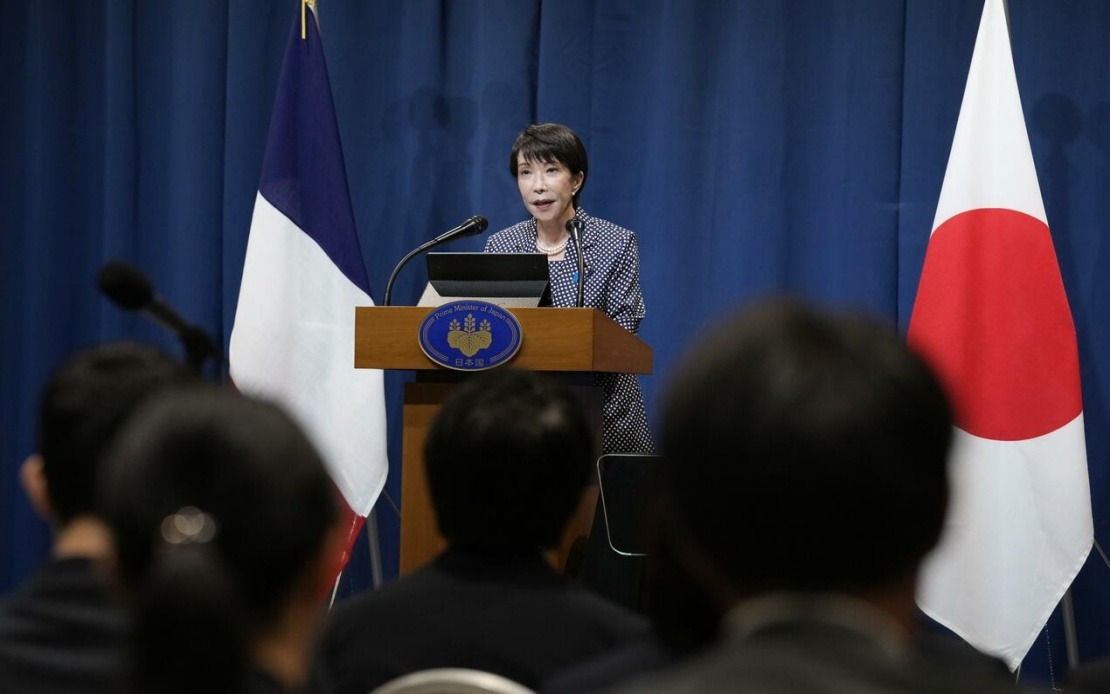
Japanese Prime Minister Sanae Takaichi's cabinet approval rating has slipped to 55.8 per cent according to a latest Kyodo News poll, representing the weakest endorsement she has received since taking office in October of last year. The deterioration in public confidence reflects mounting anxiety among Japanese voters regarding both domestic economic pressures and international security considerations, particularly the regional tensions affecting global energy markets and trade routes.
The timing of this decline is significant, occurring against a backdrop of persistent economic headwinds that have kept household purchasing power under strain. Japan's resource-dependent economy remains vulnerable to disruptions in key strategic waterways, and the government continues to navigate complex questions about how extensively to commit military resources to protecting crucial maritime passages. The convergence of these challenges has plainly weighed on public sentiment toward the Takaichi administration's overall direction and competence.
A weekend telephone survey conducted by Kyodo News revealed nuanced public opinion on a specific security concern: whether Japan should dispatch the Self-Defence Forces to safeguard commercial shipping through vital regional corridors. The polling data showed that a majority of 54.7 per cent of respondents felt such a deployment was unnecessary, while 36.6 per cent supported the deployment to ensure safe passage of merchant vessels. This division in public opinion underscores ongoing debate within Japanese society about the appropriate balance between security commitments and fiscal constraints.
The survey was conducted following a development that might have been expected to ease tensions somewhat: the United States and Iran announced a preliminary peace agreement that included arrangements for Tehran to reopen the Strait of Hormuz. This diplomatic progress would theoretically reduce immediate security concerns about chokepoints affecting Japan's vital energy imports and broader trade flows. However, the improvement in regional relations does not appear to have substantially bolstered confidence in the government's handling of economic challenges that persist regardless of geopolitical developments.
Persistent inflation remains the most pressing concern for ordinary Japanese households, which continue to experience elevated prices across essential goods and services. Consumer purchasing power has been eroded by sustained price pressures, and public frustration about cost-of-living challenges has clearly translated into softer approval ratings for the government. The cabinet appears increasingly vulnerable on the economic management front, where household sentiment remains decidedly negative despite any positive diplomatic developments in distant regions.
On the fiscal policy front, the Kyodo poll reveals substantial public appetite for targeted tax relief to address household financial strain. The largest share of respondents, representing 43.9 per cent, indicated support for reducing the consumption tax rate applied to food and beverages from the current 8.0 per cent to 1.0 per cent, provided such a reduction could be implemented relatively quickly. This position represents a middle ground between maintaining current tax levels and the more ambitious zero-rate proposal that some respondents favour.
An additional 22.6 per cent of survey participants expressed support for the ruling coalition's pledge to eliminate the consumption tax entirely on food and beverages, bringing the rate to zero. This contingent of voters views comprehensive tax relief on essential foodstuffs as a necessary response to household budget pressures. The combined support for various forms of consumption tax reduction therefore represents a clear electoral signal that voters expect concrete action on cost-of-living relief, and the government's response will likely influence its approval trajectory in coming months.
The tax debate resonates particularly strongly with Southeast Asian observers, as Japan's experience with consumption tax and inflation management offers important lessons for regional economies with similar demographic profiles and export-dependent growth models. Malaysia, Singapore, and other ASEAN members facing their own inflation pressures and consumer confidence challenges can observe how Tokyo balances fiscal sustainability against the political necessity of providing targeted relief. Japan's aging society and declining workforce mirror challenges that will increasingly preoccupy Southeast Asian policymakers, making Japanese policy responses relevant to regional strategic thinking.
Takaichi's declining approval rating may influence her government's near-term policy priorities, potentially accelerating decisions on tax relief and other measures designed to boost household consumption. The government faces electoral considerations as well as the practical reality that persistent weakness in domestic demand constrains Japan's broader economic growth prospects. This political pressure from below may reshape cabinet decision-making on fiscal measures in ways that create ripple effects across Asia-Pacific trade and investment flows.
The Kyodo poll data suggests that Japanese voters are weighing both international security concerns and domestic economic welfare in formulating their political judgments, with the latter appearing to hold greater sway. As Middle East tensions potentially ease following the preliminary US-Iran agreement, the political focus will likely intensify on domestic economic grievances. For the Takaichi administration, reversing the recent approval decline will require demonstrable progress on cost-of-living relief and tangible improvements in household economic circumstances.

