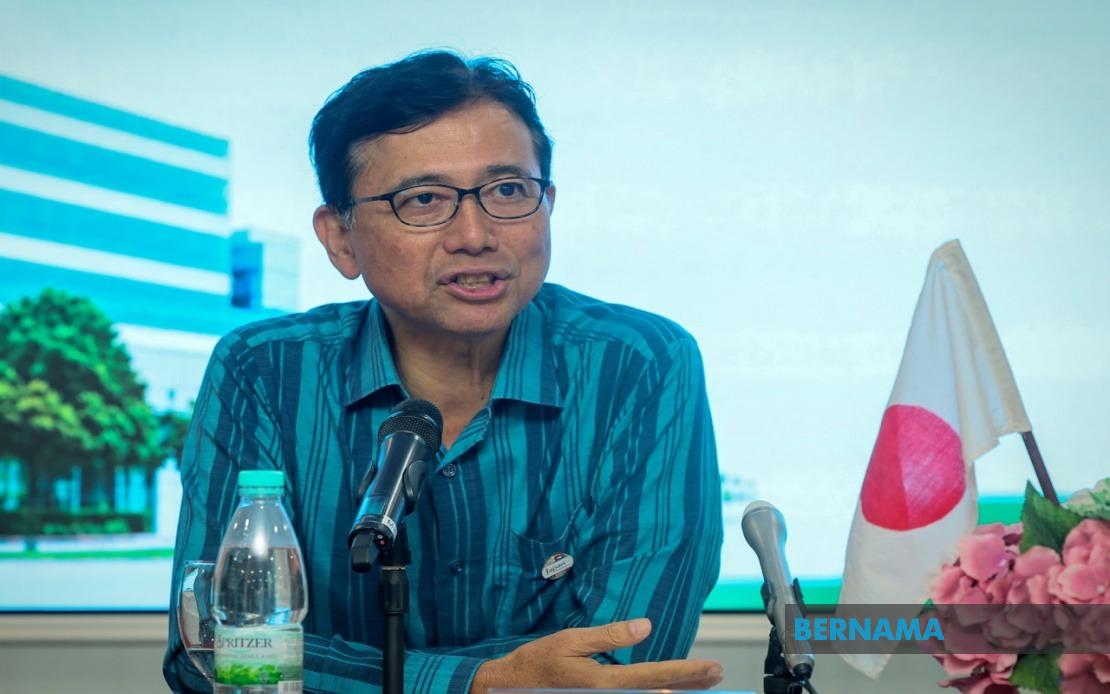
Japan's revised approach to regional engagement presents significant opportunities for Malaysia's transformation into a technology powerhouse, according to Japanese Ambassador to Malaysia Noriyuki Shikata. The updated Free and Open Indo-Pacific (FOIP) framework, unveiled by Japanese Prime Minister Sanae Takaichi in May, marks a substantial recalibration of Tokyo's strategic priorities, moving beyond traditional infrastructure projects to encompass emerging technologies that will reshape regional economic competitiveness.
The original FOIP concept, introduced by former Prime Minister Shinzo Abe in 2016, established Japan's commitment to preserving a rules-based order and advancing shared prosperity across the Indo-Pacific. However, the refreshed iteration signals Japan's recognition that regional stability now hinges on technological sovereignty, supply chain resilience and collaborative innovation. Shikata characterised this evolution as pragmatic and substantive, one that positions economic security and industrial resilience as central pillars rather than peripheral considerations.
Where Malaysia stands to gain considerably is in the framework's emphasis on capacity building across high-impact sectors including artificial intelligence, quantum computing, secure international data movement, undersea cable infrastructure and satellite communications. These are not sectors where Malaysia currently possesses overwhelming comparative advantage, but rather areas where targeted investment and knowledge transfer can catalyse rapid advancement. The alignment with the ASEAN Outlook on the Indo-Pacific demonstrates that Japan has deliberately crafted its approach to complement rather than compete with regional consensus, a diplomatic nuance that strengthens its appeal among Southeast Asian nations.
The financial muscle behind this initiative cannot be understated. The POWERR Asia (Partnership on Wide Energy and Resource Resilience Asia) initiative commits US$10 billion to supporting ASEAN economies in diversifying energy sources, building strategic fuel reserves and securing access to critical materials essential for semiconductor and battery manufacturing. This addresses a vulnerability that has constrained Malaysia's ability to scale high-tech manufacturing clusters—the assurance of stable, affordable and strategically secure supply chains that underpin industrial confidence.
For Japanese corporations operating in Malaysia, the framework creates an incentive structure tilted towards upgrading operational sophistication. Rather than remaining locked into conventional manufacturing models that have characterised Malaysian industrial policy for decades, Japanese firms now see explicit encouragement to invest in advanced semiconductor packaging facilities, artificial intelligence infrastructure development and cloud computing capabilities. This reorientation has immediate implications for the labour market and skill development, suggesting that Malaysia's manufacturing workforce will require accelerated training in digital technologies and process automation.
Malaysia's established credentials as a semiconductor hub provide a natural foundation for deeper Japanese engagement. The country already hosts significant manufacturing presence from both Japanese and international chipmakers, yet this presence remains concentrated in specific value-chain segments. Japanese investors have signalled eagerness to expand into more sophisticated domains—packaging technologies, materials science, design capabilities and system integration—where Malaysia can position itself as an indispensable node in Asia-Pacific semiconductor networks. This vertical deepening represents precisely the kind of industrial transformation that has eluded Malaysia despite decades of foreign direct investment.
The bilateral relationship entered fresh terrain with the establishment of the Comprehensive Strategic Partnership in December 2023, which has gradually transcended the historical Look East Policy framework. That earlier doctrine, conceived when Japan represented manufacturing excellence worth emulating, addressed a different era of industrial competition. Today's partnership acknowledges Malaysia as a co-creator rather than a student—an evolution reflected in Prime Minister Datuk Seri Anwar Ibrahim's recent engagement with major Japanese conglomerates including Mitsubishi Corporation, ENEOS, DENSO, IBM and Marubeni. These conversations, according to Shikata, have established clear momentum toward Malaysia's next industrial phase.
The anticipated joint development of artificial intelligence and quantum computing solutions represents a qualitative shift in how Japan and Malaysia might collaborate. Rather than Malaysia serving primarily as a production location for technologies designed elsewhere, the framework contemplates collaborative innovation where intellectual property development and research capacity are distributed across both nations. This has profound implications for attracting higher-wage employment, retaining talented engineers and building a domestic technology ecosystem capable of generating innovation rather than merely absorbing it.
Critical infrastructure protection and supply chain security feature prominently in Shikata's articulation of the partnership's trajectory. Recent geopolitical tensions and pandemic-related disruptions have exposed how concentrated and brittle many global supply chains remain. Japan and Malaysia, working in concert, can develop redundancy mechanisms and diversification strategies that protect both economies from strategic coercion or systemic shock. This security dimension often goes underappreciated in discussions of trade and investment, yet it fundamentally shapes business confidence and capital deployment decisions.
For Malaysia's technology ecosystem, the convergence of Japanese strategic intent and financial resources with existing regional tech clusters—particularly in cities like Kuala Lumpur, Penang and Johor Bahru—creates conditions for accelerated clustering effects. When major Japanese corporations signal commitment to upgrading operations and expanding research capacity, they attract supporting vendors, consultants and specialist service providers. This agglomeration dynamic has driven technology hubs globally and represents an underutilised pathway for Malaysia to build genuine technological depth rather than remaining perpetually reliant on external expertise.
The timing aligns with Malaysia's own digital economy ambitions articulated through national plans and regulatory frameworks designed to attract tech investment and nurture homegrown innovation. Japanese engagement, backed by strategic commitment from Tokyo and substantial financial resources, significantly increases the probability that these aspirational targets translate into concrete industrial transformation. The risk, conversely, lies in Malaysia failing to operationalise the regulatory and human capital foundations necessary to absorb and retain these investment flows.
Sector-specific opportunities emerging from this framework extend beyond semiconductors into renewable energy integration, advanced materials and precision manufacturing where Japan possesses deep technological capabilities and Malaysia offers geographic advantages, labour cost structures and positioning within regional supply networks. The POWERR Asia initiative's energy focus creates particular relevance for Malaysia's transition toward cleaner energy systems while simultaneously building manufacturing capacity around renewable technologies.
As Shikata emphasises, Japan remains committed to being Malaysia's dependable and innovation-focused partner through this transformation period. The rhetoric of partnership appears substantiated by concrete mechanisms—financial commitments, technological transfer arrangements and industrial alignment. Whether Malaysia can translate this external opportunity into sustained competitive advantage depends significantly on domestic policy execution, education and skills development, and the ability to build ecosystems that retain and reward technological talent.