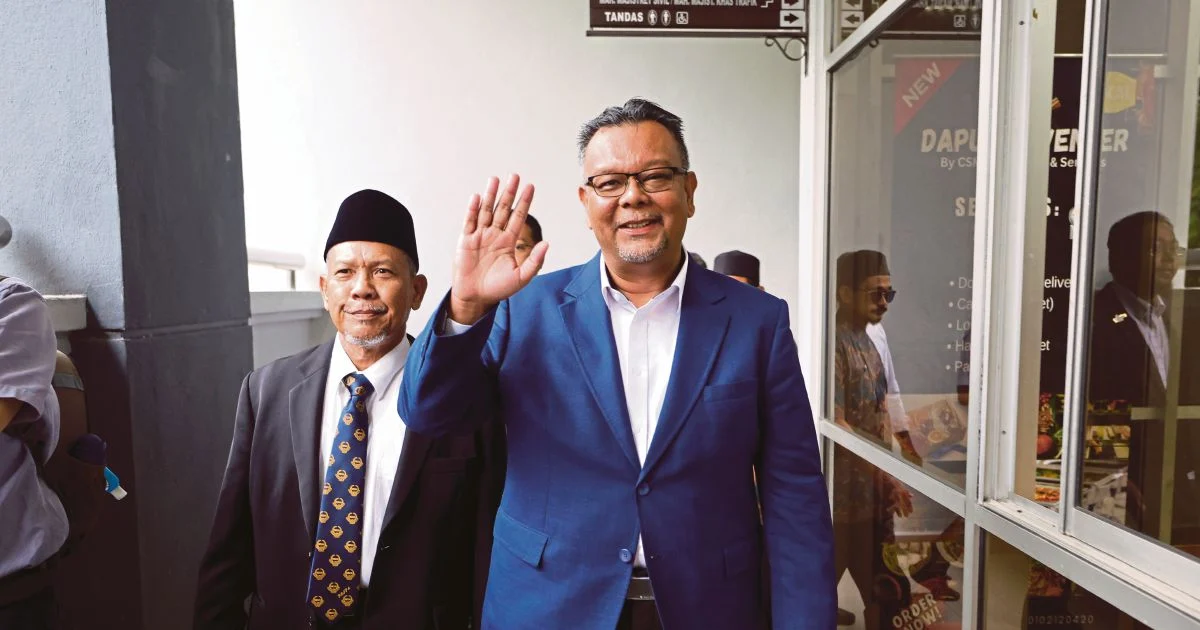
Dr Haim Hilman Abdullah, the assemblyman representing Jitra, appeared before the magistrate's court in Seremban today where he formally denied charges that he had made statements capable of causing widespread public alarm. The legal proceedings mark a significant development in a matter that has drawn considerable attention within political circles in the state.
The charge against Dr Haim Hilman invokes provisions of Malaysian law designed to prevent the dissemination of statements that could trigger fear, panic, or undue anxiety among the general population. Such offences are treated seriously under the legal framework, reflecting the government's interest in maintaining public order and preventing the spread of information that might destabilise community confidence.
The specifics of which statements Dr Haim Hilman allegedly made have not been detailed in available court records, though such cases typically involve public declarations made through media, social media platforms, or public gatherings. The nature of the charge suggests the prosecution believes his utterances crossed the threshold from legitimate political speech into territory deemed potentially harmful to public tranquillity.
Dr Haim Hilman's appearance in Seremban magistrate's court underscores the intersection of political activity and legal accountability in Malaysia's system. Elected representatives, while enjoying certain parliamentary privileges within the legislature, remain subject to the same laws applicable to ordinary citizens when speaking outside their official duties. This tension between political freedom and public order restrictions remains a recurring theme in Malaysian politics.
The decision to proceed with formal charges suggests the investigating authorities determined sufficient evidence existed to support allegations that the statements in question crossed legal boundaries. Malaysia's framework for addressing public alarm offences provides authorities with latitude in interpreting what constitutes speech likely to cause such alarm, a provision that has occasionally generated debate among civil liberties advocates regarding the scope of permissible political discourse.
For Jitra constituents and Kedah political observers, the proceedings carry practical implications regarding their representative's capacity to fulfil duties while managing legal obligations. The court process will necessarily consume time and resources that Dr Haim Hilman might otherwise dedicate to constituency work. More broadly, the case exemplifies how political figures must navigate between voicing constituent concerns and respecting legal constraints on public communication.
The magistrate's court in Seremban will oversee the subsequent proceedings, with further developments likely to emerge as the legal process unfolds. Preliminary hearings may involve arguments about the admissibility of evidence, witness testimony from those present when the statements were made, or disputes about their exact wording and context. The prosecution will need to establish not merely that Dr Haim Hilman made certain statements, but specifically that these utterances possessed the capacity to trigger public alarm as defined under relevant legislation.
This case arrives amid a period when Malaysian politicians across the spectrum face heightened scrutiny regarding public statements, particularly those touching on sensitive matters. The broader political environment has become increasingly attentive to potential consequences of contentious speech, whether through formal legal channels or through public and organisational responses. Dr Haim Hilman's case thus reflects contemporary tensions within Malaysia's political discourse.
The defence strategy will likely focus on demonstrating that the statements in question, taken in their proper context, did not genuinely possess the capacity to cause public alarm, or that they represented legitimate political commentary protected by principles of free speech. Dr Haim Hilman's legal representatives may argue that distinguishing between speech intended to highlight genuine public concerns and speech impermissibly designed to create panic represents a crucial distinction that courts must carefully examine.
For Malaysian political observers, the proceedings offer an opportunity to understand how courts interpret and apply provisions governing public order in the context of political speech. The outcome will potentially influence how elected representatives subsequently calibrate their public communications. If the courts rule against Dr Haim Hilman, the decision may establish precedent affecting what legislators feel emboldened to express publicly. Conversely, an acquittal would reinforce protections for political speech against overly expansive interpretations of alarm-causing provisions.
The case underscores Malaysia's complex relationship with political freedom and public safety. While democratic governance requires space for vigorous political debate and criticism, governments maintain legitimate interests in preventing genuinely destabilising speech. Finding appropriate equilibrium between these competing values remains an ongoing challenge for Malaysia's legal and political institutions. Dr Haim Hilman's forthcoming trial will contribute to how that balance is understood and applied.

