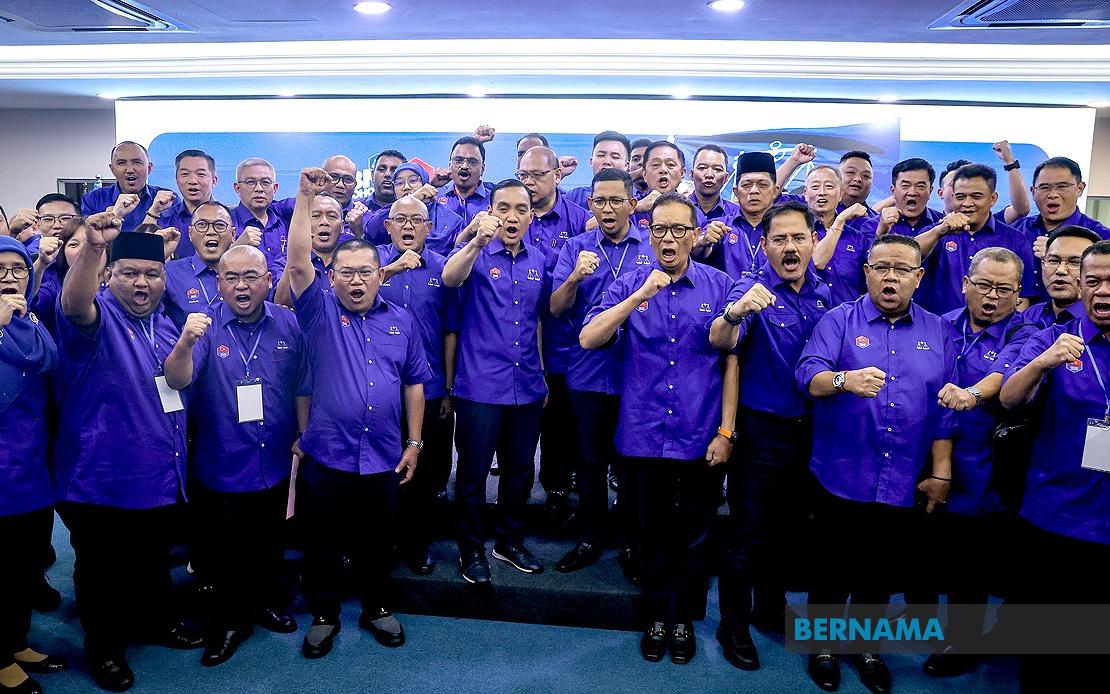
Johor Barisan Nasional has unveiled its comprehensive candidate slate for the 16th state election, presenting a strategically composed lineup that emphasises continuity while introducing fresh political voices. The coalition announced all 56 candidates across three component parties—37 from UMNO, 15 from MCA and four from MIC—at a formal ceremony in Johor Bahru, with Johor BN chairman Datuk Onn Hafiz Ghazi presiding over the announcement. The selection process carried the explicit endorsement of BN chairman Datuk Seri Dr Ahmad Zahid Hamidi, underscoring the coalition's consensus on its electoral direction for the peninsula's southern stronghold.
Menteri Besar Onn Hafiz will contest the Machap seat, a constituency he successfully held in the 2022 state election. His continuation as BN's chief ministerial candidate reflects the coalition's confidence in his leadership during a period when state governments across Malaysia face mounting pressure to deliver tangible development outcomes and address persistent economic concerns affecting ordinary voters. Machap represents a critical political bellwether, as victories in such seats often indicate broader voter sentiment across the state.
Among the most significant returns is Datuk Seri Dr Adham Baba, the former health minister and Tenggara UMNO division chief, who has been positioned to contest in Pasir Raja. Adham's political trajectory underscores the premium BN places on experienced hands with demonstrated national-level credentials. His earlier representation of the same constituency from 2008 to 2018, combined with his dual tenures as Tenggara MP spanning 2004 to 2008 and 2018 to 2022, provides considerable institutional memory and constituent familiarity. His re-entry into state-level politics after his federal parliamentary service ended in 2022 suggests BN views him as capable of galvanising support in a traditionally competitive electoral division.
The treatment of former Menteri Besar Datuk Seri Hasni Mohammad illustrates the coalition's pragmatic approach to personnel decisions. Hasni, who has served as Benut's assemblyman and held significant state executive responsibilities, was not renominated for this election cycle. Instead, BN has fielded UMNO working secretary Datuk Mohd Sumali Reduan in the constituency. Such decisions, while sometimes controversial within party structures, reflect calculations about electoral momentum and resource allocation across the broader canvas of 56 contests. The Benut decision particularly matters for understanding BN's confidence intervals in different demographic and geographic pockets of Johor.
The coalition's retention strategy for incumbent state executive councillors demonstrates institutional preference for administrative continuity. Nine of ten former executive councillors who contested in 2022 have been reselected as candidates, signalling BN's assessment that administrative experience translates into electoral advantage. The single exception is Khairin-Nisa Ismail @ Md On, the former State Women, Family and Community Development Committee chairman, who will not defend the Serom seat. This selective renewal pattern balances the political costs of removing experienced administrators with the strategic flexibility to introduce new candidates in seats where demographic or political calculations suggest fresh approaches may prove more effective.
The composition across party lines reflects BN's broader coalition mathematics in Johor. UMNO's dominance with 37 candidates underscores Malay-Muslim electoral concentration in Johor's state constituencies, a demographic reality that has shaped peninsular electoral politics for decades. MCA's allocation of 15 seats targets constituencies with significant Chinese voter populations, concentrated in urban centres and traditional business-oriented communities. MIC's four seats address Indian community representation, though this proportion has declined relative to broader minority demographics, reflecting shifting population distributions and electoral competitiveness in specific constituencies.
Onn Hafiz's framing of candidate selection as a trust and responsibility rather than a reward carries implicit messaging about governance standards and ethical conduct. His emphasis on courteous, respectful and prudent campaigning, aligned with Johor's values, addresses contemporary voter expectations regarding political discourse quality. Such guidance becomes particularly relevant in an era when campaign conduct has faced scrutiny across Malaysian political contests, with voters increasingly responsive to candidates perceived as maintaining dignified standards amid intense partisan competition.
The slate's composition reflects careful calibration between retaining electoral assets and introducing new candidates capable of mobilising emerging voter demographics. Johor's political landscape has undergone substantial transformation since 2022, with economic pressures affecting urban working-class constituencies and rural communities alike. The candidate mix appears designed to address these shifting dynamics through combinations of proven administrators and candidates potentially better positioned to connect with younger voters or communities experiencing economic stress.
For Malaysian and Southeast Asian observers, Johor's electoral trajectory carries significance beyond state boundaries. As the country's second-largest state by population and a consistent BN stronghold, Johor election outcomes provide barometric readings of broader national political sentiment. The coalition's confidence in fielding experienced figures like Adham Baba alongside Menteri Besar Onn Hafiz suggests internal calculations that BN's decade-long presence in state government has generated sufficient developmental achievements to withstand opposition pressure. However, the careful choreography of personnel decisions—the retention of most incumbents but selective non-renewal—indicates recognition that no electoral outcome should be presumed inevitable in Malaysia's increasingly competitive political environment.

