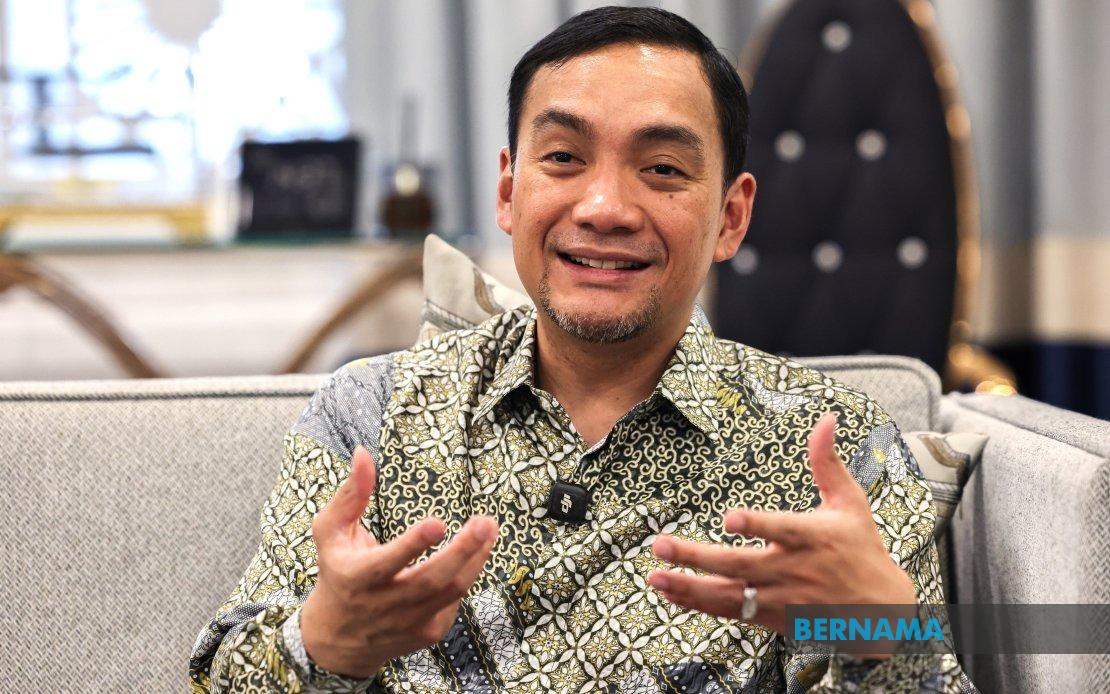
Johor's Barisan Nasional coalition has committed to launching an evening mosque and prayer hall activation programme ahead of the state election scheduled for July 11, positioning spiritual development alongside economic growth as a pillar of regional governance. The Semarak Isya' initiative forms part of a broader 63-point manifesto titled Maju Johor, Kestabilan Dikekalkan, Kemajuan Diteruskan and represents an expansion of the existing Semarak Subuh dawn-prayer programme that has gained traction across the state's religious spaces in recent years.
According to Johor BN chairman Datuk Onn Hafiz Ghazi, the new evening programme aims to position mosques and surau beyond their traditional role as places of worship, transforming them into multifunctional community hubs. The initiative would see religious lectures, spiritual content sessions, and organised community activities scheduled after evening prayers, with complimentary meals provided to worshippers. This approach reflects a growing recognition among Malaysian political parties that grassroots engagement through religious institutions offers substantial electoral and governance advantages, particularly in states with large Muslim populations.
The programme's design targets multiple demographics within the community. Young people are specifically identified as a focal group, with the manifesto recognising that contemporary mosque engagement requires scheduling and programming that aligns with modern family routines and work schedules. By positioning activities after the Isya' prayer—typically conducted between 7:30 and 9:00 pm—the initiative seeks to capture community members whose participation in pre-dawn Semarak Subuh events may prove logistically challenging, thereby broadening the reach of mosque-centred community building.
Onn Hafiz articulated a governance philosophy that extends beyond conventional metrics of development, arguing that sustainable regional progress demands simultaneous advancement in economic output, spiritual values, and social cohesion. This framing positions the BN's approach as rejecting a purely materialist development model in favour of what local political discourse increasingly terms "balanced growth." The assertion reflects wider conversations within Malaysian politics about development indices that incorporate religious and cultural dimensions alongside gross domestic product and infrastructure expansion.
Implementation of Semarak Isya' across all 56 state constituencies would enable substantial customisation based on local religious demographics and community preferences. Rural constituencies may prioritise agricultural welfare support and religious scholarship programmes, while urban areas might emphasise youth mentoring, family counselling services, and interfaith dialogue initiatives. This decentralised approach suggests recognition that a single-template national programme would prove inadequate for Johor's diverse geographic and demographic composition.
The timing of this pledge carries strategic significance. The Election Commission set June 27 as nomination day, with polling occurring two weeks later on July 11, following the state assembly's dissolution on June 1. Political parties utilising religious institution messaging during election campaigns carry both opportunities and sensitivities in Malaysia's plural democracy. The BN's emphasis on expanding inclusive community spaces rather than sectarian religious content indicates careful calibration of messaging to appeal to both Muslim majority voters and the significant non-Muslim populations in constituencies such as Johor Bahru and Kota Tinggi.
The Semarak Subuh programme's existing operational success provides empirical foundation for the evening expansion. That dawn initiative has reportedly achieved measurable participation increases and community satisfaction metrics that the coalition now intends to replicate during evening hours. Both programmes share underlying operational assumptions: that religious institutions possess underutilised community convening capacity, that complementary meals and structured programming increase participation rates, and that political parties maintaining visible investment in mosque modernisation and activation garner substantial goodwill among religious constituencies.
From a Southeast Asian perspective, Johor BN's platform reflects patterns observable across the region where political coalitions increasingly invest in mosque and temple programming as core campaign commitments. Thailand's various coalitions have similarly emphasised Buddhist temple support, while Indonesian parties promote pesantren and community Islamic centre development. This regionalisation of religious institution-based governance suggests that post-pandemic politics increasingly recognises houses of worship as critical social infrastructure deserving explicit policy attention.
The welfare and volunteerism components embedded within Semarak Isya' programming respond to documented community concerns about economic inequality and social fragmentation in Johor. The manifesto's promise of structured welfare activities conducted through mosque networks leverages existing trust relationships and administrative capacity within religious institutions. For economically vulnerable families, mosque-based welfare delivery often proves more culturally accessible and less stigmatising than government bureaucratic processes, potentially explaining the BN's emphasis on this delivery mechanism.
Onn Hafiz's articulation of "true development" occurring when economies expand, citizens prosper, and societal relationships deepen encapsulates a holistic governance narrative that appeals particularly to constituencies concerned about social atomisation accompanying rapid urbanisation. Johor has experienced significant demographic transformation over recent decades, with rural-urban migration and foreign worker influxes altering traditional community structures. Mosque-based programming positioning itself as a stabilising social institution directly addresses anxieties about community fragmentation that political surveys consistently identify across Southeast Asian urban centres.
The programme's emphasis on youth participation warrants particular attention given Malaysia's ongoing concerns about youth radicalisation and engagement with extremist narratives. By providing structured, officially-sanctioned religious content and community belonging experiences within mainstream mosque settings, the Semarak Isya' initiative positions itself as a preventive engagement strategy. This framing aligns with recommendations from Malaysian security analysts and regional counter-extremism experts who emphasise positive pull factors of legitimate community institutions over purely prohibitive security approaches.
Successful implementation would require coordination between state religious affairs departments, mosque management committees, and BN grassroots organisers. Operational challenges including venue capacity, programming consistency across 56 constituencies, volunteer recruitment and training, and budget allocation remain substantial. The manifesto commitment's specificity—targeting every state constituency rather than selected pilot areas—suggests substantial resource commitments, though actual funding mechanisms remain unstated pending potential election victory and government formation.
As Johor voters contemplate their June 27 nominations and prepare for July 11 polling, the Semarak Isya' pledge represents one element within a broader BN campaign narrative emphasising stability, economic continuity, and community-centred governance. Whether implemented as proposed or subjected to budgetary constraints following any electoral victory remains uncertain, but the programme's articulation reflects contemporary Malaysian political understanding that sustainable regional governance integrates economic policy, social infrastructure, and explicit engagement with religious community life.

