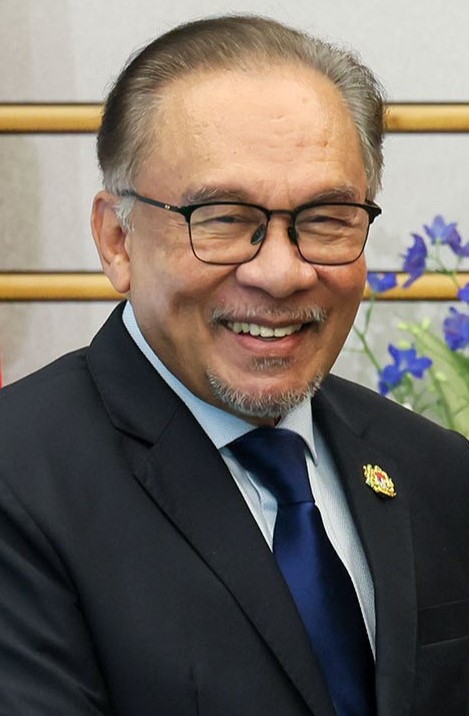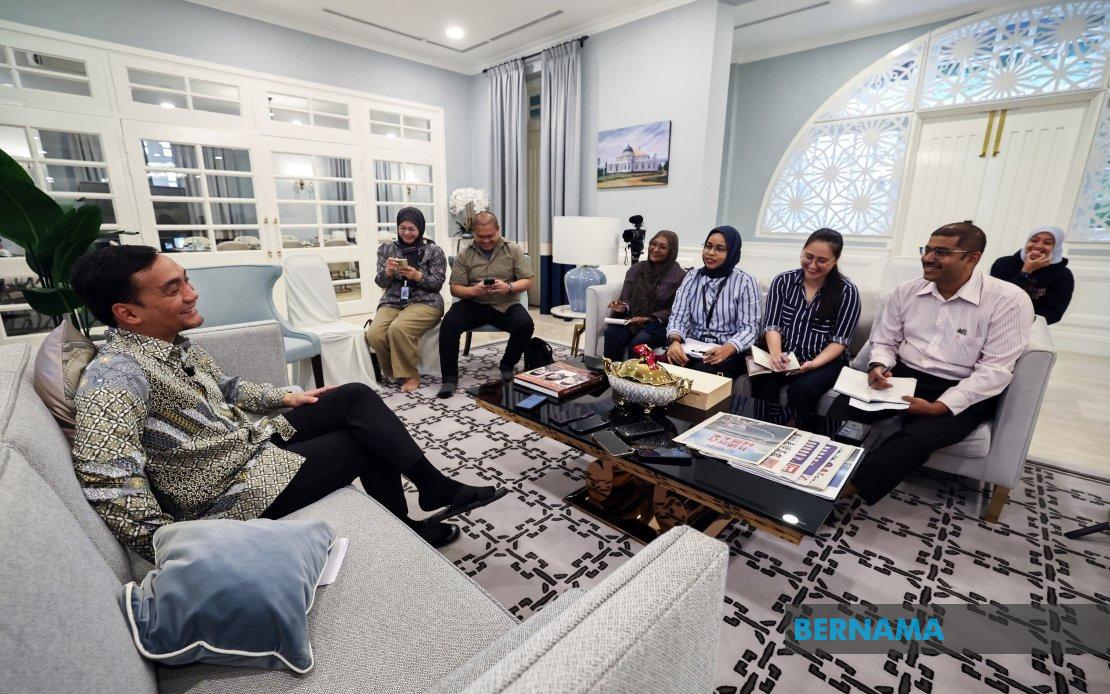
With the Johor state election less than a month away, Johor Menteri Besar Datuk Onn Hafiz Ghazi has sent a carefully calibrated message to party members who will not contest as candidates: their exclusion from the ballot does not diminish their value to the broader Barisan Nasional project. Speaking at his official residence in Saujana, Onn Hafiz acknowledged that not all aspirants can secure candidacy, given the finite number of state assembly seats available, but stressed that meaningful opportunities exist elsewhere within the coalition's ecosystem.
The candidate selection process for the Johor poll, scheduled for July 11, remains fluid even at its advanced stages. Although selection procedures have reached approximately 80 per cent completion, Onn Hafiz revealed that the formal confirmation process—marked by the presentation of watikah letters of appointment—remains the true point of no return. This transparency about the ongoing nature of deliberations reflects the competitive nature of seat allocation within a large and diverse coalition. The Menteri Besar noted that historical precedent exists for withdrawn appointments, underscoring that even those who believe their nominations are secure cannot afford complacency until official documentation is delivered.
The selection criteria adopted by Johor BN reveal a pragmatic approach to candidate vetting, prioritising local credibility and community acceptance over demographics or narrow professional prerequisites. Onn Hafiz articulated the WALI framework—acronyms denoting winnable, acceptable, and likeable candidates—as the philosophical foundation guiding these decisions. Rather than prioritising youth or seniority, the selection process emphasises demonstrated capacity to serve constituents, recognising that charisma or energy without substance holds limited electoral value. This standards-based approach suggests that the coalition is attempting to move beyond patronage-driven selection methods, though critics might argue that implementation often diverges from such stated principles.
Decision-making authority for candidate selection extends well beyond state-level functionaries. Onn Hafiz confirmed that BN president and UMNO president Datuk Seri Dr Ahmad Zahid Hamidi, along with other senior party leadership, must approve all final nominations. This centralised approval structure ensures party discipline and prevents regional leaders from autonomously rewarding loyal supporters. For unsuccessful aspirants, this hierarchical arrangement means that appeals or negotiations may require engagement at levels significantly above state party machinery, a reality that may discourage some from pressing their cases.
Alternative pathways for political engagement offer consolation to those excluded from the candidate lists. Parliament membership represents one avenue, particularly for candidates who narrowly missed state assembly selection or whose profiles might better suit federal representation. Additionally, the party machinery itself provides administrative and organisational roles that, while less visible than elected office, can yield influence and status within coalition structures. Onn Hafiz's framing of these alternative roles suggests that party strategists recognise the risk of demoralisation among rejected candidates and are consciously attempting to retain their continued engagement and labour throughout the campaign period.
The electoral significance of younger voters looms large in Johor's political landscape. Individuals below age 40 constitute between 20 and 40 per cent of the state's population, a demographic substantially larger than many might assume. Despite this numerical weight, Onn Hafiz observed that most current elected representatives have actively cultivated relationships with younger constituents, suggesting that the generational gap between voters and representatives may be less pronounced than national-level discourse sometimes implies. This point carries particular relevance for Southeast Asian democracies where youth voter participation often languishes below participation among older cohorts.
Migrant workers employed across the border in Singapore represent a specific voter demographic that merits targeted mobilisation efforts. Onn Hafiz explicitly encouraged Johoreans working in Singapore to exercise their franchise on July 11, implicitly acknowledging that logistics and awareness gaps may prevent cross-border workers from voting. This outreach reflects the practical reality that tens of thousands of Johor residents maintain employment in Singapore while retaining electoral rights at home. Their participation, while potentially modest in aggregate terms, could prove decisive in closely contested seats, particularly those proximate to the border.
The broader argument offered by the Menteri Besar emphasises that democratic legitimacy derives substantially from turnout rates. Higher electoral participation produces representative outcomes that more accurately reflect genuine public preferences rather than merely those voters who happen to be mobilised or motivated to cast ballots. In a state that formally practises democratic governance, Onn Hafiz's emphasis on maximising turnout rather than suppressing opposition support projects an image of confident incumbency. Whether this rhetorical commitment translates into actual efforts to facilitate voting across all demographic segments remains subject to scrutiny from independent observers.
Onn Hafiz's personal track record and request for renewed mandate anchors the campaign message in incumbent performance rather than abstract ideological appeals. The Menteri Besar asserted that his administration has delivered tangible benefits to Johor residents and pledged continued commitment should voters reelect Barisan Nasional to another term. This emphasis on governance performance over party machinery or factional dynamics represents a potentially substantive basis for electoral support, contrasting sharply with campaigns that rely primarily on ethnic or religious mobilisation.
The nomination process scheduled to conclude on June 27, with early voting on July 7 preceding the main election day of July 11, establishes a compressed timeline for candidate socialisation and campaign execution. This condensed schedule means that unsuccessful candidates must quickly transition from their own ambitions to supporting nominated colleagues, a psychological adjustment that requires party leadership to actively nurture commitment through the mechanisms outlined by Onn Hafiz. The party's ability to retain the energies and loyalty of unsuccessful candidates throughout this compressed period will substantially influence overall campaign effectiveness across Johor's assembly constituencies.
From a regional perspective, the Johor election holds significance beyond state boundaries. As Malaysia's most populous state and a constituent component of one of the nation's largest metropolitan regions, Johor's political direction influences broader perceptions of Barisan Nasional's electoral viability and coalition stability. The management of candidate selection—particularly how gracefully the coalition retains unsuccessful candidates' support—offers a template that other BN state branches may observe or attempt to replicate. For opposition parties operating across Malaysia and Southeast Asia more broadly, the Johor contest provides a case study in incumbency management and coalition discipline.