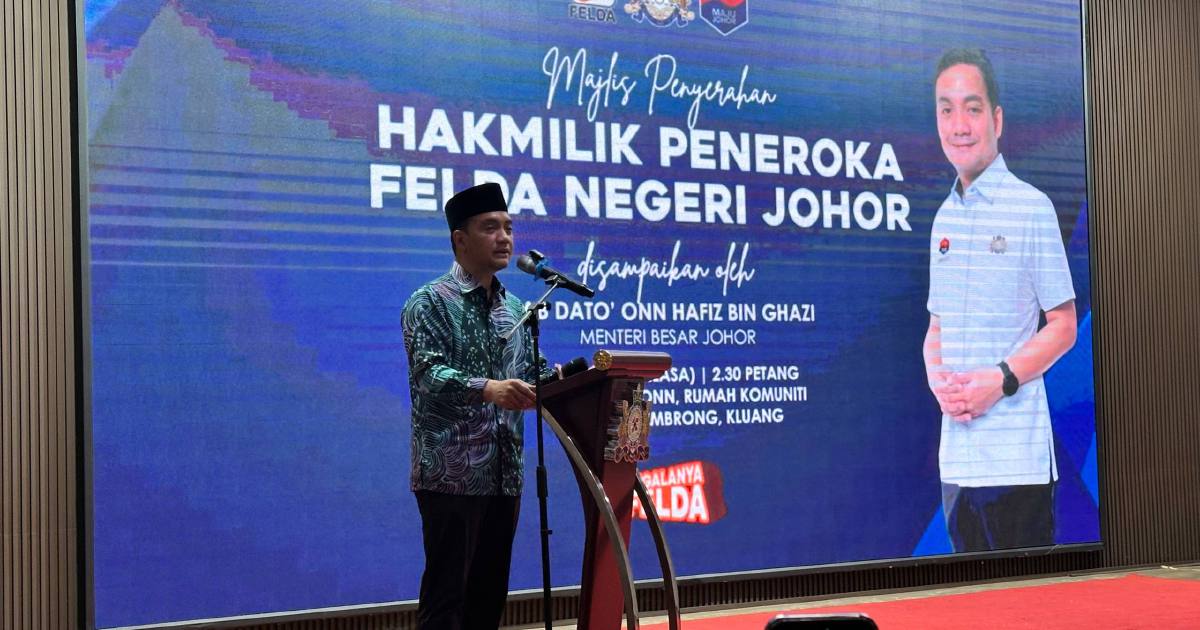
Caretaker Johor Menteri Besar Datuk Onn Hafiz Ghazi has alleged he was prevented from accessing a Felda settlement to carry out an official ceremony awarding land titles to settlers, marking another flashpoint in the politically charged environment surrounding the state elections.
The incident, which Onn Hafiz claims occurred two days before his statement, underscores the mounting tensions as the election campaign intensifies across Johor. The blocking of a caretaker menteri besar from a public development scheme raises significant questions about the allocation of access to government land distribution programmes and who controls such facilities during election periods.
Felda settlements represent some of Malaysia's most significant rural development initiatives, providing smallholder farming opportunities to thousands of families across the peninsula. These communities have historically been politically important constituencies, with land distribution ceremonies carrying symbolic weight during electoral campaigns. The distribution of land titles is typically considered a core government function, making the alleged denial of access to Onn Hafiz particularly contentious.
The timing of the incident, occurring during the caretaker period when political sensitivities run particularly high, adds another layer of complexity to Johor's electoral situation. During caretaker periods, appointed officials technically retain their positions but face limitations on campaign activities. However, the distribution of land titles and awarding of government benefits to eligible settlers falls within routine administrative functions that caretaker officials are ordinarily permitted to execute.
Onn Hafiz's allegation suggests that officials managing the Felda settlement may have interpreted their instructions differently, or that there was coordination between various authorities to restrict his movement. Such restrictions would require official authorization, pointing to potential political coordination at higher levels. The lack of clear explanation for the denial raises concerns about the proper channels through which such decisions are made during caretaker periods.
In Malaysian electoral history, disputes over access to government installations and official ceremonies have frequently become flashpoints between competing political factions. The Felda community, traditionally aligned with UMNO, represents a crucial voting bloc in Johor politics. Control over when and how government benefits are distributed to these communities can influence electoral outcomes, making disputes over access to Felda settlements particularly politically fraught.
The incident also highlights the broader challenge of maintaining administrative neutrality during election campaigns. Caretaker governments are meant to operate as caretakers without advancing partisan interests, yet they retain responsibility for routine government functions. The line between legitimate administrative work and campaign activity can become blurred, particularly when official ceremonies intersect with electoral considerations.
Local government officials managing Felda settlements often face competing pressures during election periods. They may receive instructions from multiple political actors or face uncertainty about appropriate protocols. The alleged refusal to permit Onn Hafiz's entry suggests either explicit orders from higher authorities or an overly cautious interpretation of caretaker period restrictions by settlement officials.
This incident occurs against the backdrop of broader contestation in Johor politics, where multiple coalitions are competing intensely for voter support. Access to government-controlled facilities and the ability to conduct official ceremonies directly influences candidates' visibility and their capacity to communicate their role in government benefits. Restrictions on such access effectively limit a political figure's ability to connect with voters on the ground.
For Felda settlers, such incidents raise questions about political interference in their entitlements and benefits. Land title distribution is fundamentally about protecting property rights and should operate according to administrative procedures rather than political convenience. When settlers perceive that access to government services is being restricted on political grounds, it can erode confidence in institutional neutrality.
The broader implications extend beyond this single incident to questions about institutional independence and the rule of law during election periods. If caretaker officials can be barred from conducting routine administrative functions without clear justification, this suggests either a breakdown in institutional clarity or a deliberate politicization of administrative processes.
For Malaysian observers, particularly those in rural development areas dependent on government schemes, this incident exemplifies the challenges of maintaining clean elections while managing complex bureaucratic structures. It underscores the need for clearer protocols governing caretaker period conduct and explicit guidelines about which officials can access government facilities for which purposes.
As the Johor electoral process continues, how such disputes are resolved will influence broader perceptions about the integrity of the election administration. Whether authorities provide clear explanations for their actions and whether independent mechanisms exist to adjudicate such disputes will shape confidence in the electoral process itself.

