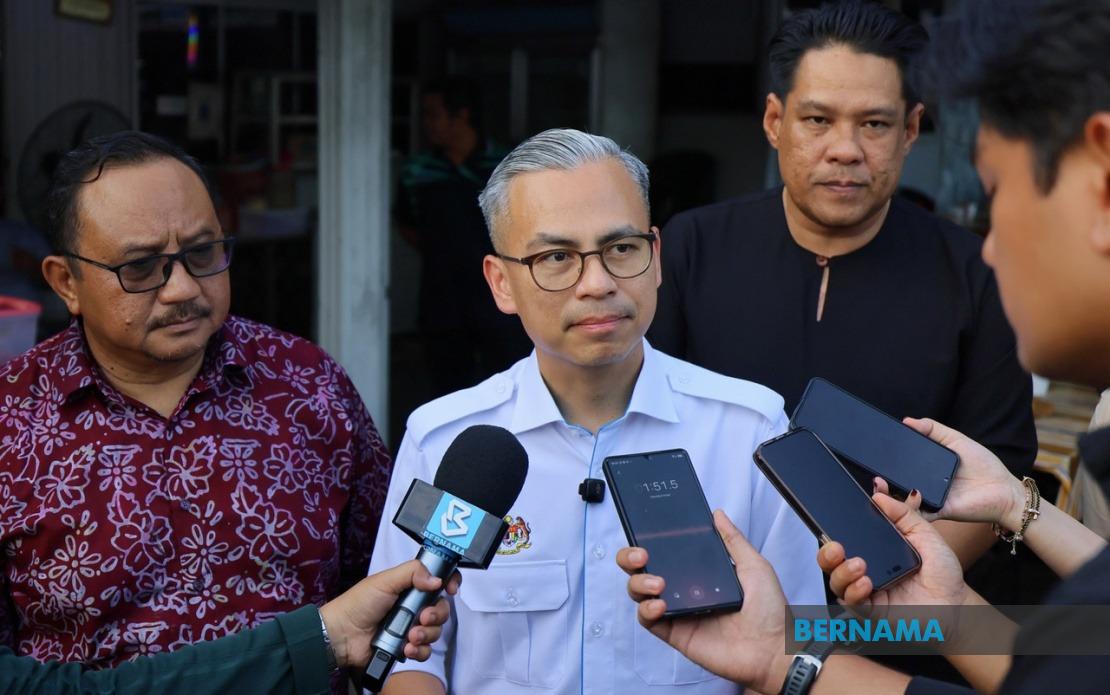
Communications Minister Datuk Fahmi Fadzil has issued a pointed appeal for the Johor State Election campaign to be grounded in factual discourse rather than unsubstantiated attacks, emphasising that the democratic process must unfold with full respect for established protocols and legal boundaries. Speaking during a media engagement in Batu Pahat on June 26, Fahmi stressed that responsible campaigning represents a shared responsibility extending across all political parties, their organisational structures, and their supporter networks as the state moves toward nomination day and the formal launch of electoral activities.
The timing of Fahmi's intervention carries particular significance given that nomination day falls immediately after his statement, marking the official commencement of the formal campaign period. His emphasis on healthy political discourse underscores growing concerns about the standards of public debate during election cycles, a pattern that has become increasingly visible across Malaysian electoral contests in recent years. The appeal signals the government's commitment to ensuring that the 16th Johor State Election demonstrates a markedly different tone compared to previous contests, setting a precedent for how politicians and their supporters should conduct themselves during the campaign season.
Fahmi made explicit the consequences that await those who transgress electoral conduct standards. Both the Election Commission and the Royal Malaysia Police have been positioned as active enforcement bodies ready to pursue legal measures against any party discovered violating the rules. This dual oversight mechanism represents a comprehensive approach designed to deter potential offenders and maintain the integrity of the electoral process. The clarity of this warning demonstrates that the government is not merely offering suggestions but establishing firm guardrails within which legitimate political competition must operate, a distinction that carries weight for all actors involved in the campaign.
The Malaysian Communications and Multimedia Commission has intensified its surveillance operations in collaboration with social media platforms to intercept the circulation of misleading content. Particularly sensitive are matters relating to the constitutional pillars commonly referenced as 3R—Royalty, Religion, and Race—areas where inflammatory rhetoric carries heightened risks of social division. This coordinated effort acknowledges the transformative role digital platforms have assumed in shaping political narratives, recognising that misinformation spreads with unprecedented velocity through these channels. The involvement of major technology companies signals recognition that private sector cooperation remains indispensable in combating the dissemination of false material during election periods.
For journalists and media practitioners covering the election, Fahmi announced the establishment of dedicated facilities designed to support their professional activities. A primary media centre has been established in Johor Bahru to serve as a hub for news gathering and coordination. Beyond this central location, the National Information Dissemination Centre network extends throughout the state at the constituency level, providing journalists with multiple access points for their reporting requirements. Fahmi explicitly encouraged media professionals to maximise these resources, recognising that adequate infrastructure for press operations contributes to the quality and breadth of election coverage available to the public.
The provision of local NADI facilities at each State Legislative Assembly constituency represents a deliberate decentralisation strategy, ensuring that journalists need not converge on a single location to accomplish their professional duties. This approach facilitates more distributed reporting, potentially enabling better ground-level coverage of campaign developments across the state's varied constituencies. Fahmi's specific invitation for journalists to utilise these facilities for both workspace and content distribution demonstrates acknowledgement that the logistics of modern campaign reporting require adequate support infrastructure, a consideration that may have been overlooked in previous electoral cycles.
Parallel to his emphasis on campaign standards, Fahmi addressed practical governance concerns affecting the Batu Pahat area. Following representations from local Member of Parliament Onn Abu Bakar regarding internet disruptions and connectivity dead zones, Fahmi committed to directing the MCMC to investigate these service deficiencies. This responsiveness to specific infrastructural grievances illustrates how electoral engagement can catalyse attention to longstanding local issues that citizens encounter in their daily lives. The connectivity problems reported in Batu Pahat reflect broader challenges facing rural and semi-urban areas across Malaysia, where network coverage remains inconsistent despite the nation's aspirations toward digital connectivity.
Onn characterised Fahmi's visit as an opportunity to channel community concerns directly to relevant government ministers, bypassing conventional bureaucratic pathways that often dilute the urgency of grassroots complaints. His observation that certain grievances fail to reach appropriate decision-makers highlights persistent gaps in how government listens to and processes citizen feedback. The informal programmatic format created space for these direct interactions, suggesting that the casual engagement setting may prove more effective at surfacing authentic local issues than more formal administrative channels typically available to elected representatives.
The election timeline established by the Election Commission reflects the compressed schedule governing this contest. Nomination day on June 27 marks the formal opening of the campaign, while polling day on July 11 follows approximately two weeks later. This condensed timeline, following the State Assembly's dissolution on June 1, compresses the period within which candidates can campaign and constituencies can be contested. Voters and candidates alike must operate within this accelerated framework, demanding efficient organisation from all electoral participants. The brief campaign window may further emphasise the importance of responsible, factual discourse since misinformation can propagate more readily when there is limited time for correction and counter-narrative to circulate.
The election encompasses all 56 State Legislative Assembly seats across Johor, making it a comprehensive assessment of the state government's performance and the electorate's preferences across diverse constituencies. The state's political complexion will be determined by how voters distribute their support among competing parties and candidates during this singular polling event. The outcomes will have ramifications extending beyond Johor itself, potentially influencing national political calculations and the broader federal political landscape. Fahmi's interventions regarding campaign standards and media infrastructure thus acquire significance not merely as election management concerns but as indicators of how Malaysia's political system is evolving in response to contemporary challenges of democratic discourse and electoral integrity.

