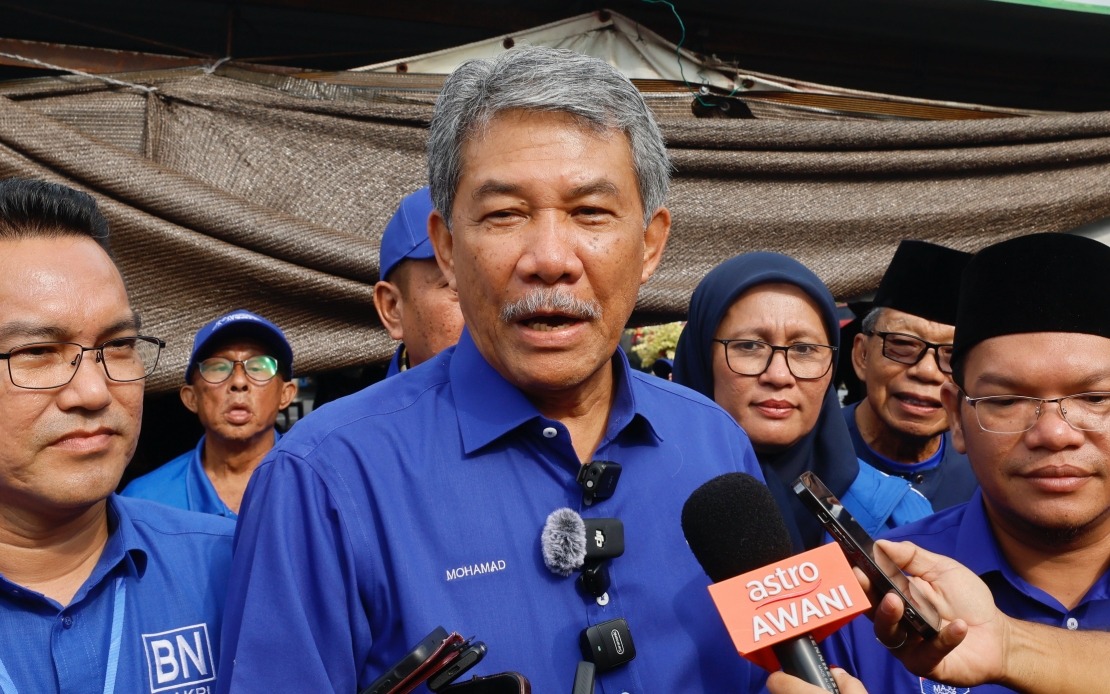
As Johor gears up for its state election on July 11, UMNO deputy president Datuk Seri Mohamad Hasan has issued a stark reminder to all contesting parties that the campaign season demands maturity and restraint. Speaking during a constituency meet-and-greet in Johor Bahru, Mohamad emphasised that whilst parties should freely articulate their policy positions and electoral offers, the intensity of the campaign must not corrode the delicate cooperative arrangement that currently sustains Malaysia's Federal Government. His words reflect growing anxiety within the coalition that aggressive state-level competition could fracture the Unity Government framework that has held since 2023.
The Foreign Minister drew a careful distinction between permissible campaign conduct and conduct that crosses into the personal and divisive. He acknowledged that political jousting, friendly teasing, and robust policy debate are natural features of any electoral contest. Yet he cautioned contestants against allowing such exchanges to veer into territory that questions the character or integrity of opponents in ways that generate lasting bitterness. Such escalation, he suggested, risks poisoning the working relationships that federal coalition partners must maintain with one another regardless of the outcome in individual state races.
The context here matters significantly for Malaysian readers. The Unity Government, formally established after the 2022 general election, brought together UMNO, PKR, DAP, and other parties in a power-sharing arrangement designed to provide stable governance after years of political turbulence. However, this coalition has always been fragile, held together more by the necessity of avoiding worse alternatives than by genuine ideological alignment. State elections in particular can destabilize such arrangements, as regional politicians may feel emboldened to pursue more partisan agendas when their own state power is at stake.
Modhamad also confronted a narrative that has circulated among some observers: the idea that the Johor state election is somehow connected to efforts to secure a pardon or reduced sentence for former Prime Minister Datuk Seri Najib Tun Razak. This allegation has repeatedly surfaced in Malaysian political discourse, and the Deputy President's direct rebuttal signals UMNO's concern that such speculation could undermine public confidence in the independence of state institutions. He grounded his argument in constitutional principle, noting that Malaysia remains committed to the rule of law and that UMNO has always respected that commitment.
His clarification on the mechanics of power is instructive. A Menteri Besar, the chief minister of Johor, wields significant authority over state affairs but possesses no prerogative in matters of federal clemency or sentencing. The power to grant pardons rests exclusively with the Yang di-Pertuan Agong, the Constitutional Monarch. By divorcing the state election from any notion of influencing the Prime Minister's fate, Mohamad sought to prevent the campaign from becoming entangled with what remains a deeply divisive national issue. This separation is important because any perception that state elections are being fought over federal matters such as high-profile convictions could further erode public trust in electoral integrity.
The Johor state election represents one of the most closely watched electoral contests in the country at present. With 172 candidates competing for 56 seats in the State Legislative Assembly, the race carries implications well beyond the state's borders. A convincing UMNO victory would strengthen the party's position within the Unity Government and reinforce its claim to be the dominant political force in the peninsula's most economically developed state. Conversely, a result that fragments UMNO's vote or sees opposition parties make substantial gains could embolden those questioning the stability of federal arrangements.
Early voting is scheduled to take place immediately following Mohamad's remarks, with the main polling day set for July 11. The compressed timeline adds urgency to campaign messaging, and candidates across party lines have been working intensively to reach voters. The sheer number of contenders—172 for just 56 seats—indicates the intensity of competition and the diversity of political representation being offered to Johor's electorate. This crowded field means that even fragmented opposition votes could materially affect outcomes in several constituencies.
Modhamad's plea for campaign propriety can also be read as a message aimed inward at UMNO's own candidates and supporters. The party has substantial organisational resources and a deep patronage network across Johor, advantages that could tempt overconfidence or aggressive tactics. By publicly committing to a civil campaign, the UMNO leadership has set expectations that its grassroots activists would find difficult to openly violate without appearing to contradict their own party president.
The broader context of Malaysian politics suggests that Mohamad's warnings are not merely rhetorical. Previous state elections have sometimes featured harsh personal attacks, rumour campaigns, and divisive rhetoric that damaged political relationships long after voting concluded. In an environment where coalition stability is already precarious, any deepening of inter-party animosity could provide additional incentive for partners to explore alternative alignments or for sitting government members to defect to opposition ranks.
For Southeast Asian observers, the Johor election also carries regional significance. Malaysia's political stability directly influences broader regional dynamics, affecting everything from trade relationships to security cooperation. A state election campaign marked by civility and policy-focused debate would suggest that Malaysia's political elite have learned lessons from recent cycles of instability. Conversely, a campaign descending into personal recriminations and institutional attacks could signal that the country remains vulnerable to renewed political volatility.
The stakes are particularly high because Johor has historically served as a political bellwether for the wider Malay-Muslim electorate. Election outcomes here have often foreshadowed shifts in federal political fortunes. A strong performance by any single party in Johor thus reverberates across the entire political system, potentially encouraging or discouraging similar parties in other states. This multiplier effect means that the tone and conduct of the Johor campaign carries consequences extending far beyond the state itself.
As polling day approaches, Mohamad's message appears designed to establish a baseline of acceptable conduct whilst making clear that UMNO intends to compete vigorously on policy grounds. The distinction he drew between legitimate campaign activity and personal attacks seeks to preserve the possibility of continued cooperation at the federal level regardless of the state-level outcome. Whether all contesting parties will honour this implicit covenant remains to be seen, but the clear articulation of expectations may help constrain the worst impulses that state elections sometimes unleash.

