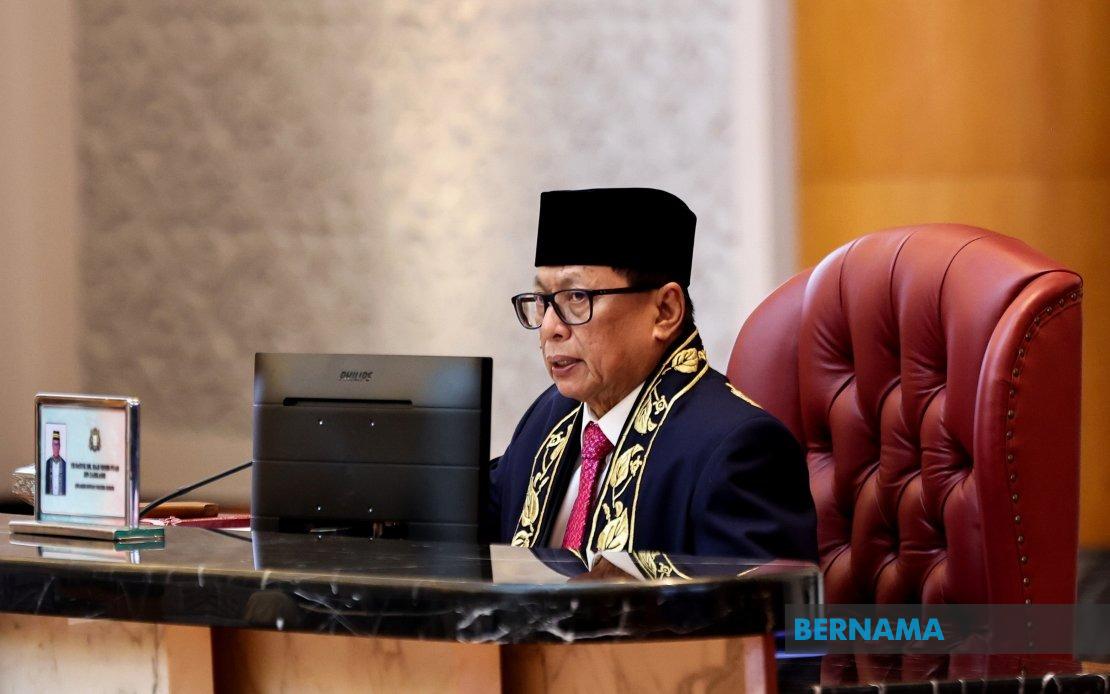
Datuk Dr Mohd Puad Zarkashi, the current assemblyman for Rengit and Speaker of the Johor State Legislative Assembly, has announced his decision to step down from electoral politics ahead of the state polls scheduled for July 11. The veteran politician disclosed his intention through a Facebook post on Monday, confirming months of deliberation on the matter. His move signals a significant generational shift within Johor's ruling coalition as the state heads toward fresh elections.
The 69-year-old lawmaker made the decision roughly a year ago but only formally communicated it to party leadership recently. He informed UMNO president Datuk Seri Dr Ahmad Zahid Hamidi and Johor UMNO chairman Datuk Onn Hafiz Ghazi of his plans two weeks prior to the announcement. The timing reflects a measured approach, allowing the party machinery sufficient notice to identify and vet potential replacement candidates for the constituency.
Mohd Puad's primary rationale centres on age and career longevity. Having already reached 69, he calculated that contesting would potentially commit him to another five-year term, placing him at 74 by the cycle's conclusion. He views this threshold as inappropriate for electoral office, particularly when substantial youth talent exists within the party ranks. His reasoning represents an increasingly rare display of voluntary succession planning in Malaysian politics, where many politicians cling to seats until forced to relinquish them through electoral defeat or regulatory term limits.
The speaker explicitly advocates for generational renewal within UMNO's ranks in Johor. He contends that candidates aged 50 or younger deserve priority consideration, as they bring contemporary perspectives and energy to governance. This position implicitly endorses Onn Hafiz's leadership transition, suggesting that the younger chairman requires a modernised team to effectively administer the state. Such rhetoric, whether genuine or strategic, positions Mohd Puad as forward-thinking rather than obstructionist—a potentially important distinction for his legacy within party circles.
Beyond his personal withdrawal, Mohd Puad has offered prescriptive guidance on future candidate selection. He proposed that the party emphasise educational credentials, moral integrity, genuine ideological commitment to the struggle, and sophisticated understanding of Malaysia's national trajectory. These criteria reflect concerns within UMNO about candidate quality and public perception, particularly following various scandals involving elected officials. His suggestions implicitly acknowledge that electoral victory means little if representatives subsequently undermine institutional credibility through personal misconduct.
During his tenure representing Rengit, Mohd Puad secured a majority of 1,920 votes in the 2022 state election. While this margin remained comfortable rather than commanding, it established him as an incumbent with demonstrable constituent support. His voluntary relinquishment of this proven seat differs markedly from politicians seeking retirement after narrow electoral victories. The decision arguably enhances his stature as someone prioritising party interests above personal political survival.
As Speaker, Mohd Puad occupies a constitutionally significant position within the assembly, serving as custodian of parliamentary procedure and institutional dignity. His departure from the electoral arena does not necessarily terminate this role immediately, as he indicated he would settle outstanding matters requiring attention before nomination day on June 27. The precise timing of any speaker's replacement remains unclear, though the convention typically requires the assembly to elect a new speaker following election results and government formation.
His gratitude toward Sultan Ibrahim, King of Malaysia for consenting to his appointment as speaker underscores the ceremonial dimensions of the role. While largely procedural, the speaker's office carries symbolic weight in the Malaysian constitutional framework, and his retention of this position briefly beyond the electoral cycle may serve useful continuity purposes for the incoming assembly. This distinction between electoral candidacy and institutional office illustrates the complex layering of roles within state governance.
The Rengit constituency, which Mohd Puad has represented, now enters a period of open candidacy within UMNO's selection process. Potential successors will compete for party endorsement, with Onn Hafiz and senior leadership ultimately determining the nominee. The process typically involves evaluating candidates against criteria such as grassroots organisational capacity, fundraising ability, and perceived electability based on demographic analysis of the constituency.
Mohd Puad's withdrawal exemplifies broader transitions occurring within Johor's political establishment. The state's governance structure continues evolving through the replacement of established figures with newer cohorts, though the pace and success of generational transition varies considerably across constituencies. His relatively graceful exit may influence how colleagues approach their own electoral futures, potentially normalising voluntary retirement in Malaysian political discourse.
The July 11 election itself represents a critical inflection point for Johor's governance, determining whether the current coalition maintains power or faces electoral upheaval. Mohd Puad's departure removes one incumbent from the equation, opening possibilities both for continuity through his successor and for opposition parties seeking to mobilise dissatisfied voters. His decision thus possesses significance extending beyond individual career considerations into the broader competitive dynamics shaping Malaysia's electoral landscape.