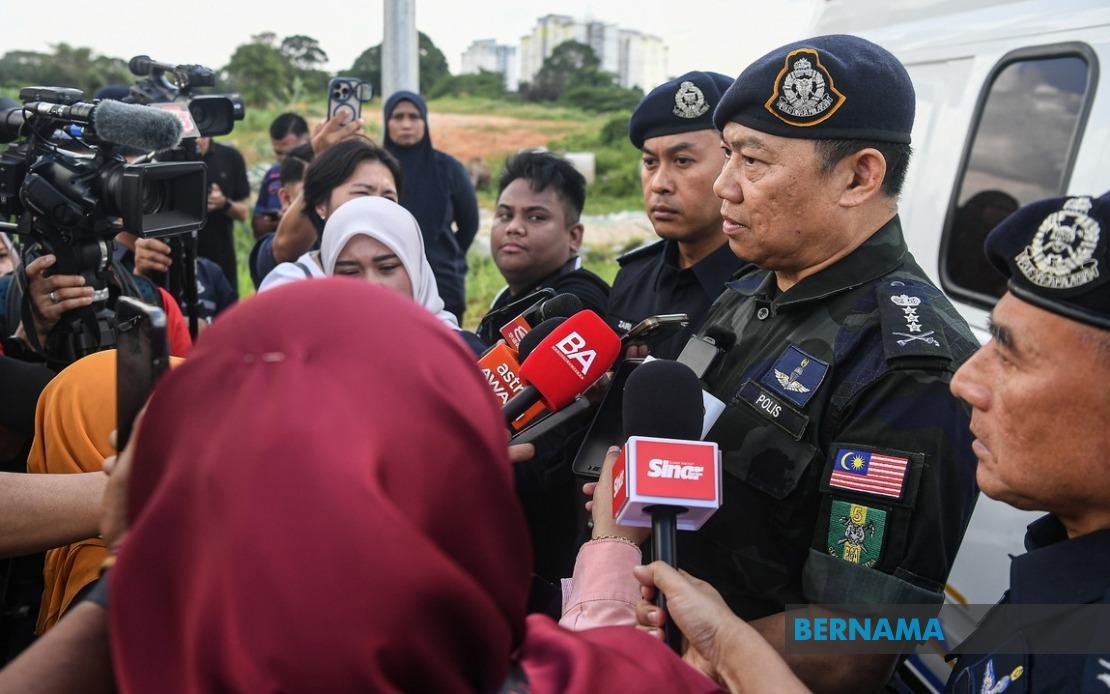
The nomination phase of Johor's 16th state election unfolded without complications on June 27, as candidates filed their nominations across all 56 polling stations throughout the state. The seamless administration of the process reflected coordinated preparations by electoral authorities and security forces, setting a positive tone for the campaign period that follows. Johor police chief Datuk Ab Rahaman Arsad confirmed that no troubling incidents had been brought to law enforcement's attention during the day's activities.
To maintain order and security during the critical nomination phase, Johor police fielded a substantial force of 4,832 officers and personnel stationed across nomination centres. This deployment underscored official commitment to creating a safe environment for candidates and election officials to carry out their constitutional duties. The scale of the police presence, while considerable, was calibrated to observe polling activities without unnecessarily intimidating participants in the democratic process.
Officials have already begun approving campaign materials and promotional activities, with 26 campaign permits issued to various political entities as of the nomination deadline. Datuk Ab Rahaman signalled that the approval process would remain open throughout the formal campaign period, allowing parties flexibility to organize grassroots mobilization efforts. This administrative responsiveness suggests authorities intend to facilitate robust political competition within legal bounds.
The police chief took the opportunity to reaffirm expectations for all contestants and their supporters, emphasizing that campaign conduct must remain within established legal frameworks. Political parties and candidates were reminded that while competition is encouraged, it must occur in ways that respect public order and democratic conventions. This guidance reflected a broader institutional concern that heated electoral competition not spill into street-level confrontation or violence, a concern particularly acute in Malaysian electoral contexts where inter-communal sensitivities occasionally surface during high-stakes contests.
Datuk Ab Rahaman further cautioned against any conduct that might destabilize public peace, making clear that police would take enforcement action against those who crossed legal lines. The statement served as both warning and reassurance—warning to those tempted to exceed electoral bounds, and reassurance to ordinary citizens that authorities stood ready to intervene if necessary. This balancing act between permitting vigorous campaigning and preventing disorder remains central to managing democratic processes in multi-ethnic societies.
The Election Commission has structured the remaining electoral calendar to compress the campaign period while allowing sufficient time for public deliberation. Early voting is scheduled for July 7, providing opportunities for voters unable to cast ballots on the main polling date. The compression reflects administrative efficiency but also contemporary recognition that extended campaigns can exhaust public patience and increase opportunities for tensions to escalate. By concentrating voting into a brief window, authorities aim to minimize friction points while respecting voters' schedules.
With nominations completed and the formal campaign underway, political parties across Johor's spectrum now enter the phase where ground organization, messaging discipline, and candidate visibility become paramount. The smooth nomination process suggests that partisan rivalries, though intense on policy and personality grounds, have not devolved into the kind of street-level antagonism that occasionally complicates Malaysian elections. This working relationship between contending parties—demonstrated through orderly nomination proceedings—provides foundation for conducting the actual polling and vote-counting phases without disruption.
For Malaysian observers, Johor's electoral exercise carries significance beyond the state itself. As the most populous state and one with substantial economic influence, Johor's political complexion affects national coalition arithmetic and federal policy priorities. The state has consistently been electorally competitive, with different coalitions controlling state government across recent election cycles. The 16th state election thus represents opportunity for political realignment, potentially affecting Kuala Lumpur's national calculations.
The Election Commission's preparation and police coordination in executing a smooth nomination day reflected institutional learning from previous electoral cycles. Electoral authorities in Malaysia have progressively refined operational procedures and security protocols, reducing logistical friction while maintaining safeguards against irregularity. The Johor nomination process demonstrated these refinements working in practical conditions, with thousands of nomination documents processed, multiple candidacies registered or rejected, and the entire machinery functioning without breakdown or visible controversy.
Looking forward, the main campaign period between nomination day and polling on July 11 will test whether the peaceful conduct established during nominations persists. Campaign rallies, door-to-door canvassing, and media engagement offer additional opportunities for tensions to emerge, particularly as parties escalate their messaging and mobilization efforts. The foundation established through orderly nominations, combined with police readiness and political party discipline, suggests authorities are positioned to manage this next phase effectively, though eternal vigilance remains necessary in managing democratic competition in diverse societies.

