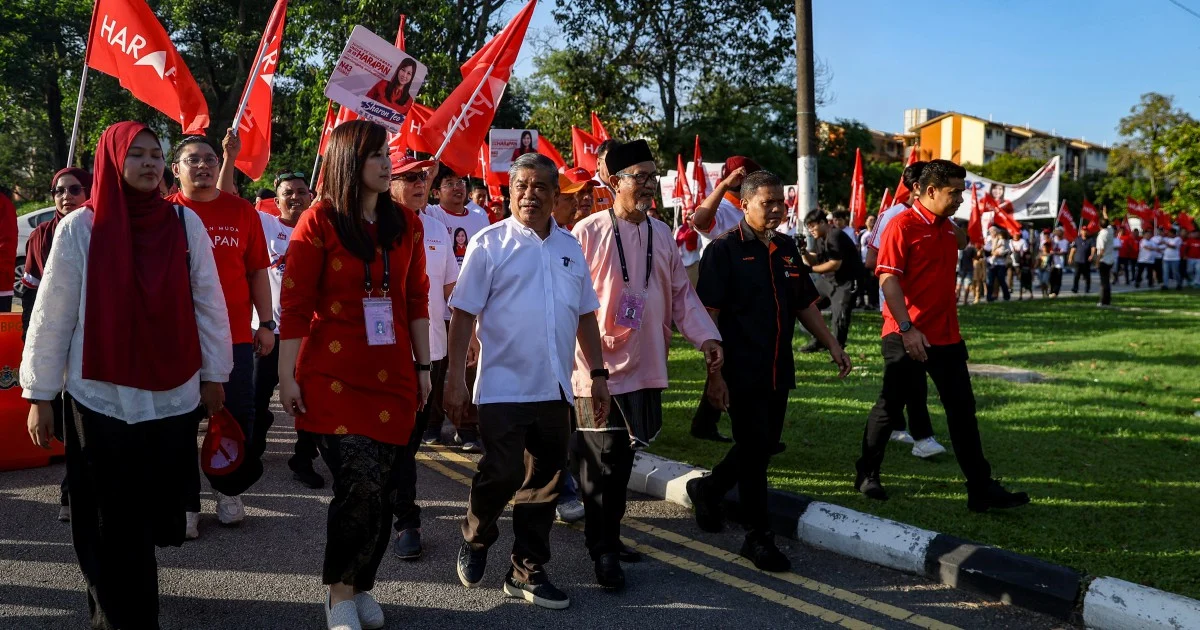
Sharon Teo arrived at the nomination centre in Pasir Gudang to a groundswell of public enthusiasm on behalf of Pakatan Harapan, the opposition coalition contesting elections in Johor. Supporters gathered at the Dewan Muafakat Taman Mawar facility to witness the filing of her candidacy for the Permas state constituency, generating sustained vocal backing that underscored the coalition's efforts to mobilise voter sentiment ahead of the poll. The audible expressions of support reflected broader campaign momentum as Pakatan Harapan positions itself as an electoral alternative in the southern state.
The Permas seat represents a significant battleground in Johor's political landscape. Located within Pasir Gudang, a district that has proven competitive in recent electoral cycles, the constituency encompasses diverse communities with varying economic interests. Manufacturing workers, traders, and service-sector employees dominate the area, making bread-and-butter issues central to voter concerns. For Pakatan Harapan, fielding a candidate in this locality signals commitment to challenging the established political order that has long dominated Johor politics.
Johor's electoral dynamics remain complex despite Pakatan Harapan's previous gains in the 2022 general election. The state, Malaysia's second-largest by population and a significant economic engine, has historically tilted toward Barisan Nasional, though recent years have witnessed shifting voter preferences. Pasir Gudang district in particular has seen closer contests, making it an area where coalition performance could swing either direction. The visible support channelled toward Teo's candidacy suggests the coalition believes it can consolidate voter backing in urban and semi-urban constituencies.
Sharon Teo's nomination reflects Pakatan Harapan's candidate selection strategy for the state elections. The coalition has sought to field candidates with community connections and appeal across demographic divides. As an incumbent or challenger, her profile matters significantly in Permas, where name recognition and perceived accessibility influence voting behaviour. The enthusiastic reception upon her arrival at the nomination centre indicates groundwork may have already established her as a recognisable figure among sections of the electorate.
The chanting of "Johor undi Pakatan Harapan"—literally calling for Johor to vote for Pakatan Harapan—represents organised grassroots mobilisation. This form of vocal support serves multiple functions: it energises campaign volunteers, generates media attention, and signals to undecided voters that the coalition possesses organisational capacity and popular backing. In contemporary Malaysian politics, such demonstrations matter for narrative-building, allowing the coalition to project momentum even before formal campaigning reaches its peak.
For Malaysian observers, Johor elections carry significance beyond the state itself. As a major economic and population centre, electoral outcomes there influence national political calculations. How Pakatan Harapan performs in constituencies like Permas provides indicators of the coalition's resilience outside its traditional strongholds and its ability to compete in previously Barisan-dominated territory. Success in such marginal seats could reshape the broader political balance.
The nomination process itself marks a formal milestone in the electoral calendar. Once candidates file nominations and campaigns commence in earnest, the next phase involves door-to-door engagement, town halls, and media appearances where policy platforms become more explicitly articulated. For Pakatan Harapan in Johor, this period will test whether initial enthusiasm translates into sustained voter commitment across the diverse constituencies the coalition contests.
Voter sentiment in Johor has evolved considerably over recent years, driven partly by cost-of-living pressures, employment concerns, and infrastructure development priorities. Urban constituencies particularly have shown receptiveness to opposition messaging on economic management and anti-corruption platforms. Whether such receptiveness translates into actual votes during elections remains contingent on campaign effectiveness, candidate credibility, and the coalition's ability to counter narratives from competing political forces.
The gathering at the Permas nomination centre also reflects broader trends in Malaysian electoral politics, where demonstrations of popular support have become routine features of candidate filings. Media coverage of enthusiastic crowds sends signals about candidate viability and coalition strength to both supporters and opponents. For Pakatan Harapan, such scenes help construct a narrative of resurgent political fortunes in a state where it seeks greater representation than previously secured.
Looking ahead, Permas will become a closely-watched constituency in the Johor electoral contest. The coalition's success here depends not merely on initial enthusiasm but on sustained engagement with voters, clear articulation of policy alternatives, and effective ground organisation throughout the campaign period. Teo's nomination represents the beginning rather than the conclusion of efforts to win this particular seat, with the actual election contest determining whether vocal support among supporters translates into electoral victory.

