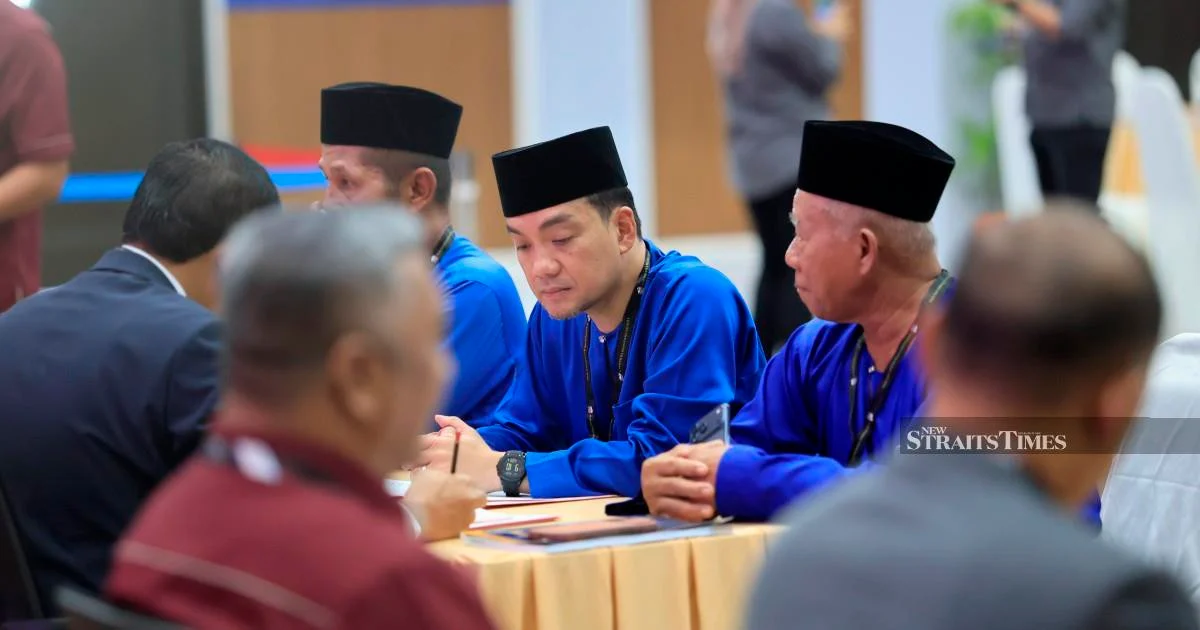
The window for candidates to formally register their intent to contest Johor's 16th state election has definitively closed, with all 56 nomination centres across the state shutting their doors at 10am today. This marks a critical juncture in the electoral timeline, transitioning the process from registration to the substantive campaign phase that will precede polling day. The widespread network of nomination centres—spanning Johor's diverse geography from urban Johor Baru to rural districts—processed registrations over a compressed nomination period that allows the Election Commission to verify candidate eligibility and prepare the official candidate list.
The closure of nomination centres simultaneously across all locations ensures administrative uniformity and prevents last-minute discrepancies that could create legal complications. This statewide approach reflects the Election Commission's standardised protocols for managing large-scale electoral events, whereby all qualified candidates must complete their formal candidacy declarations before a hard deadline. For political parties organising across Johor, which has 56 state assembly seats, the closure signals the end of internal deliberations over candidate selection and the beginning of phase where sitting representatives and newly announced candidates must campaign to secure voter support.
Johor's electoral process carries particular significance for the broader Malaysian political landscape. As a major state with a substantial electorate, the composition of the Johor State Assembly directly influences coalition mathematics at the national level and determines which political faction will govern the state government. The state has experienced considerable political volatility in recent years, with shifts in power and changing political allegiances among elected representatives. This has made the nominating phase especially consequential, as parties strategise candidate deployment to consolidate support in competitive constituencies and recapture ground lost in previous contests.
The 56 nomination centres' closure at a fixed time means that election officials will now proceed to verify candidate papers, cross-check statutory declarations, confirm party endorsements, and confirm compliance with all regulatory requirements. Candidates who have been formally nominated will move into the campaigning phase, during which they must reach out to constituents to articulate their platforms and secure votes. The nomination process closure also activates heightened security protocols, as the election framework transitions from a registration period to one where official candidates are publicly known and campaign activities intensify.
For Malaysian observers and political analysts, the completion of this nomination phase enables clearer assessment of electoral dynamics. The field of candidates contesting each seat will determine whether contests are straight fights between two major parties, complex multi-cornered races with smaller parties, or contests between candidates from the same party split across rival factions. Such configuration directly impacts campaign strategies and voter behaviour. In recent Malaysian elections, contests featuring more than two or three credible candidates have often produced fragmented results where winning candidates secured less than 40 per cent of votes cast, particularly when opposition was divided.
The Johor election represents a test of political momentum in a state where the Barisan Nasional coalition maintains a traditional stronghold, yet has faced sustained challenges from opposition movements. The nomination of candidates across 56 seats now crystallises the contest framework. Urban constituencies may feature intense battles between coalition candidates and opposition forces with strong ground support, while rural and semi-rural seats may lean toward the ruling coalition with varying competition levels. The candidate list released following nomination verification will reveal whether incumbents faced de-selection, whether new faces were introduced, and whether any candidates switched party affiliations immediately before nomination closure.
From an administrative perspective, the Election Commission must now compile and publish the official list of nominated candidates, typically within days of nomination closure. This document becomes the definitive record for campaign purposes and establishes the formal candidacy that carries legal consequences. Any nomination objections or disputes must be resolved through prescribed electoral procedures before the candidate list becomes final. The commission simultaneously activates election machinery for campaign period commencement, including deployment of polling locations, training of election workers, and security coordination across the state.
For voters in Johor, nomination closure marks the moment when their electoral choices become concrete. Rather than engaging with theoretical possibilities of potential candidates, Johor voters now know precisely which individuals are seeking their votes, which parties they represent, and what platforms they advance. This transition from nomination to campaigning often sees significant shifts in voter engagement, as campaign activities become more visible and intensive. Media coverage escalates, candidate announcements proliferate, and grassroots mobilisation intensifies across all political camps.
The 56 nomination centres' simultaneous closure also concludes a logistically complex exercise requiring coordination between state-level election officials, district returning officers, polling station managers, and security personnel. Maintaining consistent closure times prevents parties from gaining procedural advantages through technical interpretation of deadlines. This rigorous standardisation reinforces the institutional independence that election commissions must demonstrate to maintain public confidence in electoral integrity.
With nominations now concluded, attention shifts to campaign dynamics and voter mobilisation. The next critical milestone will be the official publication of the final candidate list, followed by the commencement of the formal campaign period, and ultimately polling day. For Johor's political community and broader Malaysian observers monitoring the state's electoral trajectory, this nomination conclusion represents the formal crystallisation of contest parameters and the opening of the public campaign phase.

