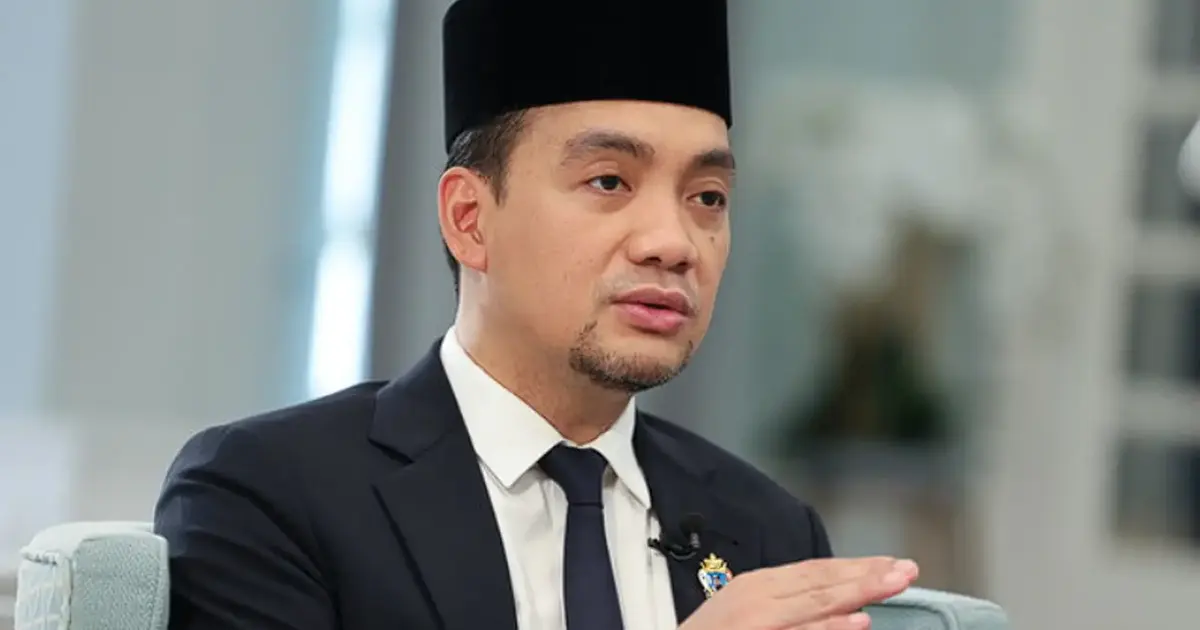
Johor's caretaker menteri besar Onn Hafiz has moved to quell concerns about institutional overreach, asserting that the Sultan's role in approving the dissolution of the state assembly represents nothing more than a constitutional formality required under Malaysia's federal structure. His clarification addresses growing scrutiny over the pace and circumstances surrounding the assembly's termination, a sensitive matter in a state where the Crown's influence remains deeply embedded in political procedures.
The distinction Onn Hafiz draws between legitimate royal prerogative and improper political intervention reflects a broader constitutional reality often misunderstood by observers unfamiliar with Malaysia's unique arrangement of state governance. Each of Malaysia's thirteen states maintains a monarch or royal head of state whose consent is mandatory for significant parliamentary actions, including the dissolution of assemblies. In Johor's case, the Sultan's assent is not discretionary but rather a procedural checkpoint that cannot be bypassed—a safeguard written into state law to prevent arbitrary executive action.
Understanding this constitutional framework proves essential for grasping why Onn Hafiz's statement carries weight beyond mere semantics. When state executives dissolve assemblies, they do so knowing they must secure royal approval beforehand. This requirement differs markedly from parliamentary systems without constitutional monarchies, where a prime minister might exercise near-absolute power to call elections. Malaysia's system instead distributes authority across multiple institutions, preventing any single actor from unilaterally reshaping the political landscape. The Sultan's role acts as a constitutional brake, ensuring that dissolution decisions cannot proceed without oversight.
The timing of Onn Hafiz's clarification suggests mounting political pressure regarding how swiftly the assembly dissolution has advanced. In recent years, Malaysian politics has witnessed heated debates over whether royal institutions should intervene more actively in governance disputes, particularly when state governments face instability or loss of parliamentary support. Some observers worry that delegitimised leaders might manipulate assembly dissolutions to escape accountability, while others fear that monarchs could weaponise their assent powers to favor particular factions. These competing anxieties have transformed procedural questions into matters of high principle.
Johor's situation reflects these tensions acutely. As one of Malaysia's most politically significant states and home to a powerful sultanate with substantial wealth and historical autonomy, Johor has long maintained distinctive governance patterns. The state's royal household exercises influence extending well beyond ceremonial functions, commanding respect across Malaysia's federation and sometimes attracting international attention during constitutional disputes. Any controversy involving Johor's Sultan therefore ripples through Malaysia's broader institutional landscape, potentially unsettling other state governments or creating precedents with national implications.
Onn Hafiz's defence of the constitutional process appears designed to reassure multiple audiences simultaneously. To state parliamentarians and opposition politicians, his message emphasises that proper procedures have been followed, implying that no illegality has occurred and that the assembly's dissolution rests on firm legal footing. To royalists and palace insiders, his language respects the Sultan's constitutional authority without suggesting that the monarchy has stepped beyond its defined bounds. To ordinary Johoreans, his explanation attempts to normalize what might otherwise seem like a dramatic political rupture.
The substance of his argument hinges on a critical point about Malaysia's constitutional architecture. The Federal Constitution and state constitutions establish that assemblies may be dissolved only with the head of state's assent. This requirement predates Malaysia's independence and reflects the nation's particular fusion of Westminster parliamentary traditions with sultanate governance structures. Because this assent is constitutionally mandated rather than discretionary, Onn Hafiz contends that raising questions about whether the Sultan should have granted it amounts to questioning the constitution itself—territory few Malaysian politicians willingly enter openly.
However, this legalistic argument masks deeper questions about institutional legitimacy that extend beyond constitutional text. Critics might reasonably ask whether royal assent should ever be withheld on political grounds, and whether the Sultan genuinely exercises independent judgment or merely rubber-stamps decisions made by caretaker governments and their advisers. Malaysia's constitutional practice has evolved through usage and convention as much as through written law, and conventions can shift. The fact that previous governors have approved dissolution requests without apparent controversy does not preclude current disputes about whether such approvals serve the public interest or reflect inappropriate concentration of power.
For Malaysian observers accustomed to parliamentary politics in Westminster systems, the Johor situation illuminates how differently power operates within Malaysia's hybrid constitutional framework. Unlike purely parliamentary monarchies where the Crown reigns but does not govern, Malaysia's state sultans occupy a space where ceremonial authority intersects with meaningful constitutional functions. Their approval rights are real, not merely formal, yet they operate within constraints that prevent them from governing directly. This liminal position has produced institutional arrangements unlike those found in comparable democracies, and these arrangements can breed uncertainty when tested under pressure.
The implications extend throughout Southeast Asia's broader constitutional landscape. Malaysia's neighbours watching the Johor situation will assess whether Malaysia's institutional checks successfully constrain executive power or whether the nation's distributed authority structures create opportunities for manipulation. If royal assent proves insufficient to prevent political abuse, Malaysia's experiment in balancing sultanate governance with democratic procedure might appear vulnerable. Conversely, if the system demonstrates resilience and transparency, it could offer instructive lessons for other Southeast Asian states navigating similar tensions between traditional institutions and modern democracy.
Onn Hafiz's carefully calibrated defence ultimately rests upon a wager that emphasising constitutional procedure will defuse political controversy. Whether this strategy succeeds depends on whether other stakeholders accept that following formal requirements fully addresses the legitimate concerns his statement seeks to answer. The distinction between constitutional process and political judgment, while legally meaningful, does not necessarily satisfy those worried about whether the system functions fairly in practice.

