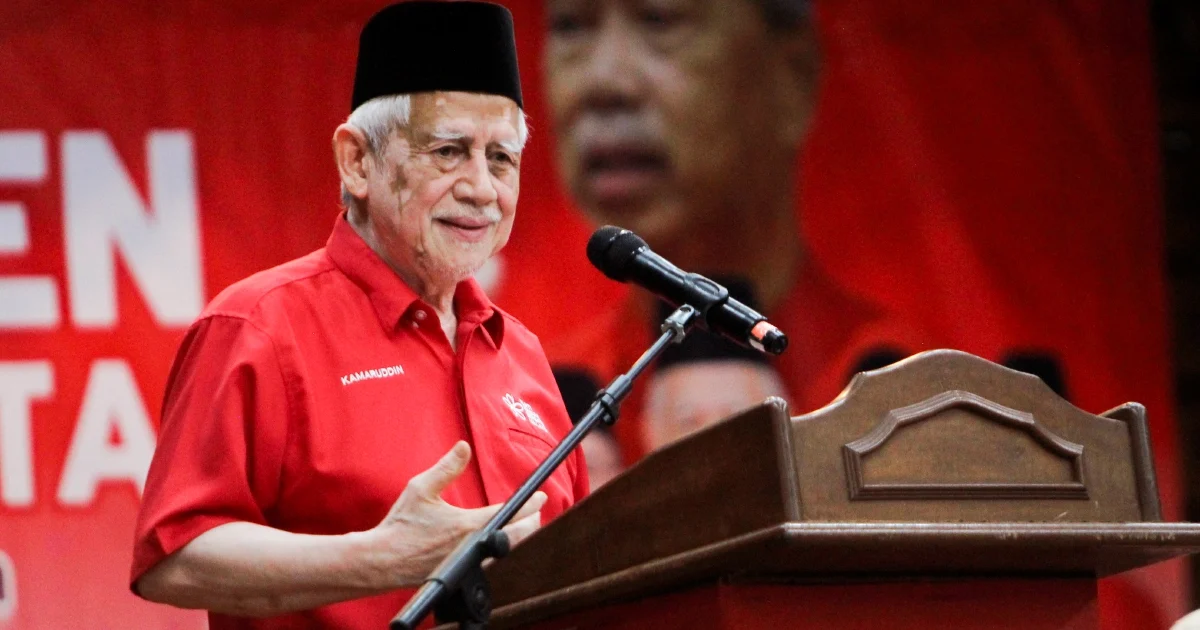
Kelantan Bersatu demonstrated considerable equanimity when Perikatan Nasional announced the removal of Datuk Seri Mohamed Azmin Ali and Datuk Dr Mohd Radzi Md Jidin from its leadership structure. The state party wing's composed response underscores an evolving internal dynamic within the broader coalition, suggesting that leadership transitions at the national level no longer trigger immediate upheaval among regional components.
The decision by Perikatan Nasional leadership represents a significant recalibration of the opposition alliance's upper echelon. Datuk Seri Mohamed Azmin Ali, who has served in various capacities within the coalition's framework, and Datuk Dr Mohd Radzi Md Jidin, whose role had been integral to several policy initiatives, both exit positions that carried considerable influence over coalition strategy and resource allocation. This reshuffling occurs against a backdrop of ongoing political realignment in Malaysian politics, where coalitions routinely adjust their leadership configurations to maintain cohesion and electoral viability.
Kelantan Bersatu's measured stance reflects a pragmatic understanding that leadership changes within umbrella coalitions are procedural necessities rather than existential threats to individual party branches. The state wing's decision to absorb this development without vocal protest suggests confidence in the coalition's strategic direction and potentially indicates pre-consultation or alignment with the broader PN agenda. Such restraint contrasts with historical patterns in Malaysian politics, where regional branches have frequently leveraged national leadership crises to consolidate local power or stake territorial claims.
The broader context of this leadership adjustment involves the delicate balance that Perikatan Nasional must maintain across its diverse component parties. Each member party brings distinct constituencies, geographical strengths, and internal power structures that can either complement or complicate coalition unity. By removing certain figures from prominent roles, PN leadership may be attempting to redistribute influence more equitably or address underlying tensions that threaten coalition stability. Kelantan's acceptance of this restructuring without public resistance suggests either satisfaction with the arrangement or shrewd political calculation that outward protests would serve no strategic purpose.
For Malaysian observers and regional analysts, the incident illuminates the maturation of opposition coalition politics in the country. Rather than fragmenting over leadership changes, as has occurred in previous iterations of multi-party alliances, Perikatan Nasional appears to be developing institutional resilience. This capacity to absorb significant personnel changes without triggering cascading defections or public acrimony represents a notable advance in Malaysian political organisation, particularly for coalitions operating outside government where unity depends primarily on voluntary commitment rather than ministerial rewards.
Kelantan's own political positioning within Perikatan Nasional remains strategically important. As a state where PN and its predecessor coalitions have demonstrated substantial electoral strength, Kelantan Bersatu's stability signals to other component parties that the coalition's foundation remains solid despite turbulence at the apex. The state party's response effectively communicates that leadership changes in Kuala Lumpur need not destabilise local governance or party cohesion in the periphery, an assurance that lower-tier politicians and grass-roots members would welcome during periods of organisational flux.
The removal of Azmin Ali and Radzi from the leadership constellation also raises questions about the trajectory of their respective political careers and their future roles within their parent parties and the coalition. Both figures have backgrounds in federal administration and policy-making, with experience spanning multiple ministerial portfolios and oversight responsibilities. Their exit from PN's formal leadership structure does not necessarily diminish their influence within their own party hierarchies, though it does reposition them as advisors or senior members rather than frontline coalition spokespersons.
Kelantan Bersatu's forbearance also reflects awareness of the broader electoral calendar and the coalition's longer-term strategic needs. Malaysian politics operates within defined electoral cycles, and coalition stability during inter-election periods proves crucial for electoral performance. By declining to weaponise the leadership change for intra-coalition advantage, Kelantan Bersatu demonstrates the kind of disciplined coalition behaviour that enhances rather than diminishes its standing within Perikatan Nasional's deliberative structures.
Looking forward, how Perikatan Nasional deploys its restructured leadership will determine whether this transition strengthens or weakens the coalition's electoral prospects. The party must ensure that removing Azmin and Radzi from prominent roles does not create a perception of instability or weakness among voters who previously identified them with PN's policy platform. Simultaneously, the coalition must integrate the leadership change into a coherent narrative about renewed focus and strategic clarity, converting what could be portrayed as internal tension into evidence of principled organisational renewal.
Kelantan Bersatu's calm acceptance of Perikatan Nasional's decision ultimately reflects political maturity and strategic self-interest alignment. The state branch understands that coalition politics requires flexibility and that leadership changes at the centre often accompany broader strategic recalibrations designed to enhance overall electoral competitiveness. By absorbing this transition without public dissent or organisational disruption, Kelantan Bersatu has positioned itself as a reliable, steady component of the opposition alliance—a credential likely to prove valuable as Malaysian politics navigates the periods ahead.