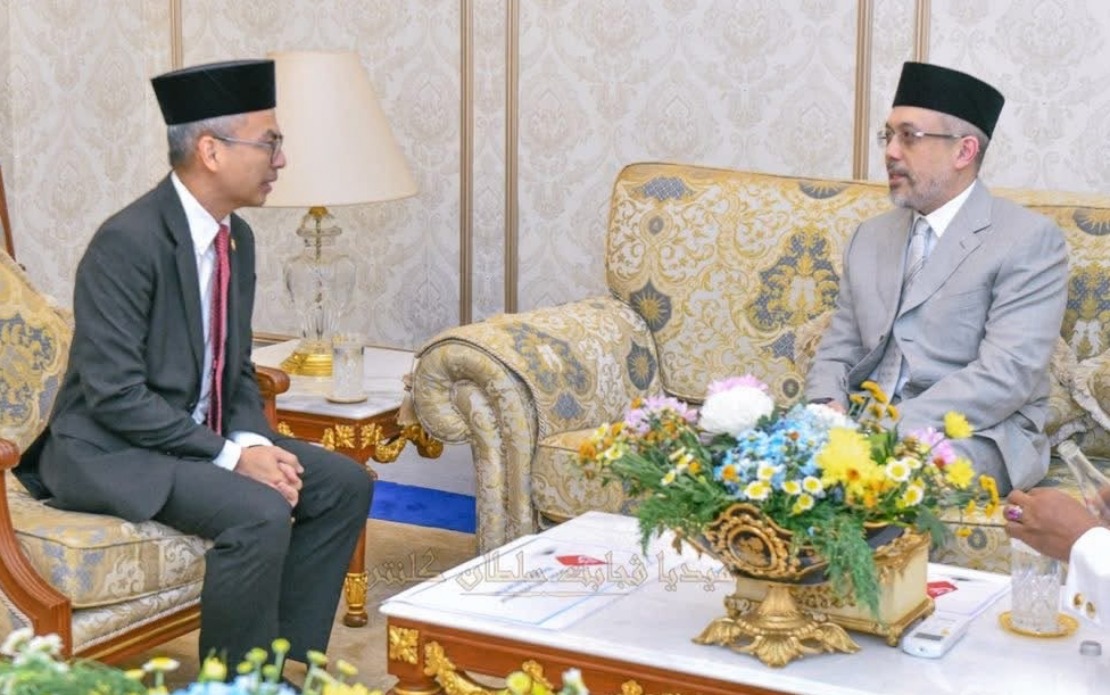
The Regent of Kelantan, Tengku Muhammad Fakhry Petra, granted an audience to Communications Minister Datuk Fahmi Fadzil at the Kota Lama Palace in Kota Bharu on June 17, marking a formal engagement between the state's royal leadership and the federal government over digital governance challenges. The hour-long session, which commenced at 5 pm, served as a platform for the ministry to update the Regent on contemporary issues affecting Malaysia's digital communications landscape and to seek the insights of Kelantan's royal establishment on matters requiring collaborative oversight.
The central focus of the discussion revolved around the proliferation of fraudulent accounts on social media platforms and the accompanying surge in dissemination of false information. These fake accounts have emerged as a significant threat to the integrity of public discourse, particularly through their weaponisation in spreading misleading narratives and inflammatory content. The Regent was briefed on how these malicious actors exploit social media infrastructure to amplify disinformation campaigns at scale, creating an environment where misinformation travels faster than fact-checking mechanisms can address it.
A particularly concerning dimension of this problem concerns deliberate attacks on the reputation and dignity of the Malaysian Royal Institution. The proliferation of coordinated campaigns featuring fabricated claims, doctored images, and false statements about the monarchy represents a threat to national institutions and social cohesion. Such coordinated disinformation efforts typically employ networks of fake accounts to create an artificial illusion of widespread support for false narratives, thereby influencing public perception and potentially destabilising confidence in established institutions. The Communications Ministry recognised the necessity of engaging royal establishments to ensure comprehensive understanding across all levels of governance.
Minister Fahmi's delegation included MohamadAsif Afifi Mohd Yusof, serving as Senior Private Secretary to the Communications Minister, along with Ahmad Afifi Hamdan Tuan Aziz, the accompanying officer for the minister's office, and supporting administrative staff. This composition reflected the importance attributed to the engagement, with key personnel present to facilitate substantive discussion and ensure accurate documentation of the audience's proceedings. The inclusion of these officials underscored that this was not a ceremonial courtesy call but rather a working session intended to establish dialogue on serious policy matters.
The Kelantan Sultan's Media Office released a statement clarifying that the audience provided the platform for the ministry to present comprehensive briefings on current developments and official reports pertaining to the Communications Ministry's operational mandate. This framing suggested that the session served multiple purposes: updating the state's royal leadership, gaining perspective on ground-level impacts of digital governance issues, and potentially enlisting the Regent's office as an ally in addressing these challenges at the state level. The formal nature of the proceedings and the subsequent official documentation indicated that this engagement may establish precedent for similar royal consultations on national digital policy matters.
The discussion of fake accounts and false news reflects deeper anxieties about social media's role in shaping public discourse across Malaysia and the broader Southeast Asian region. Unlike traditional media channels, social platforms operate with minimal editorial oversight, making them vulnerable to coordinated campaigns by actors seeking to manipulate public opinion or undermine institutional credibility. The relative ease with which malicious actors can create multiple fake accounts, amplify divisive content, and evade detection mechanisms has created asymmetric challenges for governments attempting to maintain information ecosystem integrity without infringing on legitimate expression.
For Malaysian policymakers, the challenge of addressing fake accounts intersects with broader considerations about digital rights, cybersecurity, and social stability. Heavy-handed regulatory responses risk attracting international criticism regarding freedom of expression, whilst insufficient intervention allows coordinated disinformation campaigns to flourish unchecked. The fact that Communications Minister Fahmi deemed it appropriate to personally engage with the Kelantan Regent suggests the ministry recognises that addressing these challenges requires buy-in from multiple institutional stakeholders, including regional royal establishments whose cultural authority and institutional trust remain significant within their respective states.
The royal audience tradition in Malaysia carries particular significance. When a minister seeks formal engagement with a regent or sultan, it signals respect for the institution and recognition of the monarchy's constitutional role. In this instance, presenting the ministry's concerns about fake accounts and misinformation targeting the Royal Institution directly to the Regent demonstrates both deference and strategic wisdom, as the monarchy itself has considerable interest in combating narratives that undermine its legitimacy and dignity. Such consultation also allows regional rulers to understand national policy direction before implementation, potentially enabling them to provide guidance aligned with their understanding of local sensitivities and contexts.
The problem of fake accounts represents a technical challenge that resists purely technical solutions. Whilst social media platforms can implement better verification systems, improved detection algorithms, and more aggressive enforcement of terms of service, determined actors continuously adapt tactics to evade restrictions. This cat-and-mouse dynamic suggests that effective responses require coordination across multiple actors: technology companies, government regulatory bodies, civil society organisations, educational institutions, and yes, traditional power structures including the monarchy. The Regent's participation in these discussions potentially elevates the conversation beyond bureaucratic circles to encompass the moral and institutional authority of the state's royal leadership.
For regional observers, the Kelantan engagement illuminates how Southeast Asian governments are grappling with digital governance in an environment where technological capability outpaces regulatory frameworks. Malaysia's approach, involving consultation with royal institutions and formal ministerial engagement, differs from more technocratic or securitised responses adopted elsewhere. This consultation-based model may offer advantages in securing social buy-in for digital governance measures, though it potentially risks slower decision-making and complexity navigating multiple institutional interests.
The presentation of a memento from Minister Fahmi to the Regent, described as a token of respect, concluded the formal proceedings. This gesture reflected diplomatic protocol and appeared designed to cement the relationship between the Communications Ministry and Kelantan's royal establishment as continuing partners in addressing digital governance challenges. The subsequent friendly meet-and-greet and photography sessions represented a deliberate softening of the formal audience structure, humanising the engagement and potentially creating opportunities for informal discussion beyond the structured agenda.
Moving forward, the framework established through this audience may encourage similar consultations between the Communications Ministry and royal establishments in other Malaysian states, or at least prompt other ministers to recognise the value of engaging traditional institutions on contemporary policy challenges. The intersection of ancient royal authority with modern digital governance issues suggests an evolving approach to national policymaking, one that respects institutional continuities whilst addressing unprecedented challenges posed by globalised, decentralised information networks.