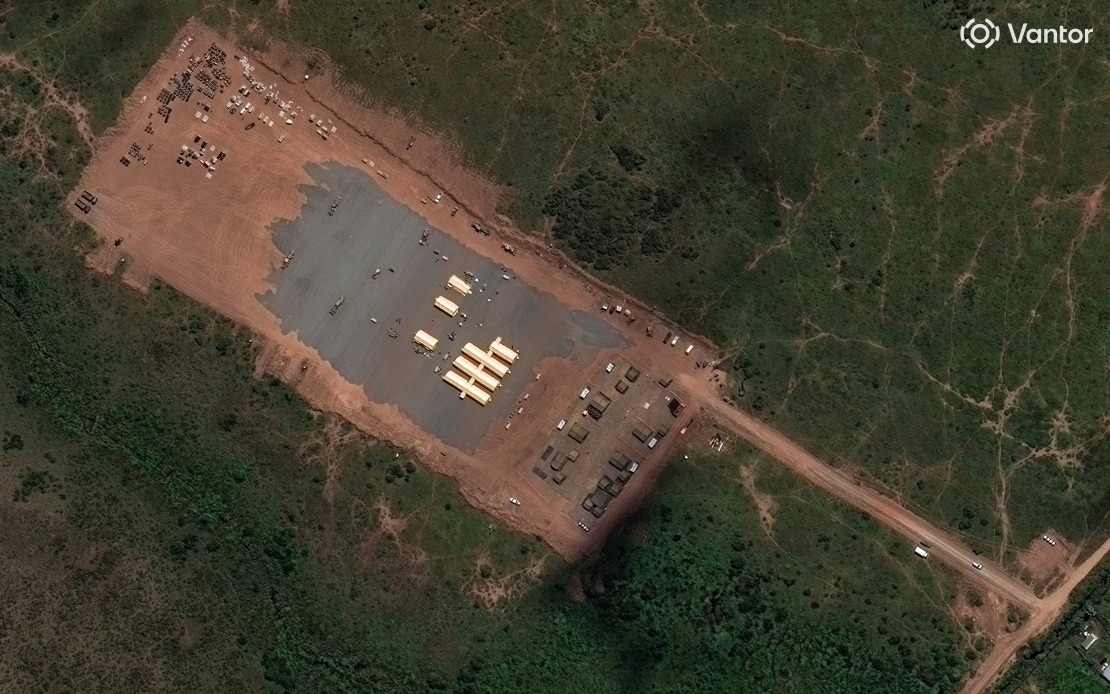
A Kenyan High Court judge has ruled against Health Minister Aden Duale for defying court orders to halt construction of a contested Ebola quarantine facility backed by the United States. Justice Patricia Nyaundi determined on Monday that Duale had persistently breached judicial directives issued in late May and early June, continuing to oversee the project despite explicit court mandates to cease activities. The minister was ordered to appear before the court the following day for mitigation arguments and potential sentencing, marking an escalation in the country's most divisive public health controversy in recent years.
The disputed installation is a 50-bed quarantine and isolation centre planned for Laikipia Air Base, situated approximately 8 kilometres west-northwest of Nanyuki in Laikipia County, roughly 200 kilometres north of Nairobi. According to government statements, the facility would primarily serve American personnel who may have been exposed to Ebola virus whilst engaged in outbreak response operations connected to cases recorded in the Democratic Republic of the Congo and neighbouring regions. The project represents part of Kenya's broader pandemic preparedness infrastructure, though its specific design and purpose have become lightning rods for constitutional and political concerns.
The controversy intensified dramatically when President William Ruto publicly disclosed that he had authorised the facility in response to a direct request from United States President Donald Trump. This revelation transformed the initiative from a technical health matter into a geopolitical issue, with questions surrounding Kenya's sovereignty, decision-making transparency, and the nation's relationship with foreign powers. The disclosure sparked accusations that the government had bypassed normal democratic processes and public consultation requirements, undermining Kenya's constitutional commitment to inclusive governance and citizen participation in matters affecting public welfare.
The Katiba Institute, a constitutional rights organisation, initiated legal proceedings by petitioning the High Court to suspend the project. Their challenge raised multiple concerns encompassing constitutional compliance, public health safety, environmental impact, and failure to observe mandatory transparency and community engagement standards. The court granted the suspension, seemingly settling the matter—yet the minister's continued oversight of construction activities prompted the fresh contempt finding, suggesting either institutional defiance or administrative confusion about the scope of judicial orders.
For Southeast Asian nations monitoring Kenya's experience, this episode offers instructive lessons about the intersection of health security, foreign partnerships, and democratic accountability. Malaysia, which maintains substantial diplomatic and economic ties with both the United States and African nations, faces comparable questions whenever international health or defence arrangements are proposed. The Kenyan situation demonstrates how foreign-backed public health infrastructure can become contentious when governments appear to prioritise external relationships over domestic transparency and public input. This dynamic reflects broader regional tensions about balancing pandemic preparedness with legitimate concerns about sovereignty and informed consent.
Government representatives have consistently defended the facility as an essential component of Kenya's disease surveillance and containment capacity. Officials argue that the country's position as East Africa's largest transport, diplomatic and commercial nexus makes it particularly vulnerable to Ebola transmission risks, necessitating robust isolation capabilities. The US Embassy in Nairobi has reinforced this position, asserting that the facility presents no health risks to neighbouring communities and represents collaborative efforts to enhance regional detection and response infrastructure. These arguments, however, have failed to persuade sceptics who question whether the project's design, location and secrecy protocols adequately protect Kenyan interests.
The dispute has moved beyond courtrooms into the streets of Laikipia County, where demonstrations have intensified. Protesters have challenged both the facility's necessity and the government's dismissal of judicial restraint orders. According to police statements, witness accounts, and reports from human rights organisations, at least three people have been killed during confrontations linked to anti-facility protests. These deaths underscore the profound community opposition and the real human consequences when governments appear unresponsive to public grievances, particularly where foreign interests are perceived as overriding local priorities.
The contempt ruling places Justice Nyaundi at the centre of Kenya's institutional power struggle. By finding the minister in contempt, the court has signalled that judicial authority cannot be circumvented by executive determination to proceed with disputed initiatives. The severity of punishment imposed during Duale's appearance would communicate whether Kenya's judiciary possesses sufficient independence and enforcement capacity to constrain executive overreach. A lenient sentence might suggest that courts lack real authority to enforce compliance; conversely, substantial penalties could escalate tensions between branches of government and potentially politicise the judicial system further.
For regional observers, the Kenyan case raises fundamental questions about the conditions under which health cooperation with external powers can proceed legitimately. When international agreements involve physical infrastructure on sovereign territory, particularly facilities potentially housing foreign nationals under special health protocols, domestic constituencies demand meaningful consultation and transparent decision-making. The absence of such processes, regardless of health benefits offered, creates legitimacy deficits that judicial intervention alone cannot remedy. Southeast Asian governments considering similar arrangements should recognise that public confidence and democratic process are themselves crucial public health assets.
The facility's future remains uncertain as the legal proceedings continue. Should the government succeed in eventually completing the installation despite the contempt ruling, it would establish a troubling precedent that executive determination overrides judicial authority on matters deemed strategically important. Conversely, sustained court-ordered suspension combined with effective public opposition could result in project abandonment, demonstrating that Kenya's democratic institutions retain capacity to resist executive unilateralism. The outcome will reverberate across the continent, influencing how other African governments balance health security partnerships against accountability to their citizens.
Beyond the immediate contempt dispute, the broader controversy reflects evolving concerns about health governance in an interconnected world. Pandemic preparedness requires international cooperation and sometimes foreign-backed infrastructure; yet such arrangements demand transparent negotiation, public participation, and explicit consent from affected communities. Kenya's experience illustrates the risks of pursuing health security through top-down implementation that excludes or marginalises public voice. For Malaysia and other Southeast Asian nations, the lesson extends beyond any single facility: legitimate health cooperation rests upon institutional processes that respect democratic principles and citizen agency, not merely on technical efficacy or international endorsement.

