The Ministry of Human Resources (KESUMA) is stepping up efforts to cushion the impact of global supply chain turbulence on Malaysian workers by deploying targeted upskilling and reskilling initiatives. Speaking at an event in Johor Bahru on June 23, Minister Datuk Seri R. Ramanan outlined plans to funnel displaced employees through Technical and Vocational Education and Training (TVET) programmes designed to equip them with skills demanded in today's evolving labour market. The announcement reflects growing concern within government circles about job losses stemming from ongoing disruptions to international supply networks, a challenge that has rippled across Southeast Asia with particular force in manufacturing-dependent economies like Malaysia.
Workers losing employment across the services, manufacturing and construction sectors will form the primary target audience for these interventions. Rather than leaving displaced workers to navigate the job market independently, KESUMA is coordinating with the Social Security Organisation (PERKESO) to provide structured employment assistance through the MYFutureJobs platform. This digital matching system represents an attempt to bridge the gap between skill-deficient job seekers and employers struggling to fill vacancies in priority sectors. By combining retraining opportunities with systematic job matching, the government hopes to prevent long-term unemployment and maintain workforce stability during a period of pronounced economic uncertainty.
The reskilling component of this initiative carries particular significance for Malaysia's transition towards higher-value manufacturing and services. Rather than simply offering generic training, KESUMA's approach emphasises matching individual capabilities with available positions through a careful assessment process. Ramanan stated that placement decisions would be made with deliberate attention to suitability, suggesting that the ministry recognises the importance of aligning worker attributes with job requirements to maximise employment retention and worker satisfaction. This thoughtful approach contrasts with more superficial job placement schemes that prioritise speed over quality of matches.
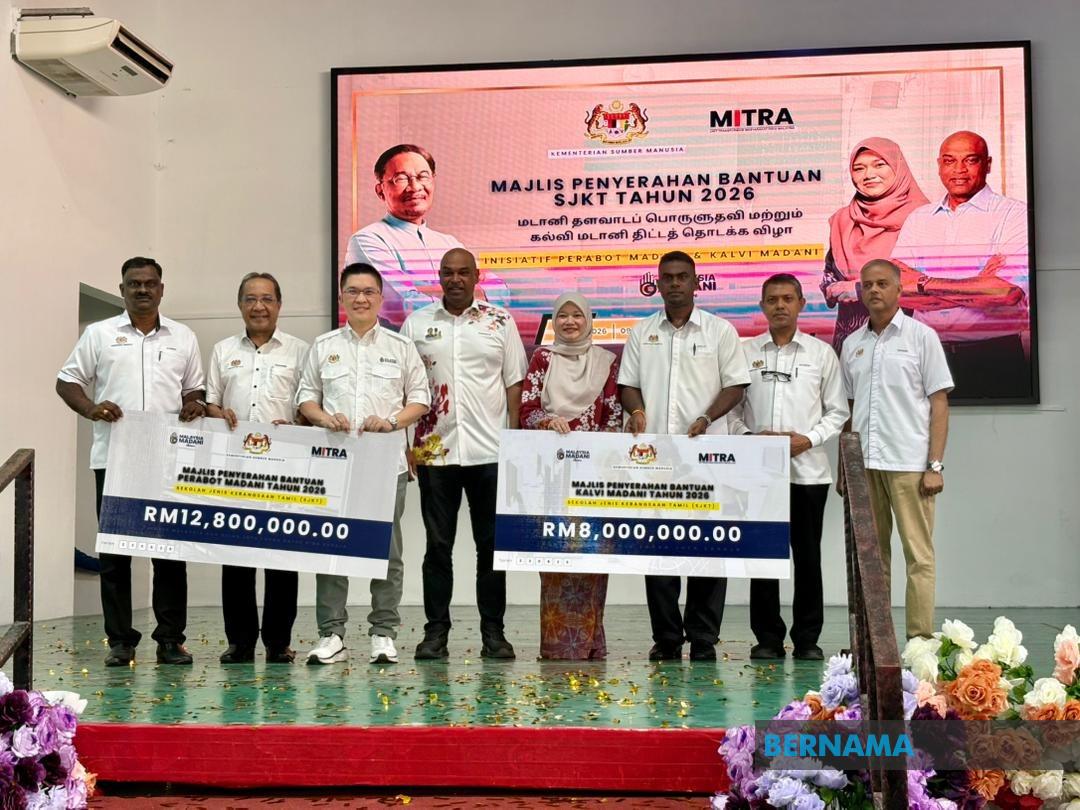
While KESUMA's worker support initiative addresses immediate employment concerns, the ministry simultaneously announced broader social investments aimed at improving educational infrastructure for disadvantaged communities. The MADANI Furniture Initiative represents a RM12.8 million commitment to supply high-quality classroom furnishings and equipment to Tamil vernacular schools across Malaysia. The programme will benefit 39,692 pupils and 5,290 teachers across 361 government-aided Tamil-medium institutions, with deliveries scheduled to roll out from June through August. The inclusion of fourteen categories of furniture and equipment—ranging from desks and seating to storage cabinets and cooling fans—suggests a comprehensive approach to improving learning environments in schools that have historically faced resource constraints.
Complementing the furniture initiative, KESUMA has allocated RM8 million for the KALVI MADANI Programme, a multifaceted educational support scheme targeting nearly 10,410 Indian pupils in 315 selected Tamil vernacular schools. This programme extends well beyond classroom furnishings to encompass free tuition classes, nutritional assistance, educational devices and learning kits, plus welfare measures benefiting teaching staff. The breadth of support signals recognition that educational inequality often stems from multiple, interconnected disadvantages—inadequate physical infrastructure, limited access to supplementary instruction, nutritional deficiency, and insufficient teaching resources. By targeting these dimensions simultaneously, the government aims to create more enabling conditions for learning among communities that have traditionally experienced marginalisation within Malaysia's education system.
The dual focus on worker reskilling and educational equity reflects a broader policy calculus within government. By investing in TVET capabilities and job placement systems for displaced workers whilst simultaneously strengthening vocational and educational pathways for younger, disadvantaged populations, KESUMA is attempting to build a more resilient and inclusive labour force. This dual-track approach acknowledges that current supply chain disruptions represent both an immediate crisis requiring emergency response and a longer-term structural challenge demanding preventative investment in human capital development.
For Malaysia's manufacturing sector specifically, the implications are noteworthy. As global supply chains continue reconfiguring in response to geopolitical tensions and pandemic-driven vulnerabilities, manufacturers face pressure to redesign operations and reposition workforce skills. KESUMA's reskilling programmes could serve as a valuable resource for factory operators seeking to transition workers into higher-value-added roles or emerging production lines. Similarly, the construction sector—another major employment generator that has faced disruptions—stands to benefit from coordinated approaches to workforce development that prevent temporary job losses from becoming permanent labour force withdrawal.
The involvement of Education Minister Fadhlina Sidek and Deputy Education Minister Wong Kah Woh at the Johor Bahru event underscores the cross-ministerial coordination required to address these interconnected challenges. Effective reskilling requires alignment between labour market realities, TVET capacity and governance systems, necessitating collaboration between human resources and education officials. This coordination, when executed rigorously, can prevent the common scenario where reskilling programmes produce graduates without corresponding job opportunities or where available positions remain unfilled due to skills mismatches.
For Malaysian workers currently facing redundancy or underemployment due to supply chain disruptions, these initiatives provide a concrete pathway forward. Rather than confronting joblessness without institutional support, affected individuals can access structured retraining, career counselling and job placement assistance. The emphasis on suitability in placement decisions suggests that KESUMA is moving beyond mere job-placement statistics towards meaningful employment outcomes. However, the success of these programmes will ultimately depend on implementation rigour, adequate funding allocation to regional delivery mechanisms, and sustained employer engagement with the MYFutureJobs platform.
Looking ahead, Malaysia's experience with these reskilling and educational equity initiatives may offer valuable lessons for other Southeast Asian nations grappling with similar supply chain vulnerabilities. Regional economies with comparable manufacturing-heavy structures face analogous challenges in protecting workers and maintaining social cohesion during periods of international economic turbulence. Should KESUMA's programmes demonstrate effectiveness in reducing joblessness and facilitating successful transitions into new employment, they could inform policy responses across the region and contribute to more systematic approaches to labour market resilience in an era of persistent supply chain uncertainty.

