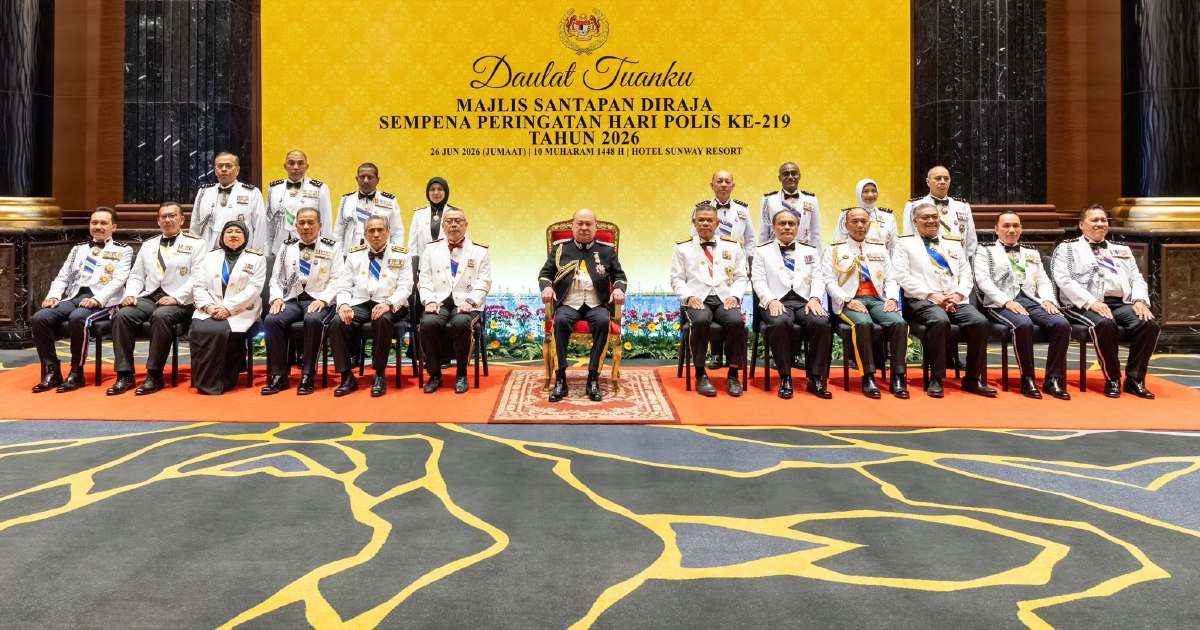
His Majesty Sultan Ibrahim, King of Malaysia, attended a prestigious royal banquet in Subang Jaya yesterday evening to mark the 219th Police Day celebration, reaffirming the monarchy's institutional commitment to honouring Malaysia's law enforcement community. The formal occasion brought together senior police officials, government representatives, and members of the constabulary to recognise the contributions and sacrifices made by personnel across the Royal Malaysian Police force.
The hosting of such high-profile ceremonial events underscores the symbolic importance the institution of the monarchy places on recognising the nation's security apparatus and its personnel. Police Day, celebrated annually on 1 March, commemorates the founding of the Constabulary in 1806 and serves as a moment for the nation to reflect on the evolving role of law enforcement in maintaining public order and safety. The selection of Subang Jaya as the venue for this year's royal banquet suggests the event's significance in the nation's official calendar, drawing attendance from across the police hierarchy.
The Royal Malaysian Police, comprising more than 147,000 personnel, continues to navigate complex operational challenges spanning urban crime, cybersecurity threats, and transnational organised crime syndicates operating across Southeast Asia. The force operates within a broader security environment shaped by evolving threats including drug trafficking, human trafficking, and financial crimes that require increasingly sophisticated investigative capabilities and cross-border cooperation. Recognition of these endeavours through high-level state occasions reflects acknowledgment of the demanding and often dangerous nature of police work.
The attendance of the King at such events carries significant symbolic weight within Malaysian governance structures. The monarchy's visible support for public institutions like the police reinforces institutional legitimacy and demonstrates the constitutional role of the Yang di-Pertuan Agong in unifying the nation around shared values and institutions. Such ceremonial occasions provide platforms for emphasising the interconnectedness of Malaysia's constitutional monarchy and its professional security apparatus.
Police Day celebrations occur annually across the nation, with numerous commemorative events, awards ceremonies, and public recognition programmes held throughout March. The royal banquet represents the most elevated form of institutional recognition, typically featuring formal protocols and ceremonies befitting state occasions. These events frequently include presentations of long-service medals, commendations for bravery, and other honours recognising exceptional performance and dedication among police personnel.
For police leadership, such occasions offer opportunities to communicate priorities and departmental achievements to the highest levels of government and the broader public. Ministers and senior officials typically utilise these platforms to articulate vision for law enforcement's future direction, technological investments, training initiatives, and integration with other security and administrative agencies. The presence of the King elevates these messages, signalling government-wide commitment to police institutional development and modernisation.
The Malaysian police force has undergone significant transformation over recent years, including technological upgrades in forensic capabilities, establishment of specialised units addressing cybercrime and counter-terrorism, and enhanced community policing programmes aimed at building public trust. These modernisation efforts require sustained financial resources and public support, both of which are reinforced through high-profile recognition by the monarchy and government leadership.
From a regional perspective, the Malaysian police force plays a crucial role in Southeast Asian security architecture, participating in bilateral and multilateral cooperation agreements with neighbouring countries' law enforcement agencies. Cross-border operations, intelligence sharing, and joint training initiatives extend the force's operational reach and effectiveness in addressing regional security challenges. Royal recognition of these broader security responsibilities acknowledges Malaysia's positioning within ASEAN security frameworks.
The event also reflects broader Malaysian approaches to commemorating institutional milestones and honouring public service. The nation maintains formal calendars of remembrance days and celebration occasions for various government agencies, uniformed services, and national commemorative dates. The 219th Police Day represents continuity with historical institutional memory dating to the force's origins in the early nineteenth century, bridging contemporary operational realities with institutional heritage and tradition.
Policemen and their families attending the banquet, along with retired personnel, would have viewed the royal presence as formal acknowledgment of their contributions to national security and social stability. Such recognition carries particular significance given the challenging working conditions, occupational hazards, and personal sacrifices often demanded of police personnel and their families. The royal occasion provides symbolic compensation for these demands through formal state recognition at the highest levels.
Looking forward, the police force continues facing evolving crime patterns and security threats requiring adaptive strategies and resource allocation. Annual commemorations like Police Day afford opportunities for public discourse around law enforcement priorities, accountability frameworks, and community expectations. The royal patronage of such occasions signals sustained institutional emphasis on professional, well-equipped, and publicly-trusted police services as foundational to Malaysia's security and social cohesion objectives.

