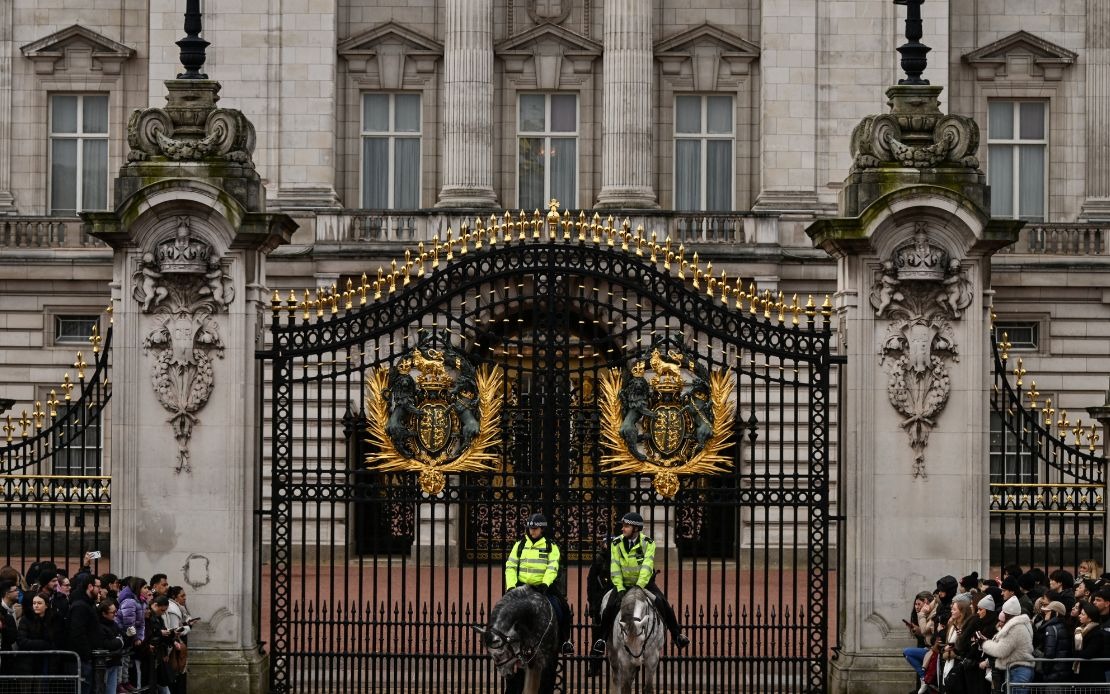
Britain's Royal Household confirmed on Thursday that King Charles III and Queen Camilla intend to preserve Buckingham Palace as the ceremonial and official heart of the monarchy following the completion of its extensive refurbishment programme, whilst maintaining their private residence elsewhere. The decision underscores the palace's enduring significance as a symbol of British institutional continuity and public pageantry, rather than as a working royal home. This distinction reflects a modernisation of how the crown operates—separating the theatre of state from the domestic sphere—and carries implications for how heritage institutions across the Commonwealth, including Malaysia, might balance public access with institutional function.
According to statements released by the Royal Household detailing its financial arrangements, the King and Queen will continue to host official ceremonies, state receptions, and other formal events at the 775-room palace once the current conservation work concludes. The palace is expected to function as the principal workplace of the Royal Household apparatus and to serve as a major national heritage asset, with expanded opportunities for members of the public to visit and experience its historic interiors and collections. This approach aligns with broader trends in heritage management across developed democracies, where iconic royal and governmental residences increasingly open their doors to visitors, generating both cultural engagement and, in some cases, revenue streams.
The Buckingham Palace Reservicing Programme, now in its ninth and penultimate year, represents one of the most ambitious conservation efforts undertaken on any occupied royal residence in recent history. The 10-year undertaking addresses structural deterioration, modernises building systems, improves accessibility for visitors with disabilities, and ensures the palace meets contemporary standards for safety and environmental efficiency. Such large-scale heritage restoration projects are resource-intensive and lengthy by necessity, often stretching across decades as craftspeople work to preserve original features whilst integrating modern infrastructure—a challenge familiar to curators and architects throughout Southeast Asia tasked with maintaining colonial and pre-colonial heritage sites.
During the 2025-2026 financial year, the Royal Household reported hosting 827 events across various royal palaces, attracting nearly 97,000 guests in total. This substantial volume of ceremonial activity illustrates the continued demand for formal state occasions and the palace's role in projecting institutional legitimacy and cultural grandeur. The figures demonstrate that Buckingham Palace remains essential to how the British state conducts diplomacy, celebrates national achievement, and engages its citizenry, roles that remain central to monarchy in the modern era.
The Sovereign Grant, which represents public funding allocated to support the monarch's constitutional duties and maintain occupied royal residences, increased to £132.1 million for the 2025-2026 financial year, equivalent to approximately US$174 million. This appropriation reflects both inflation and the substantial costs associated with maintaining aging palatial infrastructure across the United Kingdom. Of this total, £67.5 million, or roughly US$89.11 million, was dedicated specifically to the preservation and protection of occupied royal palaces, demonstrating the Crown's commitment to long-term heritage stewardship.
The decision to retain Buckingham Palace as a ceremonial centre rather than converting it into a museum or private residence reflects careful consideration of its role within the British constitutional framework. A functioning ceremonial palace serves multiple purposes simultaneously: it hosts the business of statecraft, provides a setting for diplomatic engagement, attracts international visitors and cultural tourism, and maintains a visible symbol of institutional continuity and national identity. For Malaysia and other Commonwealth nations, the approach offers a model for how historic seats of power might evolve whilst preserving their symbolic authority.
Malaysian observers and heritage professionals may find particular relevance in how the British monarchy balances public access with operational function. While Malaysia's royal palaces serve different constitutional roles within the country's unique system of constitutional monarchy, the principle of maintaining heritage buildings as living institutions rather than static museums resonates across the region. Istana Negara in Kuala Lumpur, whilst not open to regular public touring, similarly serves both ceremonial and symbolic functions that require it to remain operationally active.
The refurbishment project, nearing completion, has already modernised significant portions of the palace's infrastructure whilst preserving its historic character and architectural integrity. Contemporary conservation standards demand that such work occur with minimal disruption to ongoing operations, requiring meticulous coordination between conservation specialists, building engineers, and the institutional staff who maintain daily operations. The complexity of such work on occupied heritage sites cannot be understated, involving careful sequencing of work phases to ensure that ceremonial functions can continue throughout the restoration period.
The financial commitment to royal palaces, whilst substantial in absolute terms, represents a relatively modest proportion of the broader British public budget and reflects the taxpayer's investment in maintaining institutions that serve representational and constitutional purposes. The per-person cost of maintaining the monarchy through the Sovereign Grant remains relatively low when calculated across the entire British population, though questions about value and transparency continue to feature in public discourse about royal finances and the role of hereditary institutions in contemporary democracies.
Looking forward, Buckingham Palace's evolution into a functioning ceremonial palace with expanded public access represents a pragmatic accommodation of modern expectations regarding transparency and cultural participation. The outcome will likely influence how other Commonwealth realms and heritage institutions consider balancing preservation, public engagement, and operational necessity. For Malaysia, observing how established monarchies adapt their ceremonial spaces to contemporary contexts offers insights into sustaining the relevance and public resonance of traditional institutions in an increasingly democratic and digitally connected world.

