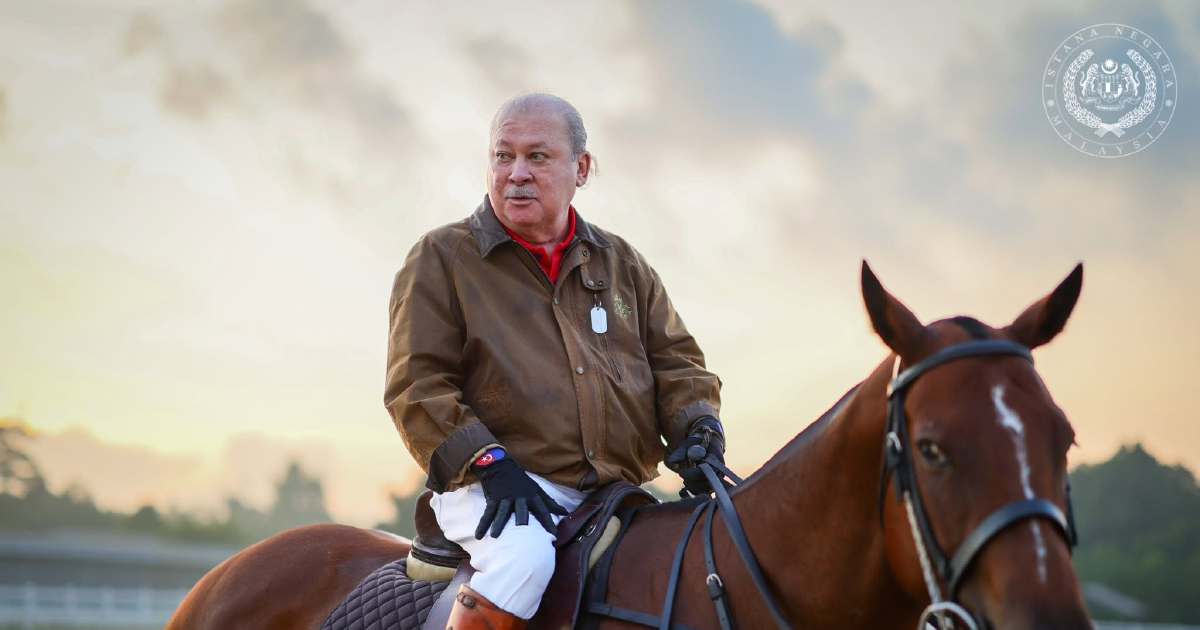
His Majesty Sultan Ibrahim, King of Malaysia, continued his established pattern of physical activity this morning by engaging in horse riding at the Royal Johor Polo Club located at Istana Pasir Pelangi in Johor Baru. The monarch's participation in the equestrian exercise reflected a composed and unhurried approach to the activity, moving at a gentle pace across the club's grounds.
The regular engagement in such recreational pursuits underscores the importance placed by the royal household on maintaining physical fitness and wellness. Horse riding, as a form of exercise practised at polo clubs throughout Malaysia and the Commonwealth, offers significant cardiovascular benefits whilst also requiring considerable balance, coordination, and core strength. For individuals in positions of considerable responsibility, such activities provide both health maintenance and a measure of leisure.
The Royal Johor Polo Club, situated within the grounds of Istana Pasir Pelangi, represents one of Malaysia's most prestigious sporting venues. The institution has long served as a focal point for equestrian pursuits among the country's elite and has hosted numerous international polo tournaments and competitions. The facility's historical significance to Johor's sporting culture extends back several decades, making it a natural location for royal sporting activities.
Regular physical exercise undertaken by heads of state carries symbolic weight beyond mere personal health considerations. The visibility of such routines, when conducted in established settings like the Royal Johor Polo Club, sends messages regarding the monarch's vitality and engagement with traditional pursuits that have characterised the Malaysian sultanate system for generations. Many Commonwealth realms have similarly documented their sovereigns participating in outdoor activities, recognising the public relations and personal wellness dimensions of such engagements.
Horse riding as a discipline demands considerable skill development and ongoing practice to maintain proficiency. The activity requires riders to develop deep communication with their mounts, understanding subtle cues and responses that ensure both safety and effective control. For regular practitioners, the repetition of morning routines creates rhythms that structure daily schedules whilst providing consistency in approach to personal fitness objectives.
From a health perspective, equestrian activities engage multiple muscle groups simultaneously. The lower body stabilises position in the saddle whilst the core maintains postural alignment and balance. Upper body engagement facilitates communication with the horse through rein adjustments and subtle weight shifts. This comprehensive muscular engagement explains why polo and recreational horse riding remain popular fitness pursuits across diverse demographics and age groups.
The choice of early morning for such activities reflects time-honoured practices within royal households across the region and internationally. Morning exercise routines often prove more sustainable than alternatives scheduled later in the day, as they establish momentum for the hours ahead and provide opportunity to complete fitness objectives before competing demands accumulate. Many accomplished individuals across various professions have similarly adopted dawn activity schedules to maintain physical conditioning.
Johor's status as the location for this royal fitness pursuit reflects the state's significant historical importance within Malaysia's monarchical system. The Sultan of Johor holds particular prominence within the institution of the Malay rulers, with the state having played central roles throughout the nation's colonial and independence histories. The visible maintenance of such activities within Johor accordingly carries cultural resonance extending beyond mere personal exercise.
The relaxed manner observed during today's riding session suggests an approach emphasising sustainability and enjoyment rather than intense athletic exertion. Such moderated intensity levels often prove more beneficial for long-term adherence to fitness regimens, particularly for individuals balancing substantial official responsibilities. The distinction between leisurely equestrian activity and competitive polo performance permits flexibility in how such pursuits accommodate broader schedules and physical requirements.
For Malaysian observers and the broader international community, such ordinary glimpses into royal routines contribute to public understanding of institutional life. The documentation of the King's engagement in established sporting traditions at venerable facilities like the Royal Johor Polo Club reinforces continuity within Malaysia's constitutional monarchy framework. Regular participation in such activities by the reigning sovereign also perpetuates sporting traditions that have enriched the nation's cultural heritage throughout its modern history.