KITARecycle, Malaysia's reward-based recycling initiative, has achieved a significant environmental milestone in Johor by collecting 3.788 million kilograms of recyclable materials since its inception in 2020. The programme now engages nearly 80,000 registered users as of May 2024, demonstrating growing public participation in formal waste management and environmental stewardship across the southern state. This accumulation represents a substantial volume of materials diverted from landfills, contributing to the country's broader circular economy ambitions while establishing practical models for household waste separation.
The composition of collected materials reveals distinct patterns in household recycling behaviour across Johor. Paper-based products dominate the recovery stream, accounting for 2.359 million kilograms—roughly 62 percent of total collections. This preponderance reflects both the prevalence of paper consumption in Malaysian households and the relative ease of paper sorting and transport. Plastic waste follows at 397,634 kilograms, while scrap metal collections reached 385,161 kilograms. Glass containers and bottles contributed a smaller but meaningful volume of 339,960 kilograms. These figures underscore the challenge of achieving balanced material recovery, as paper's dominance may overshadow efforts to address the plastic waste crisis that particularly concerns Southeast Asian nations.
SWM Environment's Corporate General Manager Mohd Norlisam Mohd Nordin attributed the programme's expansion to coordinated efforts involving multiple stakeholder groups. The 3R Troopers—community-based environmental volunteers—have collaborated with local municipal authorities and corporate sponsors to embed recycling infrastructure and awareness into daily community life. Mobile recycling counters extend services to neighbourhoods lacking fixed collection points, while the Iskandar Malaysia Ecolife Challenge (IMELC) integrates sustainability education with practical participation, particularly among younger demographics. This multi-pronged approach recognises that infrastructure alone cannot drive behaviour change; sustained engagement requires community ownership, accessible touchpoints, and educational reinforcement of recycling's environmental and economic benefits.
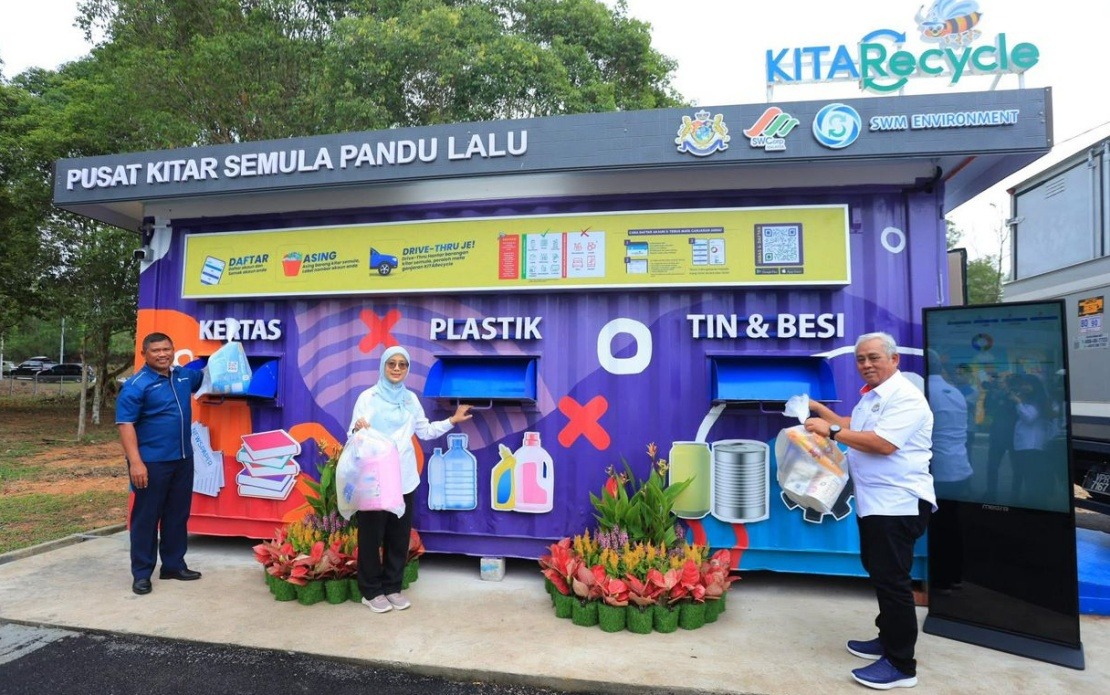
The expansion of collection facilities across Johor has been methodical and strategic. As of the latest reporting period, KITARecycle operates 39 dedicated facilities throughout the state, with each site selected to serve identifiable populations and residential clusters. The recent opening of the Pasir Gudang Drive-Thru Recycling Centre (DTRC) exemplifies the programme's evolution toward convenience-focused models that accommodate busy urban lifestyles. Drive-thru centres reduce barriers to participation by eliminating the need for customers to exit vehicles and navigate unfamiliar facilities, a practical adaptation that acknowledges contemporary Malaysian commuting patterns and time constraints.
The Pasir Gudang facility showcases innovation in repurposing industrial materials for environmental purposes. Constructed from two converted shipping containers, the centre demonstrates resource efficiency whilst creating a distinctive landmark that signals environmental commitment to the surrounding community. The design accommodates six collection slots segregated by material type—paper, beverage cartons, plastic bottles, and glass—enabling straightforward sorting at the point of deposit. Security is integrated through a closed-circuit television system, protecting materials from tampering and ensuring accountability within the collection chain. This thoughtful design balances accessibility with operational integrity, establishing standards that other Malaysian municipalities might replicate.
The operational requirements for KITARecycle users reflect a deliberate emphasis on source separation—the practice of sorting recyclables at origin rather than at processing facilities. Participants must categorise materials before visiting collection points and label each package with their unique KITARecycle account number. This system creates an auditable connection between household and collection, enabling programme managers to track participation patterns and provide rewards calibrated to individual contribution levels. The account number linkage also facilitates data collection for impact assessment and allows the programme to identify which neighbourhoods show strong engagement and which require targeted promotion or additional infrastructure.
The reward mechanisms embedded within KITARecycle distinguish it from traditional municipal collection systems and address a significant behavioural economics question: how to incentivise consistent participation in a programme that generates public goods but limited private return for individual households. By attaching economic or recognition-based rewards to measured contributions, the programme overcomes the free-rider problem that often undermines purely civic-minded recycling appeals. For Malaysian households managing tight budgets, such incentives can meaningfully influence disposal decisions, nudging individuals toward formal collection systems rather than informal dumping or uncontrolled burning of waste.
The scale achieved in Johor positions the state as a leading region for formalised household recycling in Malaysia and provides a template for expansion into other peninsular and East Malaysian territories. However, the 3.8 million kilogram accumulation must be contextualised against total waste generation in the state. Johor, with a population exceeding 4 million, generates substantially more total waste than KITARecycle currently captures, suggesting significant untapped potential. Achieving higher participation rates and material recovery will require sustained investment in awareness campaigns, particularly targeting younger generations and migrant populations less familiar with the programme.
Corporate partnerships have proven essential to KITARecycle's viability and expansion. Private sector engagement diversifies funding streams beyond municipal budgets and demonstrates that environmental stewardship aligns with business interests—whether through corporate social responsibility commitments or emerging circular economy business models. Companies participating in IMELC and providing collection support strengthen their community presence whilst gaining authentic environmental credentials. For multinational corporations operating in Malaysia, association with formalised recycling programmes addresses international stakeholder expectations regarding operational sustainability and local environmental contribution.
The Pasir Gudang centre's opening reflects SWM Environment's confidence in expanding the model further across Johor's urban and suburban areas. Pasir Gudang itself, as a significant industrial and population hub, represents a logical location for infrastructure expansion. Industrial areas often generate substantial cardboard, plastic, and metal waste from manufacturing and logistics operations; consumer recycling participation in nearby residential zones can supplement commercial streams. This spatial strategy potentially increases the efficiency of collection routes and processing operations by concentrating material flows.
Looking ahead, KITARecycle's trajectory hinges on maintaining user engagement whilst expanding infrastructure accessibility. The nearly 80,000 registered users represent a significant engaged cohort, but conversion of casual participants into consistent contributors remains ongoing work. Seasonal variations in recyclable material availability—such as increased cardboard during year-end shopping periods—require operational flexibility. Data from the programme about what materials prove most valuable and what collection methods generate highest participation will inform future municipal waste management policy across Malaysia.
The environmental significance of 3.788 million kilograms of diverted materials extends beyond mere tonnage figures. Each kilogram of recovered paper eliminates the environmental costs of virgin pulp production, including water consumption, chemical processing, and forest harvesting impacts. Plastic diversion prevents accumulation in marine ecosystems and reduces demand for petroleum extraction. Metal recovery conserves mining resources and energy-intensive smelting processes. Glass collection preserves silica reserves and minimises the thermal energy required for new container production. Collectively, KITARecycle's Johor achievements represent meaningful environmental resource conservation, though quantifying avoided emissions and resource depletion would strengthen the programme's public communication and justify continued investment.

