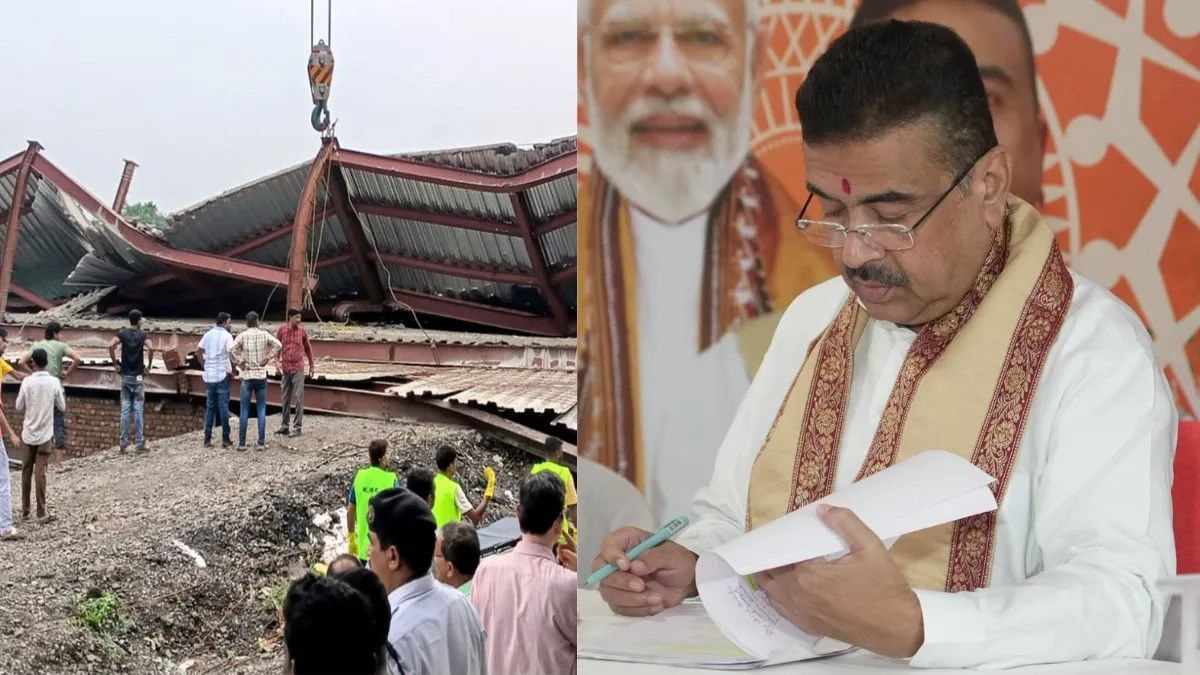
The death toll from a warehouse collapse at Taratala in Kolkata has climbed to 11 as rescue teams extend their search into the second day of operations. Another body was recovered and brought to the Trauma Care Centre at SSKM Hospital on Thursday afternoon, adding to the grim toll. Officials remain concerned that additional workers may still be trapped under the rubble, prompting continued coordinated efforts between central government agencies and the West Bengal state authorities.
The rescue mission demonstrates a rare display of seamless cooperation involving personnel from the Indian Army, the National Disaster Response Force, and various other emergency services working in tandem at the collapse site. This multiagency response reflects the scale of the disaster and the urgency authorities place on locating any remaining survivors. However, the ongoing operation also highlights the structural and logistical challenges inherent in extracting victims from such incidents, where time and careful excavation are critical factors.
In a fiery assembly address, West Bengal Chief Minister Suvendu Adhikari has launched a scathing indictment of the previous Kolkata Municipal Corporation administration, which was controlled by the Trinamool Congress. Adhikari presented documentary evidence suggesting that the Taratala warehouse building plan received official approval despite containing significant structural deficiencies. This allegation strikes at the heart of regulatory failure and raises troubling questions about the adequacy of the approval process for major construction projects in the state's capital.
Adhikari specifically invoked documents bearing the signature of former Mayor Firhad Hakim, using these as evidence of negligence or potential complicity in the approval of a flawed building design. The chief minister indicated that a government fact-finding report had already been completed, and he raised pointed questions about the professional responsibility of the engineers and officials who sanctioned the construction plan. These accusations suggest a systemic problem within the municipal approval machinery that may have extended beyond a single decision.
The chief minister's comments about corruption and the extraction of "cut money"—illegal payments made to facilitate approvals—paint a picture of an administration where financial incentives may have superseded public safety considerations. He characterised this systemic corruption as having transformed Kolkata into a "city of death," a stark phrase that encapsulates both the immediate tragedy and the alleged broader institutional decay. This framing suggests that the warehouse collapse may represent not an isolated incident but rather a symptom of deeper governance problems.
Investigative action has already commenced, with five arrests made so far. Those detained include the construction company's supervisor, the iron structure fabricator, the land lessee, the labour contractor associated with Trimex, and a broker implicated in the KMC approval process. These arrests span the chain of responsibility from construction execution through to administrative approval, indicating a comprehensive approach to accountability. However, the prime accused individual identified as Azgar remains at large, complicating the investigation.
In response to the disaster, Adhikari has declared a comprehensive suspension of all construction activity across multiple municipalities in the greater Kolkata metropolitan area for the next four weeks. This moratorium applies to the Kolkata Municipal area and extends to surrounding jurisdictions including Rajarhat-New Town, Maheshtala, Budge Budge, Pujali, Bishnupur, Sonarpur, and Baruipur. The suspension exempts only essential services, reflecting an attempt to balance safety concerns with the continuation of critical infrastructure maintenance.
During this four-week construction freeze, all previously approved building plans across these areas will undergo a comprehensive audit. This ambitious exercise represents an attempt to identify potential safety vulnerabilities in existing approvals before additional structures are constructed or completed. The sheer scale of this audit suggests authorities have recognised that regulatory failures may be widespread rather than limited to the Taratala case.
Responsibility for overseeing the audit has been vested in a high-level committee chaired by Additional Chief Secretary Rajesh Pandey. The committee's composition reflects a multidisciplinary approach, drawing on expertise from senior government officials, the Indian Institute of Technology Kharagpur, Rail India Technical and Economic Service, Indian Railway Construction Limited, the Fire Services Department, the Public Works Department, and the Kolkata Municipal Corporation itself. This broad representation suggests authorities are attempting to bring independent technical expertise to bear on the audit process and reduce the possibility of institutional capture.
Adhikari has emphasised that the government will pursue a zero-tolerance approach regarding those found responsible for regulatory failures or construction negligence. He indicated that guilty parties may face not only imprisonment but also confiscation of their assets, with proceeds directed toward compensation for victims and their families. This statement signals an intent to pursue both criminal accountability and financial restitution, though questions may remain about the practical and legal feasibility of such comprehensive asset seizure.
The Kolkata warehouse collapse carries broader implications for construction oversight across South Asia. India's rapid urbanisation has often outpaced regulatory capacity, creating environments where profit incentives may override safety considerations. The incident raises urgent questions about whether similar vulnerabilities exist in building approval processes across other Indian cities and in neighbouring countries like Bangladesh and Pakistan, where rapid development and sometimes weaker governance structures present comparable risks. For Malaysia, which has its own construction industry and regulatory frameworks, the incident serves as a cautionary tale about the dangers of regulatory capture and the importance of rigorous, independent oversight of building approvals and construction practices.

