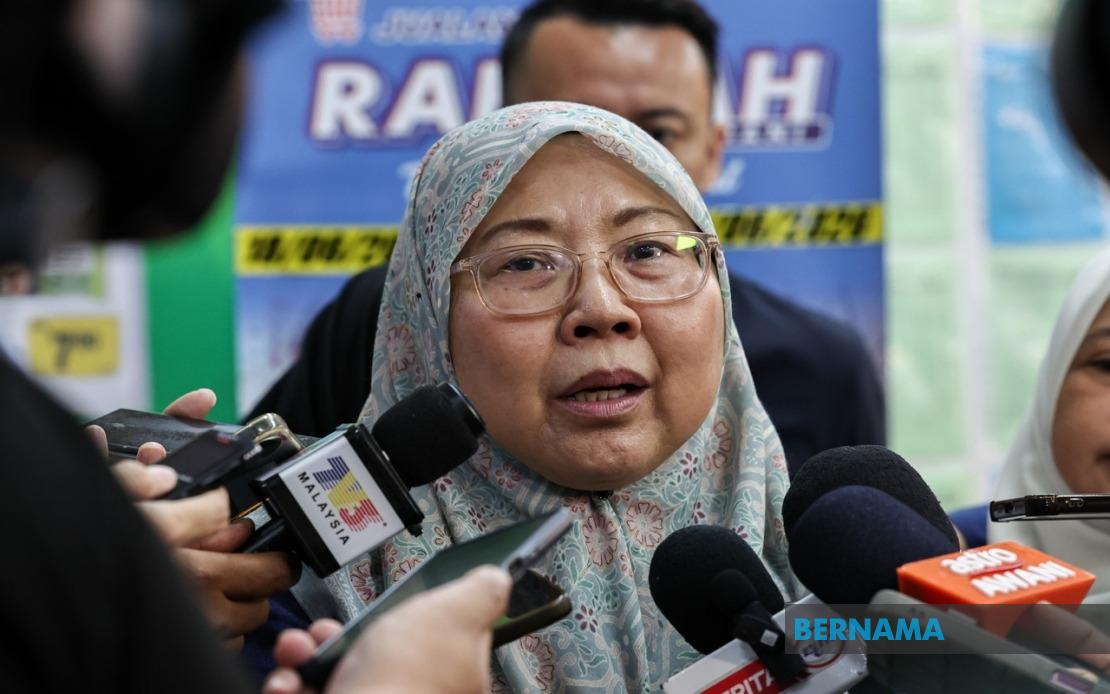
The Ministry of Domestic Trade and Cost of Living (KPDN) has moved to reassure consumers and businesses that essential commodity supplies will remain stable throughout the Johor and Negeri Sembilan state election period, even as international freight expenses continue climbing due to regional conflicts. Deputy Minister Datuk Dr Fuziah Salleh outlined a comprehensive preparedness strategy designed to manage anticipated demand surges from election officials and visiting dignitaries, signalling confidence that existing logistics networks can handle the temporary spike without triggering shortages or price inflation.
Recognising the vulnerability of supply chains to external shocks, the ministry has implemented proactive measures aimed at fortifying the distribution infrastructure for subsidised staples. Among the most significant innovations is a streamlined system for subsidised packet cooking oil that bypasses traditional wholesale intermediaries, moving product directly from repackers to retail points of sale. This restructuring eliminates unnecessary transaction layers that historically created bottlenecks and reduced supply predictability, particularly during periods of heightened demand.
Johor's monthly allocation of subsidised cooking oil stands at over 3,000 metric tonnes, distributed through a network of 18 licensed repackers operating across 95 designated points of sale. The retail network encompasses major supermarket chains including Econsave outlets strategically positioned across the state to ensure geographical accessibility. Dr Fuziah's inspection of the Taman Daya Econsave location revealed approximately 100 cartons of subsidised cooking oil in daily stock, indicating that current inventory levels comfortably meet localised consumption patterns without depletion.
To prevent diversion of subsidised goods to unauthorised users or the grey market, the ministry has instituted verification protocols at point-of-sale checkouts. These mechanisms require customers to scan mobile applications or present MyKad identification documents, creating an audit trail that restricts subsidised purchasing to eligible Malaysian citizens. Such gatekeeping measures represent an acknowledgment that subsidised commodity schemes remain vulnerable to leakage and fraudulent claims, particularly during high-volume retail periods when cashier attention may be divided.
The broader Rahmah MADANI Sales Programme (PJRM) has emerged as a cornerstone of the government's cost-of-living mitigation strategy, demonstrating sustained consumer engagement since its launch. Between January 1 and June 13, 2026, nationwide PJRM events totalled 13,692 sessions, generating over 2.3 million visitor interactions and completing 1.46 million transactions. Within Johor specifically, the programme orchestrated 920 dedicated events across all 56 state constituencies, indicating near-universal geographic coverage and suggesting that rural and urban communities alike have accessed subsidised merchandise through this channel.
These participation figures carry political significance as the state election approaches, functioning as a barometer of programme visibility and public awareness. The scale of PJRM engagement in Johor—with 2.3 million visitors representing a substantial proportion of the state's electorate—suggests that government cost-of-living interventions have achieved meaningful market penetration. For election strategists, such metrics imply that messaging around economic relief initiatives may resonate with voters evaluating incumbent performance on household affordability.
The timing of the KPDN announcement reflects broader anxieties about supply chain resilience during politically significant periods. Elections routinely generate demand volatility as election workers, observers, media personnel, and visiting officials converge on polling regions, straining local retail infrastructure. The ministry's proactive communications appear designed to prevent panic buying or hoarding by assuring stakeholders that distribution networks have been stress-tested and reinforced. By publicly detailing specific quota volumes, outlet counts, and inventory snapshots, KPDN provides granular reassurance rather than abstract platitudes.
The global logistics environment has deteriorated markedly due to the West Asia conflict, with shipping costs and fuel surcharges creating upward pressure on import-dependent supply chains. Malaysia's substantial reliance on imported food commodities and packaging materials makes it vulnerable to these cost escalations, which eventually filter through to consumer prices unless actively managed. The ministry's framing of its preparations within this difficult international context suggests an attempt to demonstrate governmental agency in an otherwise constrained operating environment, emphasising what remains controllable rather than lamenting external constraints.
For Southeast Asian observers, Malaysia's approach to subsidised commodity distribution during elections offers a model of targeted price support mechanisms. By limiting subsidies to defined product categories and verifying eligibility through identity documentation, the government attempts to balance fiscal sustainability with social protection—a perpetual policy tension in developing economies. The direct distribution system from repacker to retailer, eliminating wholesale intermediaries, reflects lessons learned from previous supply disruptions and represents incremental infrastructure modernisation.
The Johor state election scheduled for July 11 represents the first electoral contest following several months of PJRM implementation, providing an opportunity to assess whether supply assurance messaging and operational reinforcement prevent commodity-related disruptions. Early voting commences July 7, with candidate nominations due June 27, giving the ministry a narrow operational window to validate that supply systems perform as intended. Should shortages or price spikes materialise despite these assurances, the credibility of government retail and logistics coordination would face public scrutiny.
From a consumer perspective, the KPDN undertakings reflect recognition that election-period supply stability constitutes a legitimate public interest. By guaranteeing subsidised staple availability, the government implicitly acknowledges the politically sensitive nature of commodity shortages and affirms its capacity to manage critical infrastructure during administratively demanding periods. For households already contending with elevated living costs, election-period supply assurance carries tangible significance beyond symbolic government commitments.
Looking forward, the scalability and sustainability of these supply management approaches will determine whether they become permanent fixtures of Malaysia's retail infrastructure or remain election-specific interventions. The integration of digital verification systems, the direct distribution model, and the nationwide PJRM framework collectively represent an evolving governance approach to commodity security—one that attempts to blend social protection objectives with supply chain efficiency. The Johor election outcome may influence subsequent policy refinements and whether similar measures are institutionalised across other states and commodity categories.