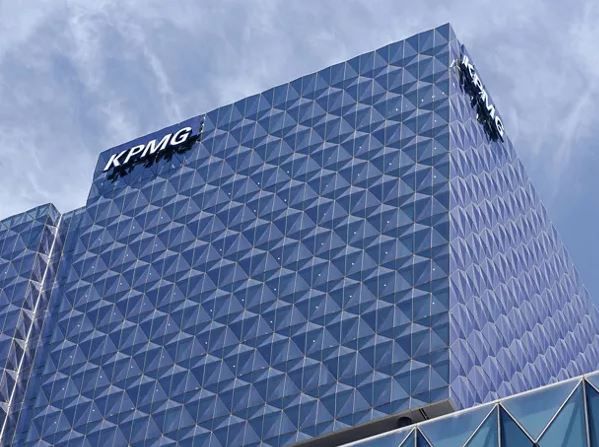
The leadership crisis at KPMG Australia has intensified with the resignation of Chairman Martin Sheppard alongside two senior audit partners, Paul Rogers and Eileen Hoggett, in response to escalating allegations that the firm breached professional standards by accessing confidential client information for competitive advantage. The departures, announced on Tuesday, represent the firmest response yet to a scandal that has already claimed the roles of the firm's chief executive officer and audit leader, signalling growing accountability within one of Australia's "Big Four" accounting firms.
Interim CEO Stan Stavros acknowledged the gravity of the situation, stating that the organisation had fundamentally failed to uphold the rigorous ethical standards demanded of professional auditors and advisors. His statement underscored the broad consequences of the misconduct, extending beyond corporate reputation to affect staff morale, client confidence, and public trust in the profession itself. The resignations represent an effort to demonstrate institutional commitment to remediation, though they arrive after months of mounting criticism and regulatory scrutiny.
The scandal centres on allegations that KPMG leveraged confidential board papers from Lendlease, a major Australian real estate developer, to strengthen bidding proposals for significant audit contracts. A whistleblower, whose allegations became public in March, specifically identified Rogers and Hoggett as the lead partners overseeing the Lendlease audit team during the period when the alleged misconduct occurred. The use of privileged client information to gain competitive advantage in tender processes would represent a severe breach of professional fiduciary duties and conflict-of-interest protocols that underpin the accounting profession's ethical framework.
For regional business communities, including Malaysia's corporate sector, the KPMG situation underscores broader vulnerabilities within global professional services networks. International accounting firms operate across borders, and audit quality, confidentiality, and ethical standards are fundamental to the integrity of financial reporting and investor confidence. The fact that such breaches allegedly occurred within Australia's tightly regulated corporate environment raises questions about enforcement mechanisms and the consistency of professional standards across KPMG's global practice.
Rogers and Hoggett now face formal investigation by the Australian Securities and Investments Commission (ASIC), the nation's corporate regulator, which holds enforcement authority over auditors and audit practices. The regulatory dimension adds serious legal and professional jeopardy to the reputational damage already incurred. Should ASIC's investigation substantiate the allegations, both partners could face disciplinary sanctions ranging from professional censure to deregistration from the audit practice register, effectively ending their careers as licensed auditors.
The departure of multiple senior executives signals that KPMG's board and interim leadership view the scandal as sufficiently grave to necessitate wholesale governance restructuring. The firm has committed to appointing an independent chair for its Australian operations and expanding independent representation on its local board, moves designed to insulate decision-making from potential conflicts and to establish clearer oversight mechanisms. These governance reforms typically follow major corporate failures and aim to restore stakeholder confidence through enhanced institutional checks.
The accumulation of departures—beginning with the CEO and audit leadership, followed now by the chairman and two named partners—suggests that regulatory and reputational pressure has reached a critical threshold within the organisation. Each resignation potentially opens internal investigations and settlements with affected parties, amplifying the financial and operational toll on KPMG Australia. For a professional services firm whose core asset is reputation and client trust, such sustained leadership instability poses existential challenges.
For Malaysian enterprises and audit committees, the KPMG situation carries practical implications for vendor selection and oversight. Multinational corporations often engage global accounting firms precisely because they represent established standards and international credentials. Revelations of ethical lapses at one of the Big Four may prompt Malaysian boards to intensify due diligence on audit partner track records, fee structures that might incentivise conflicts of interest, and the independence of audit teams from consulting divisions within the same firm. The scandal illustrates why robust internal controls and clear information governance protocols must exist independently of external auditor integrity.
The allegations also highlight the tension inherent in integrated professional services firms where audit, tax, advisory, and consulting divisions operate under common ownership. Lendlease's confidential materials, accessed legitimately for audit purposes, were allegedly leveraged to support bids for other services—a form of cross-selling that, while commercially attractive, creates obvious conflicts. Such structures are common globally, but the KPMG case demonstrates why regulatory frameworks and internal ethical protocols must be sufficiently stringent to prevent privileged information from flowing across operational silos.
The timing and scope of these resignations also reflect broader scrutiny of audit quality and professional independence that has intensified globally following high-profile corporate failures. Regulators, investors, and the public increasingly question whether audit firms maintain sufficient distance from their commercial interests to provide objective assurance. KPMG Australia's mishandling of the whistleblower allegations and the subsequent departures underscore that even established, regulated entities can experience significant lapses in ethical judgment and institutional discipline.
Moving forward, the success of KPMG Australia's remediation efforts will depend on whether the governance reforms generate genuine accountability and whether regulatory bodies impose sufficiently meaningful sanctions to deter similar conduct across the profession. For Malaysian stakeholders reliant on international audit quality and professional integrity, the trajectory of KPMG's recovery—or continued deterioration—warrants continued attention as a bellwether for global professional services standards.

