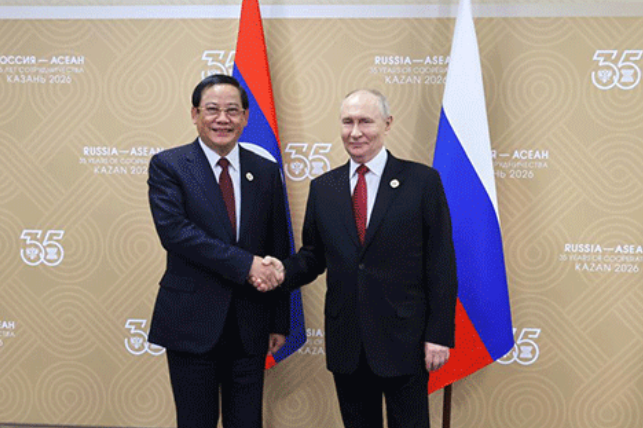
Laos and Russia have moved to solidify their long-standing partnership through a series of high-level meetings that underscore the depth of engagement between Vientiane and Moscow. Prime Minister Sonexay Siphandone's first official visit to Russia since assuming office culminated in substantive discussions with President Vladimir Putin and Russian Prime Minister Mikhail Mishustin during the Russia-Association of Southeast Asian Nations Summit held in Kazan from June 14-17. The timing of these talks, which took place as the two nations marked 65 years of diplomatic relations, reflects the enduring nature of ties that have weathered decades of geopolitical shifts across Asia and beyond.
At the heart of the recent engagement lies a landmark agreement on nuclear energy cooperation that carries significant implications for Laos's development trajectory. President Putin characterised the signing of an intergovernmental accord on the peaceful use of nuclear technology as a milestone achievement, with the arrangement establishing the legal framework for constructing a small nuclear power plant utilising Russian technology within Lao territory. This initiative represents a substantial vote of confidence in Laos's capacity to manage sophisticated energy infrastructure and signals Russia's willingness to transfer critical technology to its Southeast Asian partner. For a nation still developing its industrial and energy sectors, such cooperation could prove transformative, though it will inevitably attract scrutiny regarding safety protocols and long-term environmental commitments.
The breadth of cooperation between Laos and Russia extends well beyond energy infrastructure. During their discussions, both sides reviewed ongoing collaboration across multiple sectors including mining, agriculture, banking, digital economy initiatives, transport networks, and educational exchange programmes. This diversified engagement portfolio suggests that bilateral relations have matured beyond traditional Cold War-era frameworks, evolving instead into pragmatic partnerships addressing contemporary development needs. The emphasis on education is particularly noteworthy for Malaysian observers, as it highlights how Russia maintains influence in Southeast Asia through human capital development, offering annual scholarships and training opportunities for Lao government officials and nationals.
Moscow's appreciation for Laos's diplomatic support within multilateral forums constituted another dimension of the reaffirmed partnership. President Putin explicitly acknowledged Laos's backing for Russia-ASEAN cooperation initiatives and noted with apparent satisfaction that 2026 will mark the 35th anniversary of formal relations between Russia and the regional bloc. The Russian leader also commended President Thongloun Sisoulith's attendance at Russia's Victory Day celebrations in May and the participation of Lao military personnel in the 80th anniversary parade commemorating Soviet victory in World War II. These gestures, while symbolic, serve to underscore Laos's alignment with Russian geopolitical narratives and Moscow's broader efforts to maintain relevance within Southeast Asia despite Western pressure and sanctions.
Prime Minister Sonexay's characterisation of the Kazan summit reflected Vientiane's appreciation for Russia's continued regional engagement and signalled Laos's comfort with positioning itself as a bridge between Moscow and ASEAN. He congratulated the Russian government on successfully hosting the gathering, viewing it as evidence of Russia's active participation in regional and international affairs. This framing is significant for understanding how Laos navigates its complex geopolitical environment—straddling relationships with multiple major powers while maintaining a consistent policy of cooperation with Russia based on what Sonexay described as longstanding friendship and strategic partnership.
Educational infrastructure development has emerged as a tangible manifestation of bilateral goodwill. Prime Minister Sonexay expressed particular appreciation for ongoing Russian assistance in human resource development and formally welcomed collaborative efforts to construct the Laos-Russia Friendship School in Vientiane, which authorities expect to complete in the near term. This institution will serve symbolic and practical purposes, fostering cultural exchange and deepening people-to-people connections between the two nations while providing Lao students exposure to Russian language and curricula. Such educational initiatives often generate long-term diplomatic dividends by cultivating cohorts of professionals with favourable dispositions toward partner nations.
The business dimensions of the partnership received attention through a dedicated Laos-Russia trade and investment forum convened during Sonexay's visit. The forum's explicit focus on promoting commercial ties and investment flows suggests that both governments view economic interdependence as complementary to their political alignment. For Malaysia and other ASEAN nations, the expansion of Russia-Laos trade cooperation represents another dimension of external power engagement within the region, diversifying economic partnerships in ways that reduce dependence on traditional Western markets and Asian trading partners.
Cultural diplomacy added a lighter dimension to proceedings when Prime Minister Sonexay presided over the ceremonial handover of two elephants to the Kazan Zoo. Designated as gifts from President Thongloun and the Lao people to commemorate both the 65th anniversary of diplomatic relations and Russia Day on June 12, these animals embody the symbolic language of bilateral friendship. Such gestures, though ceremonial in nature, carry diplomatic weight in international relations and reflect the care both nations invest in maintaining positive atmospheres for their engagement.
The convergence of nuclear cooperation, educational exchange, trade promotion, and strategic diplomatic alignment demonstrates that Laos-Russia relations have evolved into a multifaceted partnership serving distinct national interests. For Laos, deepening ties with Russia diversifies its external relationships and provides access to technology and expertise otherwise difficult to obtain. For Russia, maintaining strong partnerships with smaller Southeast Asian nations like Laos helps counterbalance Western influence and preserves Moscow's role as a consequential player in regional affairs despite economic constraints and international isolation. For Malaysia and the broader ASEAN community, these developments underscore the region's attractiveness to external powers and the complexity of balancing multiple partnerships while pursuing domestic development objectives.
Looking forward, the agreements reached during Sonexay's visit establish frameworks for deepening cooperation in critical areas over coming years. The nuclear energy accord, in particular, will require sustained technical collaboration, regulatory oversight, and possibly additional financial arrangements. Educational initiatives will gradually produce cohorts of professionals with enhanced ties to Russia. Commercial partnerships will deepen economic interdependence. Collectively, these mechanisms lock in a relationship that will persist regardless of shifts in broader geopolitical dynamics, reflecting the pragmatic calculation that sustained partnership serves fundamental interests of both nations.

