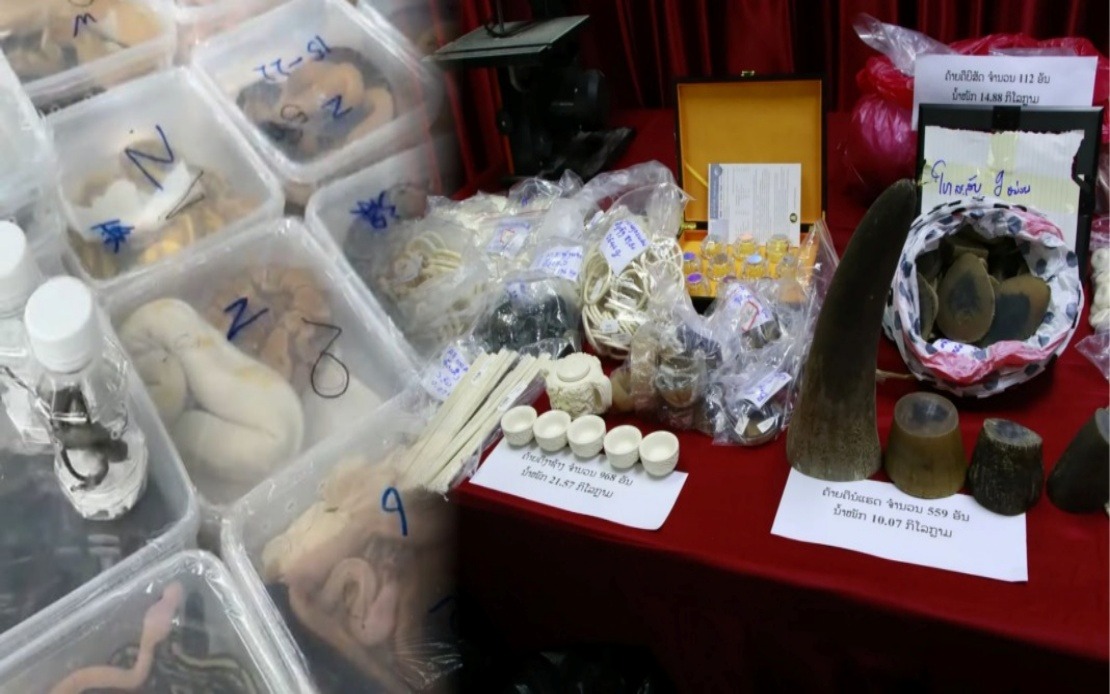
A sophisticated wildlife trafficking network operating across the Mekong region has been exposed through a series of coordinated raids by Lao authorities, revealing the scale of illegal animal smuggling that continues to devastate endangered species populations throughout Southeast Asia. The operations, which unfolded across multiple provinces and international checkpoints over a single week, culminated in the rescue of nearly 300 live creatures and the seizure of significant quantities of protected wildlife materials destined for lucrative black markets in Thailand, China, and Vietnam.
The initial breakthrough came when the Lao Wildlife Enforcement Network conducted a search in Luang Prabang, a major tourist hub that has become an unexpected hotspot for trafficking activities. Officers discovered approximately 60 kilogrammes of contraband wildlife products, including what appeared to be ivory, animal gallbladders harvested from protected bears, pangolin scales in various forms of processing, and what authorities believed to be rhinoceros horn fragments. The discovery extended beyond raw materials to refined commercial products, with investigators uncovering containers of elephant skin powder, tubes of traditional herbal medicines suspected of containing illegal wildlife ingredients, and processed parts from protected bird species including hornbill remains destined for traditional medicine practitioners and souvenir merchants.
Four days after the Luang Prabang seizure, wildlife rangers achieved an even more significant result when they intercepted a shipment at the Vang Tao International Checkpoint in Champasak Province, which serves as the primary crossing point between Laos and Thailand's Ubon Ratchathani Province. The operation netted 294 live reptiles and other wildlife, comprising multiple species of turtles, python snakes, various types of green and gold-ringed cat snakes, and numerous lizard specimens. These animals, most not native to Laos, had apparently been consolidated from supply chains originating in Cambodia, Myanmar, and potentially China before being transported northward toward Thai and ultimately international markets. The scale of this single seizure underscores how Laos has become a critical transit point rather than merely a source nation for trafficking operations.
These high-profile busts form part of a broader crackdown that has intensified throughout the region in recent weeks. Thai authorities arrested a Nakhon Phanom woman operating a combined traditional medicine shop and souvenir business on May 27, recovering more than 100 protected animal remains that had been smuggled across the Lao border. The merchandise in her shop represented the final consumer-facing layer of the trafficking chain, where endangered species products are sold openly to both domestic customers seeking traditional remedies and tourists seeking authentic souvenirs. Just days earlier, on May 16, Thai and Lao border enforcement teams collaborated to prevent a major shipment of 130 kilogrammes of cut elephant ivory and animal carcasses from crossing into Thailand, demonstrating increasing cooperation between neighbouring nations in tackling the crisis.
The geographical positioning of Laos makes it uniquely vulnerable to becoming a trafficking hub. Sharing borders with five nations—Cambodia, China, Myanmar, Thailand, and Vietnam—Laos occupies a central position in Southeast Asian trade networks where wildlife can be easily redirected toward whichever market offers the highest prices. The country's relatively limited enforcement capacity, compared to more developed neighbours, combined with porous borders and a tradition of wildlife consumption in both traditional medicine and culinary practices, creates an environment where organised trafficking networks can flourish with relatively low risk of serious consequences.
The economic dimensions of wildlife trafficking reveal why criminal networks view the trade as an attractive proposition. The United Nations Office on Drugs and Crime calculated in its 2024 World Wildlife Crime Report that illegal wildlife commerce generates approximately US$10 billion annually in global transactions, placing it on par with human trafficking, drug smuggling, and the international arms trade in terms of criminal profit potential. This astronomical valuation explains the sophistication and violence associated with trafficking operations, as well as the corruption that pervades enforcement agencies across the region. The report specifically identifies corruption among government officials, border agents, and law enforcement as the primary enabling factor allowing traffickers to operate with such apparent impunity.
The species being trafficked along the Mekong corridor reflect the particular demands of Asian markets, where traditional medicine systems prize animal parts for purported therapeutic properties despite scientific evidence refuting most such claims. Bear gallbladders, sought for centuries in traditional Chinese medicine despite legal alternatives, command prices exceeding US$10,000 per litre in some markets. Pangolin scales, the most trafficked mammal parts globally, are used in traditional remedies despite the pangolin's status as a critically endangered species with populations declining across Africa and Asia. Elephant ivory and rhino horn continue to attract wealthy collectors and trophy hunters, while reptiles face demand from both the exotic pet trade and traditional medicine practitioners.
For Malaysia and other Southeast Asian nations, the exposure of this trafficking ring carries significant implications beyond Laos's borders. Malaysian ports, particularly in Kuala Lumpur and Port Klang, have historically served as transshipment hubs where wildlife products are repackaged and rerouted toward final destinations in China, Vietnam, and beyond. Malaysian consumers also participate in the demand side through purchases of traditional medicine products and exotic pets, creating economic incentives that drive poaching throughout the region. The expansion of trafficking networks into Laos suggests that criminal enterprises are shifting supply routes and consolidation points to evade increasingly effective enforcement in Thailand and Malaysia, potentially making the region's most vulnerable nation a central player in transnational smuggling operations.
The coordination between Lao, Thai, and international agencies demonstrated in these seizures reflects a shifting enforcement paradigm in the region. Rather than treating wildlife crime as a isolated enforcement matter, regional governments increasingly recognise that effective prosecution requires transnational cooperation, intelligence sharing, and pressure on the final consumer markets driving demand. The involvement of organisations like Traffic Southeast Asia, which monitors trafficking patterns and provides crucial intelligence to enforcement agencies, has elevated the sophistication of enforcement operations beyond simple border patrols to strategic interdiction targeting major trafficking networks and their leadership structures.
Yet despite these encouraging enforcement successes, the underlying dynamics driving trafficking remain intact. As long as traditional medicine practitioners maintain demand for animal products, as long as wealthy consumers view endangered species parts as status symbols or remedies, and as long as the profit margins available to traffickers exceed the penalties for being caught, criminal networks will continue evolving their tactics and routes. The discovery of nearly 300 animals in a single checkpoint seizure suggests that traffickers are attempting to move larger quantities, possibly in response to increased enforcement pressure elsewhere, or reflecting growing demand in final markets.
Laos faces the considerable challenge of building institutional capacity to sustain the momentum demonstrated in these recent operations. Enforcement success depends not merely on individual seizures but on consistent, coordinated action over extended periods, supported by adequate resources, training, and incentives for enforcement personnel to resist corruption. The United Nations Office on Drugs and Crime's emphasis on corruption as a key facilitator recognises that in many instances, traffickers move illegal cargo with the knowledge or active assistance of border officials, wildlife rangers, or police officers who have been compromised through bribery. Without addressing these systemic vulnerabilities, even dramatic seizures represent only temporary disruptions to trafficking flows rather than sustainable solutions.
Regional governments must also confront the demand side of the trafficking equation. Public awareness campaigns highlighting the extinction risks facing trafficked species, combined with efforts to validate or debunk traditional medicine claims, may reduce consumption patterns particularly among younger, more educated populations. Simultaneously, enforcement agencies need to target not merely couriers and street-level traffickers but the organised crime networks and corrupt officials who orchestrate these operations at scale. The May arrests in Thailand, targeting both traffickers and retail merchants, suggest an emerging willingness to hold merchants accountable rather than focusing exclusively on border interdiction, a strategic shift that could gradually reduce market opportunities for trafficked goods.

