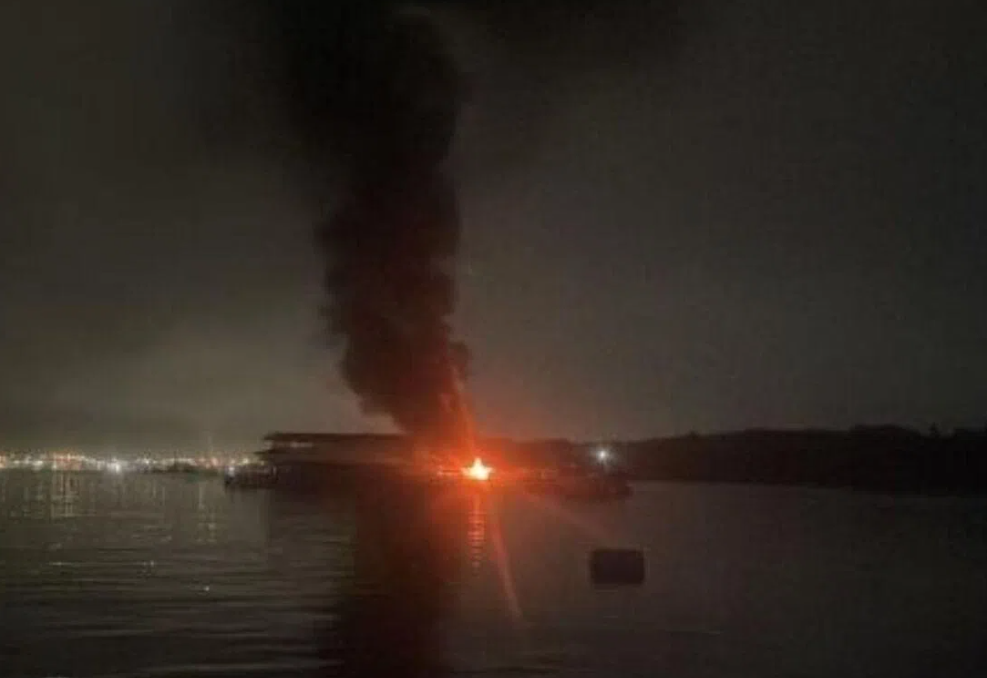
Singapore's aquaculture sector faced a significant setback when a fire erupted at multiple floating fish farms positioned near Pulau Ubin and Pulau Ketam on June 24, with investigators suspecting a lightning strike as the catalyst. The blaze, which engulfed at least two adjacent operations situated off the Lorong Halus jetty near Pasir Ris, required an extended firefighting effort and response from multiple agencies to bring under control. The Singapore Civil Defence Force (SCDF) received the alert at approximately 8.10pm and coordinated with marine resources to extinguish the flames, with fortunately no injuries reported during the incident.
The fire's origin points to the solar panel infrastructure at one of the farms, which was apparently struck by lightning during what appears to have been stormy weather conditions. Electrical systems and renewable energy installations at these offshore operations have emerged as potential vulnerability points during severe weather events. The initial blaze subsequently spread to two neighbouring farms before emergency responders managed to contain and eliminate the threat, illustrating the interconnected nature of clustering these operations in close proximity and the cascading risk such arrangements can create during emergencies.
One farm operator disclosed substantial financial consequences from the incident, estimating personal losses at up to S$120,000. The damage inventory extended across critical operational assets, encompassing feed storage systems, backup power generators, the solar panel arrays themselves, a fishing vessel, multiple fish traps used for collection and transport, and extensive fishing net systems. The destruction of netting proved particularly consequential, as approximately half of the farm's aquatic inventory escaped during the chaos, representing both immediate lost inventory and potential ecological considerations regarding non-native species dispersal in local waters.
The operational vulnerability exposed by this event extends beyond mere equipment replacement costs. The farm owner highlighted a troubling insurance dimension to the disaster, noting his inability to file claims for the fire damage—a gap in coverage that raises broader questions about risk management frameworks within Singapore's aquaculture industry. This insurance limitation creates substantial uncompensated financial exposure for operators, particularly those managing modest-scale operations where such losses could prove existential.
Historical context provided by the affected operator reveals this is not an unprecedented occurrence at these installations. The farm owner noted previous instances where lightning damaged solar panels, but on those occasions, workers were present and could respond rapidly to prevent escalation into major conflagrations. The absence of personnel during the June 24 incident allowed the initial strike to develop unchecked into a spreading fire, underscoring the operational challenges of maintaining 24-hour monitoring and rapid response capabilities at remote offshore facilities. This staffing consideration raises questions about optimal security and safety protocols for floating farm operations.
The response mobilisation demonstrated Singapore's maritime emergency infrastructure capabilities and inter-agency coordination. Beyond the SCDF, the Maritime and Port Authority of Singapore and Airport Emergency Service deployed marine vessels to the scene, while operators from neighbouring fish farms voluntarily assisted in containing the blaze. This community response element reflects both the practical necessities of emergency management in tight geographical clusters and the collaborative ethos within Singapore's aquaculture community when facing crisis situations.
The incident carries implications for Southeast Asia's broader aquaculture expansion, where floating farm operations have proliferated across the region as a response to land scarcity and coastal development pressures. As countries including Malaysia, Vietnam, Thailand, and Indonesia scale up aquaculture production through similar floating infrastructure deployments, the safety and resilience challenges exposed by Singapore's experience merit serious consideration. Lightning vulnerability, equipment reliability under tropical weather conditions, insurance adequacy, and emergency response protocols all represent technical and regulatory challenges that regional aquaculture industries must address systematically.
Singapore's Food Agency and the Fish Farmers Association remain engaged in investigating the incident's full circumstances and implications. The inquiry outcomes may establish precedents for equipment standards, safety protocols, and insurance requirements applicable to the sector. Given Singapore's position as a regional food security hub and its aquaculture industry's strategic importance, regulatory responses to this incident could influence standards adoption across neighbouring jurisdictions where operators maintain regulatory oversight of similar installations.
The June 24 fire illustrates the operational complexities of intensive aquaculture in compact maritime environments. While floating farms represent pragmatic solutions to spatial constraints and offer advantages in water quality management and accessibility, they concentrate assets and populations in weather-exposed locations. Infrastructure hardening against tropical storm phenomena, redundant safety systems, comprehensive insurance coverage, and adequate staffing for emergency response appear essential to building resilience into these operations, particularly as climate variability increases the frequency and intensity of severe weather events across the region.

