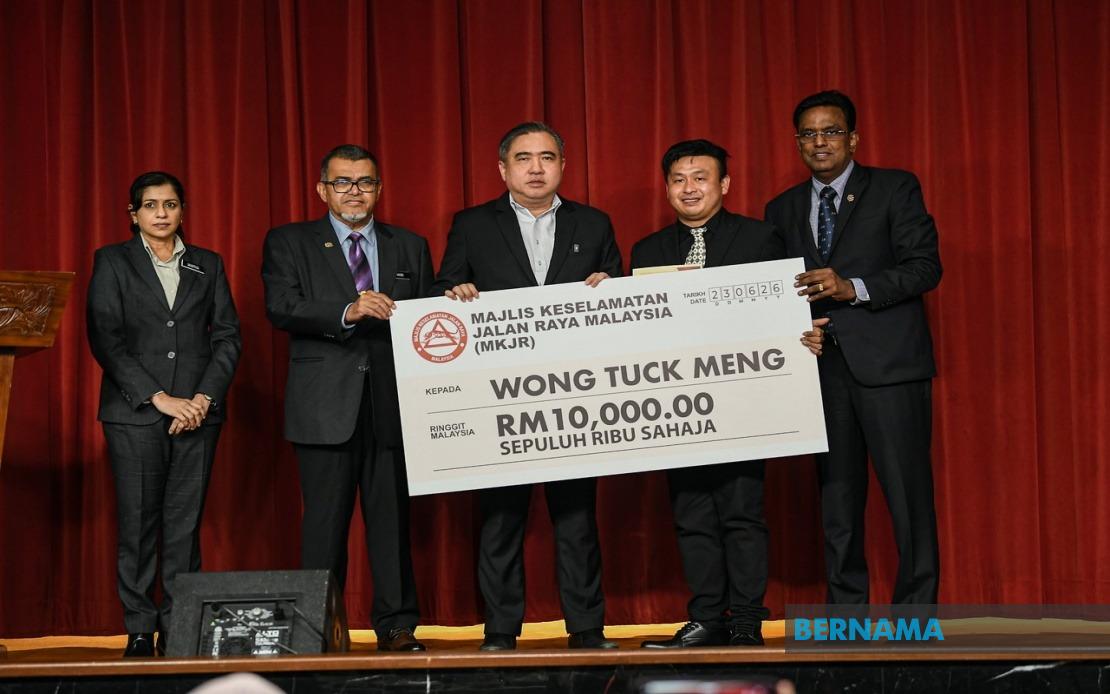
Wong Tak Ming, a lorry driver whose remarkable presence of mind averted potential disaster on the roads of Perak, was honoured today at Parliament with a Special Certificate of Appreciation and RM10,000 in recognition of his life-saving intervention. The award, presented by Transport Minister Anthony Loke at a special ceremony in the Parliament building, represents the government's acknowledgement of Wong's heroic actions during a critical incident that unfolded on June 15, when an express bus carrying 21 passengers lost control on a downhill section near the Menora Tunnel.
The incident itself underscores a persistent challenge facing Malaysian road safety: the vulnerability of commercial vehicles operating on demanding terrain where mechanical failure can cascade into tragedy within seconds. The express bus, bound for Kuala Lumpur from Kedah, experienced a technical malfunction that robbed its driver of steering and braking capability at precisely the moment when control mattered most. As the vehicle began to careen down the slope, its trajectory pointed toward potential collision with vehicles ahead, creating a scenario that could easily have resulted in multiple casualties.
Wong's response to this unfolding emergency reveals the distinction between ordinary road users and those who possess the judgment and calm necessary to act decisively under extreme pressure. Rather than attempting to avoid the runaway bus, Wong positioned his lorry strategically behind the vehicle, allowing the bus to make contact with his rear section. This calculated manoeuvre served a dual purpose: it created friction that helped decelerate the bus's downhill momentum, buying precious seconds, while simultaneously allowing Wong to maintain control of both vehicles by steering toward the guardrail until both came to rest safely.
Transport Minister Loke characterized Wong's intervention as the work of a hero, emphasizing that his actions prevented what could easily have become a catastrophic accident despite the considerable personal risk he accepted. Speaking at the appreciation ceremony, Loke noted that Wong's swift decision-making saved multiple lives and prevented the kind of tragedy that haunts Malaysia's road safety statistics. The minister's recognition reflects growing government attention to the role of ordinary citizens in preventing road disasters, a shift away from focusing solely on enforcement and infrastructure toward celebrating those who make split-second decisions that matter.
The Malaysian Road Safety Council (MKJR) funded the award, signalling institutional recognition that Wong's actions exemplify the kind of responsible driving behaviour the country should encourage and celebrate. For a nation grappling with persistent road fatality rates, Wong's story offers a powerful counter-narrative to the typical reports of collisions, pile-ups, and loss of life that dominate traffic reporting. His willingness to accept risk to protect strangers demonstrates a level of civic responsibility that extends beyond legal compliance into genuine concern for public welfare.
When asked about his motivations, Wong insisted that his instincts were simply humanitarian rather than heroic. He explained that his immediate concern was preventing a fatal accident and creating space for drivers ahead to move clear of danger. His quick thinking included sounding his horn to alert motorists further down the road, multiplying the protective effect of his intervention beyond the immediate moment of contact. This pragmatic approach—focused on consequences rather than recognition—adds credibility to his account and illustrates how emergency response operates when someone thinks clearly amid chaos.
The viral spread of video footage capturing Wong's actions on social media demonstrates how digital platforms amplify exceptional instances of good citizenship, allowing millions to witness and appreciate acts that might otherwise pass unrecorded. This social media attention likely influenced the government's decision to formally recognize Wong, suggesting that public acknowledgement of heroic behaviour strengthens social norms around responsible driving and community protection. For younger drivers and transport workers, Wong's example provides a template for how to respond when split-second decisions can mean the difference between tragedy and safety.
Parliament itself weighed in on the matter, with Deputy Speaker Datuk Dr Ramli Mohd Nor conveying the legislative body's gratitude after Transport Minister Loke tabled the Road Transport (Amendment) Bill 2025 for its second reading. This parliamentary recognition elevates Wong's individual act into broader discourse about road safety policy and the legal frameworks governing vehicle operation. The timing suggests that lawmakers view Wong's incident and response as emblematic of challenges requiring legislative attention, particularly regarding vehicle maintenance standards and emergency response protocols.
The RM10,000 award, while modest in absolute terms, carries symbolic weight in Malaysian context, representing official validation that such actions warrant tangible recognition. For transport workers operating under demanding conditions with limited financial security, the award acknowledges the contribution of ordinary professionals to public safety. The decision to fund the recognition through MKJR rather than general government coffers emphasizes that road safety is a collective responsibility shared across public agencies, private organizations, and individual citizens.
Wong's story arrives amid ongoing discussions about improving Malaysia's road safety record, which continues to rank poorly by regional standards. Each year, thousands of Malaysians lose their lives on roads where mechanical failures, driver error, and inadequate infrastructure create deadly combinations. While engineering improvements and stricter enforcement remain essential, Wong's intervention reminds policymakers that human judgment, quick reflexes, and willingness to accept personal risk can prevent tragedies that statistics alone cannot capture. His actions during those critical seconds near Menora Tunnel may have saved not only the 21 passengers on that bus but also prevented secondary collisions that could have claimed additional lives.
The incident also highlights the cascading nature of road accidents, where one vehicle's mechanical failure can endanger not merely its occupants but everyone sharing the road. Wong's presence in the right place at the right moment, combined with his capacity to respond effectively, prevented the kind of multi-vehicle pile-up that often characterizes serious road disasters. For transport operators and safety advocates, Wong's example illustrates why maintaining safe spacing between vehicles and remaining alert to changing road conditions matter—he had the distance and awareness necessary to intervene when crisis struck.
Looking forward, Wong's recognition may influence how Malaysian society thinks about road safety responsibilities. Rather than viewing safety as the exclusive domain of authorities, regulators, and vehicle manufacturers, his award validates the idea that every road user bears some responsibility for collective safety. This cultural shift, however incremental, could gradually reshape attitudes toward defensive driving, mutual vigilance, and the willingness to accept minor inconvenience to prevent major tragedy. Wong Tak Ming's RM10,000 and certificate may ultimately prove less significant than the example he sets for how to respond when seconds determine whether people live or die.

