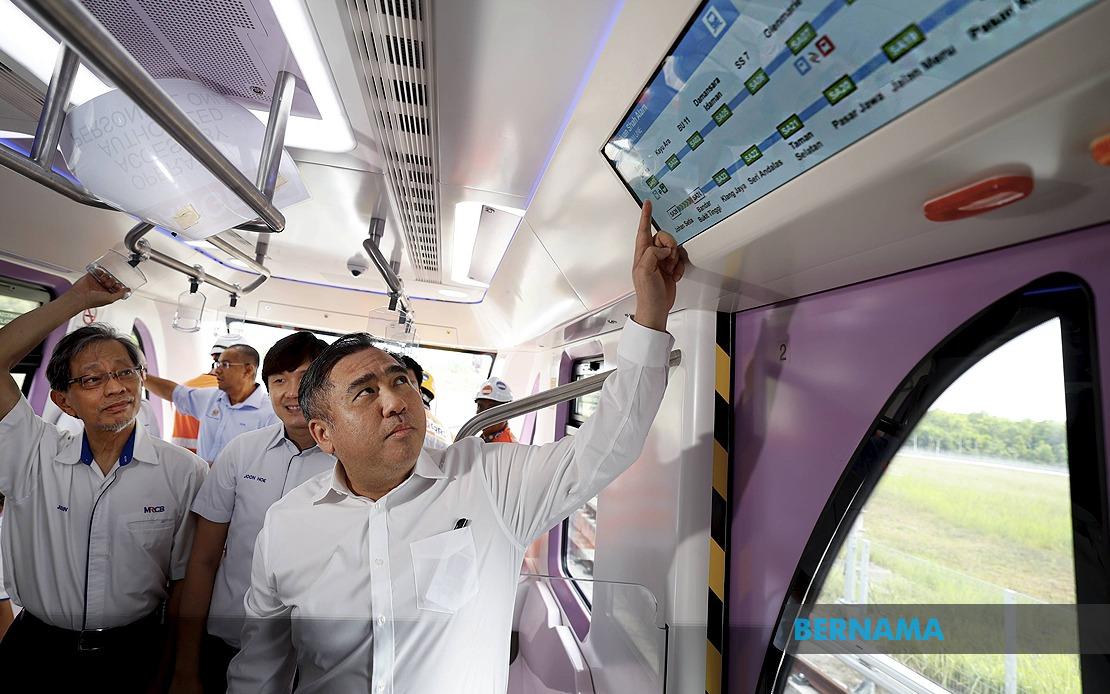
Malaysia's expanding rapid transit network is set to gain a significant new artery on Monday, June 29, when the Light Rail Transit 3 (LRT3) line opens for passenger operations. Transport Minister Anthony Loke confirmed the launch timeline, revealing that Prime Minister Datuk Seri Anwar Ibrahim will officiate the official opening ceremony this coming Sunday before services commence the following day. The announcement marks a crucial milestone for the country's transportation infrastructure development and addresses long-standing connectivity challenges in the western Klang Valley region.
The LRT3 network represents a substantial infrastructure investment, spanning 37.8 kilometres through some of Selangor's most densely populated areas. Running from Bandar Utama in the north to Johan Setia in the south, the line traverses crucial economic and residential zones that have previously faced inadequate public transport connections. The route's geography positions it strategically between existing rapid transit networks, filling a critical gap in the greater Kuala Lumpur metropolitan area's rail framework.
Projected beneficiaries extend to approximately two million residents living across the service corridor, making this one of Malaysia's most impactful recent transit projects in terms of potential user base. These figures underscore the population density of the western Klang Valley and the pressing transport demand that planners sought to address. For commuters in Shah Alam and its satellite communities, the opening represents a transformative shift in mobility options, particularly those previously dependent on increasingly congested road networks.
The line's design philosophy emphasises connectivity across residential, commercial, and industrial sectors, recognising the interconnected nature of contemporary urban development. Rather than serving merely as a passenger shuttle between two distant points, the LRT3 integrates multiple land-use categories, allowing workers in industrial zones to access residential areas more efficiently and enabling residents to reach commercial districts without vehicular congestion. This comprehensive approach reflects evolved thinking about how rail transit should function within modern metropolitan systems.
For Malaysian urban planners and transport economists, the LRT3 opening arrives at a particularly significant moment. The country's rapid urbanisation continues, with projections suggesting further concentration of population in Klang Valley corridor zones over the coming decades. Establishing efficient rail alternatives to road transport now provides foundational infrastructure that can accommodate growth while mitigating traffic gridlock and associated pollution challenges that have increasingly defined Malaysian city centres.
The western corridor, where the LRT3 operates, has experienced substantial commercial and residential development over recent years, yet remained underserved by rapid transit compared to the federal territories. This infrastructure gap created bottlenecks where growing suburban populations faced limited options for cost-effective, reliable commuting. Loke's announcement signals the government's commitment to addressing these disparities through targeted transit investments that prioritise underserved regions.
From a regional Southeast Asian perspective, Malaysia's continued expansion of its light rail network positions the country as a leader in intra-urban rapid transit development. Neighbouring countries like Thailand and Indonesia continue building their own systems, and Malaysia's demonstrated ability to complete and operationalise major transit lines provides relevant benchmarks for regional transport planning. The LRT3 project, despite occasional delays common to large infrastructure undertakings, ultimately demonstrates completion capacity that enhances Malaysia's reputation for transit development competence.
The economic implications extend beyond mere convenience metrics. Reliable public transport networks tend to generate positive secondary effects including property value appreciation in accessible areas, reduced transportation costs for household budgets, and increased productivity through reduced commute times. These multiplier effects typically emerge gradually but compound significantly over time, suggesting that the LRT3's long-term contribution to regional prosperity may substantially exceed initial financial calculations.
Operationally, the LRT3's integration with existing rapid transit networks warrants attention as services commence. Passenger transfers between the LRT3 and other Klang Valley lines require seamless coordination to maximise the network's effectiveness. The coming weeks and months will test whether connection points function efficiently and whether timetable coordination enables smooth passenger transitions, factors that ultimately determine whether the network fulfils its theoretical potential.
Looking forward, the LRT3's opening should catalyse discussions regarding further western corridor transit enhancement. Regional planners may already be evaluating whether extensions or complementary transit modes could serve communities beyond the initial 37.8-kilometre alignment. Such forward planning, undertaken now while the line is being activated, could position Malaysia to implement subsequent transit improvements with minimal delay.
The timing of the official launch, coinciding with Prime Minister Anwar Ibrahim's ceremonial participation, reflects the government's messaging around infrastructure modernisation and commitment to provincial development beyond the federal territories. Such high-level political attention typically accelerates implementation of remaining operational requirements and sends market signals regarding the administration's prioritisation of transport development.
As the LRT3 enters revenue service, approximately two million residents gain access to a transportation option that may fundamentally alter their commuting patterns and daily mobility choices. Whether this potential translates into the anticipated ridership levels will depend partly on fare structures, service frequency, and integration effectiveness with broader transport networks—factors that will become clearer during the opening months of operation.

