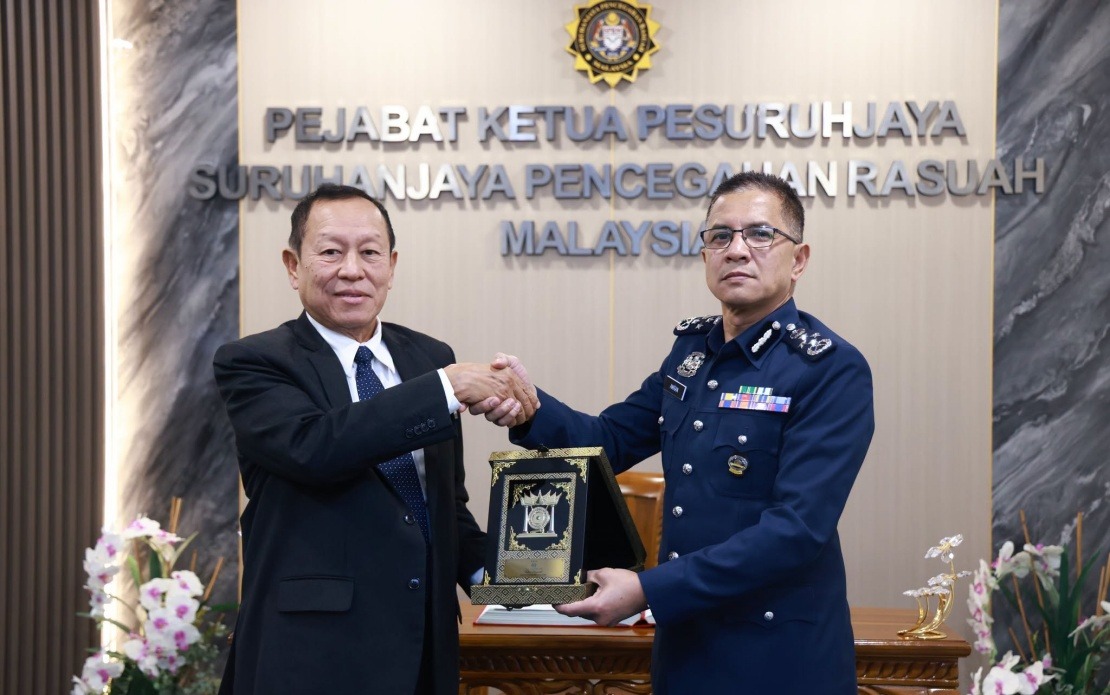
Authorities in Malaysia are taking coordinated action to address mounting concerns about corruption and revenue leakage at the nation's busiest trade gateways. The Malaysian Anti-Corruption Commission (MACC) and the Royal Malaysian Customs Department (JKDM) have proposed creating a dedicated task force focused on strengthening enforcement procedures and tax collection mechanisms at strategic ports nationwide. The announcement reflects growing recognition among government agencies that port security requires enhanced inter-agency cooperation to protect national interests and revenue streams.
The proposal emerged during high-level discussions between MACC chief commissioner Datuk Seri Abd Halim Aman and JKDM director-general Datuk Amran Ahmad at MACC headquarters in Putrajaya on July 15. During their strategic meeting, both leaders identified critical vulnerabilities in current systems and committed to developing integrated approaches to address them. The one-hour session went beyond routine courtesy courtesy, serving as a substantive platform for officials to dissect operational challenges faced by each agency and explore mechanisms for improved collaboration.
A central issue occupying the discussions involves container management at ports, where significant financial leakages have been detected. Customs officials have identified concerning gaps in tracking procedures and oversight mechanisms that potentially allow illicit goods and undeclared shipments to enter Malaysian territory. This vulnerability carries implications beyond simple revenue loss, as smuggled items often include counterfeit products, banned substances, and goods subject to excise duties. The task force's mandate will likely encompass enhanced monitoring systems, improved documentation verification, and stronger coordination between port authorities and enforcement personnel.
Syndicates exploiting Malaysia's port systems have developed increasingly sophisticated evasion tactics that present serious challenges to customs operations. According to JKDM leadership, criminal networks have mastered false declaration methodologies, including systematically misrepresenting the value and nature of imported cargo. One particularly troubling modus operandi involves cash smuggling, where individuals declare significantly lower amounts than they are actually transporting into the country—a practice that facilitates money laundering and undermines financial integrity systems. These patterns indicate organized, profit-driven operations rather than isolated violations, suggesting that ad-hoc enforcement responses prove insufficient.
Document falsification represents another critical vulnerability that the agencies intend to address through the proposed task force. Criminals submit fraudulent or altered paperwork under various approvals, creating bureaucratic camouflage that allows contraband to proceed through ports. The complexity emerges partly because Malaysia's volume of trade creates genuine challenges for manual verification of all documentation. With thousands of containers processed daily across major ports, customs personnel struggle to maintain thorough scrutiny while maintaining trade flow. The task force will likely focus on developing smarter verification systems and identifying high-risk shipment profiles that warrant deeper investigation.
MACC's involvement brings anti-corruption expertise and investigative capacity that complements customs enforcement capabilities. Abd Halim emphasized that the collaboration aims to cultivate integrity standards among personnel across both agencies, recognizing that corruption within government ranks amplifies systemic vulnerabilities. When customs officials or port workers collude with smugglers, enforcement becomes nearly impossible regardless of procedural sophistication. By fostering anti-corruption culture through targeted integrity programs and training initiatives, both agencies acknowledge that personnel accountability forms an essential foundation for operational effectiveness.
The broader context of this initiative reflects Malaysia's position as a major Southeast Asian trading hub, where port integrity directly affects economic competitiveness and national revenue. Customs revenue constitutes a meaningful portion of government income, particularly through import duties and excise collections. When systematic leakage occurs, it distorts fair competition for legitimate importers operating according to regulations, while simultaneously depriving the treasury of funds needed for public services. Port corruption also enables organized crime networks to establish supply chains for illicit products, creating security challenges extending beyond customs matters.
For Malaysian businesses engaged in legitimate trade, enhanced port enforcement offers mixed implications. Companies complying with regulations may initially experience modest delays as the task force implements more rigorous verification procedures, but such inconveniences represent acceptable costs for ensuring fair competitive conditions. Smuggling operations undercut legitimate businesses by evading duties and taxes, creating unfair price competition that threatens livelihoods of companies operating transparently. Long-term port security thus benefits the broader Malaysian business community despite temporary friction during implementation phases.
The task force initiative also carries regional significance given Southeast Asia's role as a critical transit corridor for global trade. Transnational smuggling networks exploit port vulnerabilities across multiple countries to move contraband, making bilateral and multilateral enforcement cooperation essential. Malaysia's experience developing this MACC-Customs collaboration provides a model potentially applicable to addressing similar challenges at other regional ports, contributing to broader efforts strengthening governance across Southeast Asia's maritime infrastructure.
Implementation challenges will inevitably emerge as both agencies operationalize the task force framework. Defining clear mandate boundaries between organizations, allocating resources, and establishing information-sharing protocols require careful negotiation. Technology integration presents another hurdle, as customs systems and MACC databases may require upgrades to enable seamless real-time intelligence sharing. Training personnel from different organizational cultures to work cohesively demands sustained commitment from leadership. Despite these obstacles, the momentum generated by this initiative signals that Malaysian authorities recognize port corruption as a priority requiring whole-of-government solutions rather than isolated departmental efforts.

