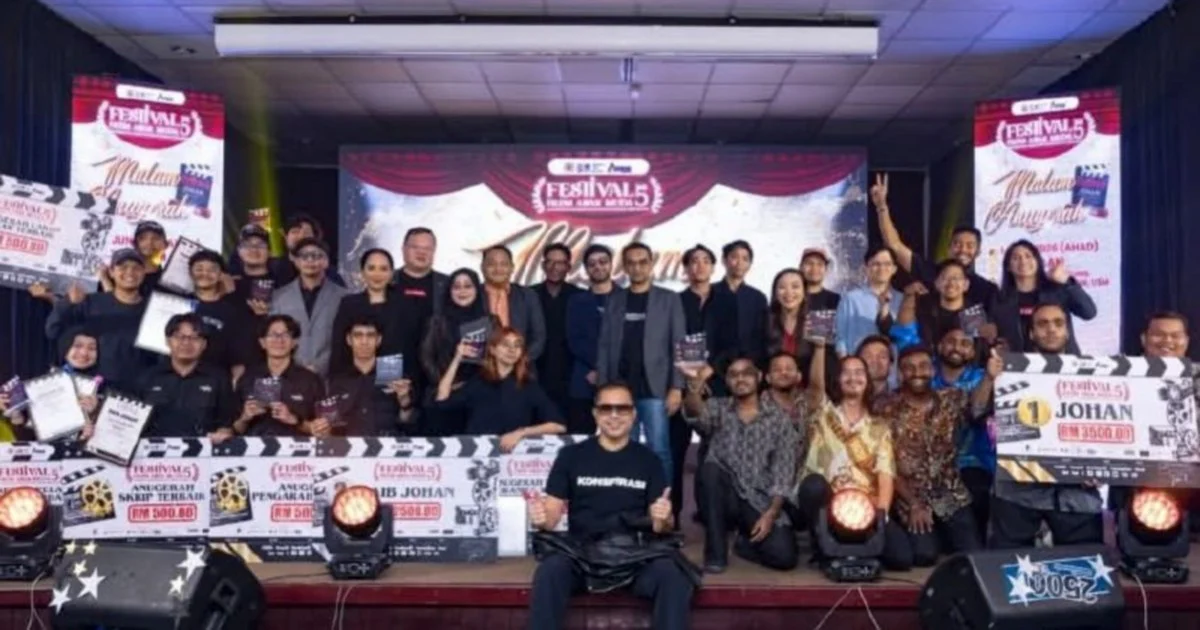
The Malaysian Anti-Corruption Commission has pivoted toward an innovative cultural approach to combat graft, leveraging the influential medium of cinema to engage young audiences on matters of integrity and ethical conduct. The agency's involvement in organising the 5th Youth Film Festival at Universiti Sains Malaysia in Penang underscores a recognition that traditional law-enforcement messaging alone cannot effectively shape the values of Malaysia's emerging generation. By embedding anti-corruption advocacy within a creative and entertainment-focused framework, MACC is attempting to reach citizens at a developmental stage when lifelong civic attitudes are being formed.
The decision to harness film as a vector for institutional messaging reflects broader trends within Malaysian governance toward youth engagement strategies that move beyond conventional channels. Younger demographics, particularly those in secondary and tertiary education, increasingly consume information through visual and narrative-driven formats rather than formal government communications. Film festivals offer precisely this environment—a space where messaging about integrity, accountability, and the dangers of corruption can be woven into artistic expression and peer-to-peer discourse. This approach aligns with international best practices in anti-corruption education, where several jurisdictions have found that creative content generated by and for young people proves more persuasive than didactic campaigns.
The Youth Film Festival itself serves as both a competitive platform and an awareness-raising mechanism. By inviting student filmmakers to create submissions around themes of integrity and ethical behaviour, the festival transforms passive viewers into active participants in the anti-corruption conversation. Participants undertake research, interview stakeholders, and grapple with complex scenarios involving bribery, nepotism, and institutional corruption. This creative process embeds anti-corruption thinking more deeply than passive consumption of messaging ever could. For audiences attending the festival, exposure to peer-generated content addressing these issues carries particular resonance—young people articulating concerns about integrity to their contemporaries often proves more credible than institutional voices.
USM's role as the festival host is strategically significant. Universities function as intellectual and cultural hubs within Malaysian society, and they represent spaces where informed discourse about governance and public ethics naturally occurs. Hosting the festival at a major research university confers institutional legitimacy on the anti-corruption agenda while simultaneously providing MACC with access to an educated, civically engaged audience. The university setting also facilitates partnerships with film schools and creative disciplines, amplifying the sophistication and artistic quality of the content produced. Students at tertiary institutions, moreover, are closer than ever to entering professional life and positions of influence within both public and private sectors, making them high-value targets for integrity-focused education.
MAAC's heightened emphasis on youth outreach suggests an institutional evolution in how the agency conceptualises its mandate. Historically perceived primarily as an investigative and enforcement body, the commission appears to be expanding into prevention and cultural change territory. This represents a long-term strategic shift, acknowledging that reducing corruption rates requires not merely prosecuting offenders but transforming societal attitudes toward graft and institutional accountability. Younger citizens who internalise anti-corruption values during formative years may be more likely to maintain ethical standards throughout their careers, creating a multiplier effect across subsequent decades.
The timing of this initiative also carries implications for Malaysia's international reputation on corruption and governance metrics. Global indices measuring perception of corruption and institutional integrity significantly influence foreign investor confidence, international partnerships, and Malaysia's standing within regional development frameworks. Demonstrating visible, sustained commitment to anti-corruption efforts—particularly through innovative programs targeting youth—contributes to a narrative of institutional reform and seriousness about tackling graft. Such efforts may not immediately shift perceptions, but they accumulate as evidence of systemic change.
Furthermore, positioning film and creative arts as anti-corruption tools reflects an implicit acknowledgement that the battle against institutional graft occurs partly in the realm of culture and values. Technical reforms to administrative procedures, regulatory frameworks, and oversight mechanisms are necessary but insufficient without corresponding shifts in how citizens and civil servants regard ethical conduct. Cinema uniquely reaches across demographic divides while simultaneously allowing complex moral ambiguities to be explored in ways that policy documents cannot. A well-crafted film depicting the human and institutional costs of corruption may persuade more viewers than statistical presentations of corruption indices.
The Youth Film Festival collaboration also creates opportunities for MACC to gather intelligence about how young Malaysians perceive corruption within their own communities and institutions. Student submissions and discussions surrounding the festival provide organic feedback about where integrity concerns are most acute—whether in educational settings, local governance, or private commerce. This feedback loop can inform future MACC strategies and help the agency prioritise limited investigative resources toward areas of greatest public concern and vulnerability. Such bottom-up understanding often proves more valuable than top-down assessments of corruption hotspots.
Regionally, Malaysia's youth-focused anti-corruption initiatives position it as a potential model for other Southeast Asian nations grappling with similar challenges. The region's demographics skew young, with growing numbers of educated urban youth increasingly conscious of governance issues. Demonstrating that creative partnerships and cultural strategies can effectively communicate institutional values may influence how neighbouring governments approach their own anti-corruption education mandates. Conversely, should the festival generate compelling content and demonstrable engagement outcomes, MACC's approach could justify expanded budgets and initiatives in coming years.
The partnership between MACC and USM at the 5th Youth Film Festival thus represents more than a single cultural event. It signals institutional commitment to prevention-focused anti-corruption work, recognition that youth engagement requires culturally resonant approaches, and a strategic bet that normative shifts among younger generations can contribute meaningfully to reducing corruption across Malaysian society. Whether the initiative meets its ambitions will depend on the quality of student submissions, audience attendance levels, and measurable follow-up engagement with participants. Nevertheless, the willingness to experiment with creative formats suggests an evolving maturity within Malaysia's anti-corruption infrastructure.