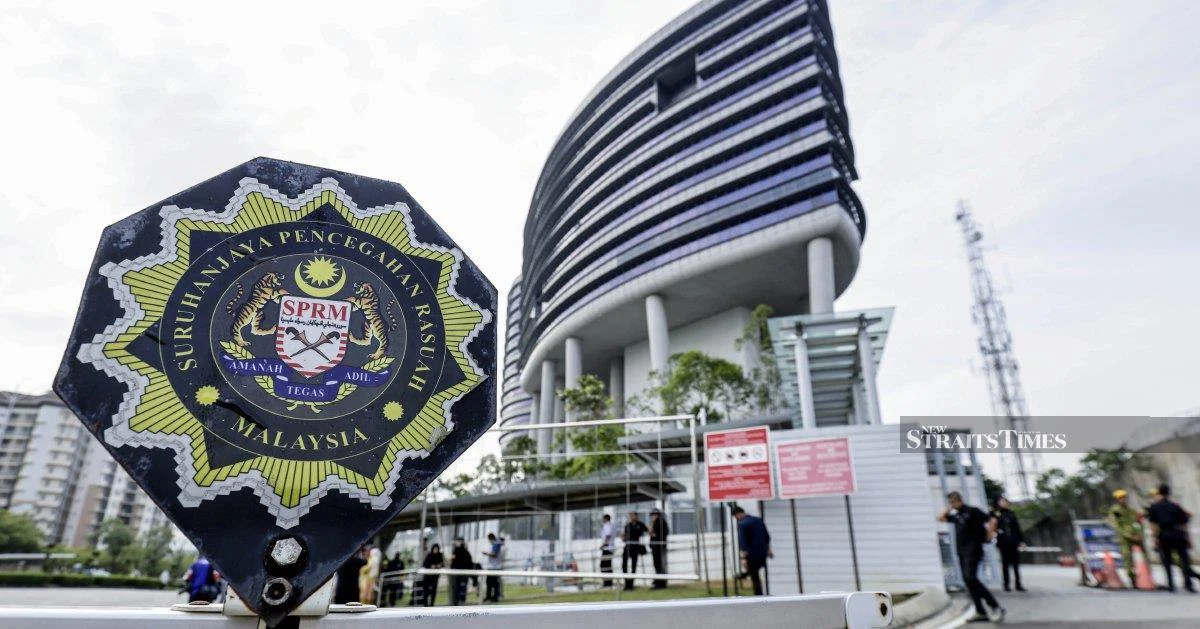
The Malaysian Anti-Corruption Commission has signalled a shift toward examining systemic failures within the Daya Kerjaya 2.0 employment incentive scheme, moving beyond investigating individual fraudulent claims to assess the broader governance structures that may have enabled misconduct. The agency's decision to probe administrative and procedural deficiencies comes as part of its comprehensive inquiry into alleged fraud totalling RM9 million, marking a critical juncture in understanding how the programme became vulnerable to exploitation.
Governance weaknesses in government-administered schemes represent a recurring vulnerability in Malaysia's public sector. The MACC's methodical approach suggests investigators believe systemic gaps rather than isolated opportunism may have permitted fraudulent activities to flourish within Daya Kerjaya 2.0. This distinction carries significant implications, as identifying structural vulnerabilities allows policymakers to implement preventive measures across similar programmes rather than simply prosecuting individual wrongdoers.
Daya Kerjaya 2.0 functions as a critical employment support initiative designed to assist Malaysian workers and job seekers. The programme's scale and reach mean that procedural weaknesses affecting it could have cascading consequences across multiple sectors of the labour market. Understanding precisely where oversight mechanisms failed becomes essential for restoring public confidence in employment incentive schemes that remain vital to Malaysia's labour policy framework.
The RM9 million fraud allegation underscores the substantial financial exposure when administrative controls prove inadequate. This magnitude suggests the problem extends beyond a few opportunistic individuals; rather, it points to systemic deficiencies that allowed multiple fraudulent claims to bypass detection. The MACC's investigation into governance failures directly addresses this concern by examining whether verification procedures, authorization protocols, and monitoring mechanisms functioned as intended.
Employment schemes across Southeast Asia frequently struggle with balancing accessibility for legitimate beneficiaries against security against fraudulent claims. Malaysia's experience with Daya Kerjaya 2.0 provides a cautionary case study for regional policymakers grappling with similar challenges. The governance review will likely identify whether documentation standards, personnel vetting, payment authorization hierarchies, or audit trails contained exploitable gaps.
Procedural weaknesses often emerge from inadequate coordination between multiple agencies, insufficient digital integration, outdated verification systems, or ambiguous responsibility assignments within organizational hierarchies. The MACC's examination of these factors will reveal whether Daya Kerjaya 2.0 suffered from any combination of these vulnerabilities. Such findings carry relevance beyond this single programme, as Malaysian government agencies managing other incentive schemes will inevitably face scrutiny regarding their own control environments.
The investigation's expansion into governance matters reflects evolving anti-corruption strategies that prioritize systemic reform alongside criminal prosecution. Rather than treating fraud as an inevitable occupational hazard of large-scale programmes, the MACC's approach seeks to eliminate conditions enabling misconduct. This methodical examination of institutional weaknesses sets a precedent for how future investigations address government programmes potentially affected by widespread fraud.
Transparency surrounding the governance review's findings will prove essential for public sector reform. When authorities identify specific control gaps and subsequently demonstrate how they have been remedied, public trust in government programmes gradually strengthens. Conversely, concealing or minimizing governance failures perpetuates skepticism about whether authorities truly committed to systemic improvement or merely engaged in performative action.
The Daya Kerjaya 2.0 investigation occurs within Malaysia's broader anti-corruption agenda, where institutional capacity and investigative thoroughness remain under constant scrutiny. The MACC's decision to examine governance structures reflects institutional maturation, demonstrating that modern anti-corruption work extends beyond identifying individual culprits to reforming the systems that enabled their misconduct. This comprehensive approach carries implications for how Malaysian and regional authorities address fraud within other large-scale government programmes.
Stakeholders monitoring this investigation include public sector administrators seeking guidance on strengthening their own control environments, labour ministry officials potentially requiring programme redesign, and Malaysian taxpayers invested in ensuring government resources reach legitimate beneficiaries. The governance review's conclusions will likely generate recommendations affecting not only Daya Kerjaya 2.0 but potentially other employment assistance initiatives and incentive schemes operated by various government entities.
The investigation's trajectory suggests that authorities view the RM9 million fraud as symptomatic of deeper institutional vulnerabilities requiring systematic remediation. This perspective aligns with international best practices in anti-corruption work, where prevention through structural improvement complements prosecution as essential components of comprehensive integrity enhancement strategies. How Malaysia addresses Daya Kerjaya 2.0's governance weaknesses will influence both the programme's credibility and government confidence in its broader portfolio of employment initiatives.