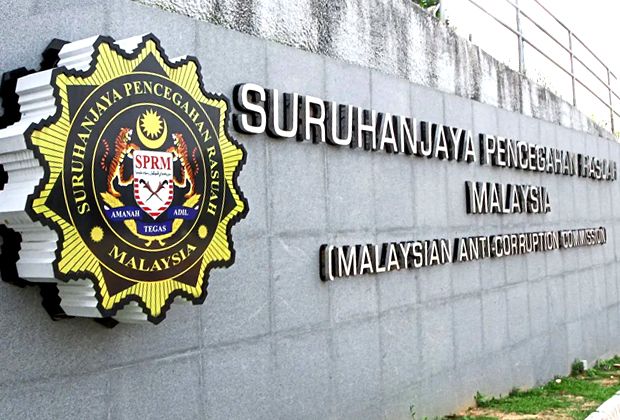
The Malaysian Anti-Corruption Commission has lifted all restrictions on bank accounts held by Rohas Tecnic and its subsidiary HGPT, marking the conclusion of an anti-money laundering investigation that had disrupted the operations of the power transmission and telecommunications tower manufacturer for over a month. The revocation extends to both corporate and personal accounts belonging to current and former officers of HGPT, a significant step that signals the resolution of allegations that prompted the original enforcement action in mid-October.
Rohas Tecnic announced the development through a Bursa Malaysia filing, confirming that all previously frozen accounts have been fully released and the company can now operate its banking facilities without restriction. The revocation represents a complete reversal of the financial constraints that had hampered the group's business activities since the initial seizure orders took effect. The company emphasised that it is now free to resume normal operations across all business functions, a crucial clearance for an enterprise dependent on capital flows for construction and infrastructure projects.
The enforcement saga began in mid-October when Rohas Tecnic disclosed that itself and two major subsidiaries—HGPT and Rohas-Euco Industries Bhd (REI)—had received simultaneous freezing and seizure orders from the MACC. These orders were issued under the Anti-Money Laundering, Anti-Terrorism Financing and Proceeds of Unlawful Activities Act 2001 (AMLA), legislation that grants authorities broad powers to restrict asset movement during investigations into financial crimes and illicit fund flows. The timing of the coordinated action suggested a comprehensive investigation spanning multiple entities within the group.
What distinguishes this case is the rapidity with which the authorities reversed course. Just six weeks after the initial seizure orders, the Deputy Public Prosecutor issued formal revocation orders for both Rohas Tecnic and HGPT on November 26. This swift clearance indicates that investigators found no substantive evidence to support the original restrictions, or that any concerns raised during the preliminary investigation were resolved to the satisfaction of prosecutorial authorities. REI had preceded the parent company and HGPT by one day in receiving its own revocation order from the MACC itself, issued under a different section of AMLA.
The differential timing and issuing authorities for the three revocation orders—spanning both the MACC directly and the Deputy Public Prosecutor's office—reflects the complexity of coordinated enforcement actions against corporate groups. The fact that each entity received tailored revocation orders rather than a blanket clearance suggests that investigators conducted entity-specific assessments, even though all restrictions appear to have been ultimately deemed unjustified. This granular approach is typical of serious financial crime investigations where authorities maintain separate investigative tracks for parent companies and subsidiaries.
For Rohas Tecnic, a company engaged in the capital-intensive business of manufacturing and installing power transmission and telecommunications infrastructure, the month-long account freeze represented a significant operational burden. Companies in this sector typically operate on thin margins with substantial working capital requirements to fund materials procurement, labour costs, and project execution. The inability to access bank accounts would have severely constrained the company's ability to meet supplier payments, service debt obligations, or fund ongoing construction projects, potentially exposing Rohas Tecnic to contractual penalties and reputational damage among business partners.
The revocation carries broader implications for Malaysian business confidence in the enforcement environment. The MACC's anti-money laundering mandate is important for detecting and preventing financial crimes, yet aggressive freezing orders without swift resolution can create uncertainty for legitimate enterprises. The fact that Rohas Tecnic's accounts were restored relatively quickly after initial seizure suggests that either the enforcement action was precautionary in nature pending preliminary investigation results, or that the company and its officers cooperated fully with authorities to clarify the questioned transactions. Either scenario points toward a professional resolution rather than adversarial enforcement.
The involvement of the Deputy Public Prosecutor in issuing the revocation orders indicates that the matter had escalated beyond routine MACC investigative procedures into prosecutorial review. This suggests the MACC had formed a view sufficiently serious to warrant referral to the Attorney-General's Chambers for legal assessment before deciding whether to pursue formal charges. The Deputy Public Prosecutor's decision to revoke the orders effectively closed that prosecutorial avenue, at least regarding the specific allegations that prompted the original seizure orders.
Rohas Tecnic's transparent disclosure of both the original restrictions and their subsequent removal demonstrates corporate governance compliance with Bursa Malaysia's continuous disclosure obligations. By promptly informing shareholders and market participants of developments affecting the company's financial position and operational capacity, the company has maintained transparency throughout the investigation period. This practice supports market confidence and allows investors to properly assess the company's circumstances during periods of regulatory scrutiny.
The lifting of restrictions removes a significant operational and reputational cloud from the Rohas Tecnic group. Having successfully navigated an anti-money laundering investigation without facing criminal charges, the company can now concentrate on business development and project execution. The incident underscores how thoroughly Malaysian regulatory authorities investigate financial anomalies, whilst also demonstrating that business entities can emerge from such investigations vindicated when no wrongdoing is found.

