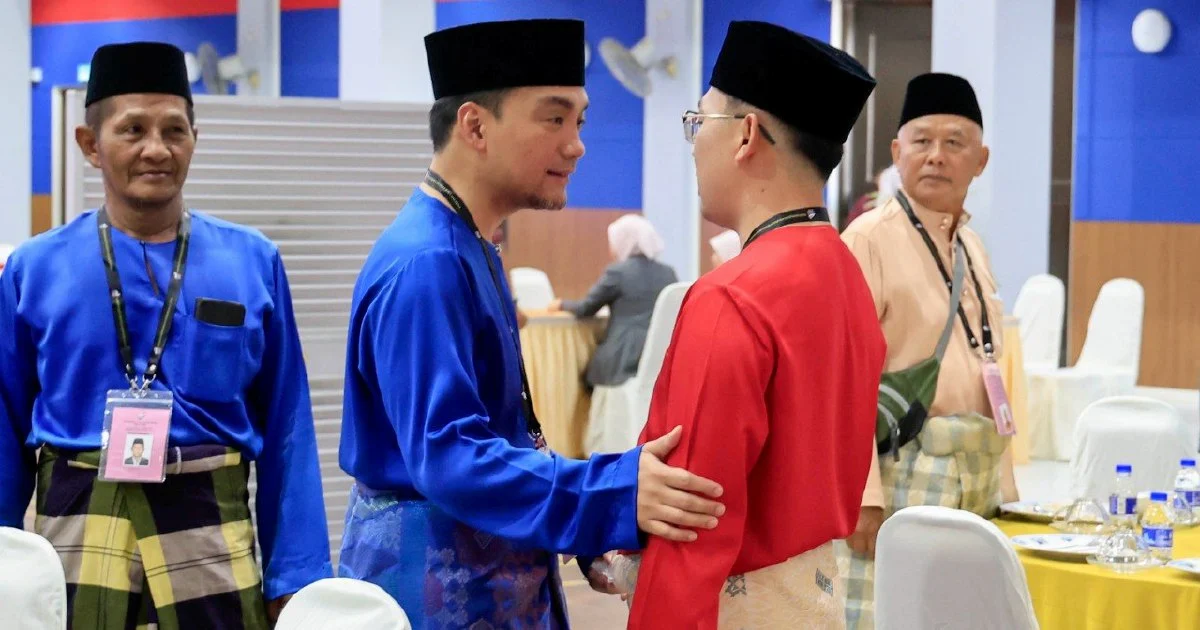
Machap has crystallised into a must-win constituency for both major political coalitions ahead of the Johor state elections, with indications pointing to a two-way contest between Barisan Nasional and Pakatan Harapan. The seat, located within the Simpang Renggam area, represents one of the electoral hotspots that will largely determine the composition of the Johor state legislature, making candidate selection and campaign strategy particularly consequential for both camps.
The emergence of Onn Hafiz as the likely Barisan Nasional standard-bearer reflects the coalition's confidence in fielding an established political figure to defend the seat. His candidacy signals BN's determination to maintain its foothold in a constituency that remains strategically valuable within Johor's political geography. BN's traditional machinery and grassroots presence in the state will be mobilised behind his campaign, leveraging the coalition's organisational infrastructure that has been refined through decades of electoral competition in the state.
Meanwhile, Nur Hafiz represents Pakatan Harapan's bid to expand its representation in Johor, a state where the coalition has made significant inroads in recent years but where Barisan Nasional continues to retain considerable strength. The opposition's selection signals a targeted effort to challenge BN in constituencies previously considered strongholds, reflecting the shifting dynamics of Malaysian electoral politics since the 2018 general election. Nur Hafiz's positioning as a credible challenger indicates PH's assessment of local sentiment and voter receptiveness to the coalition's political narrative.
The absence of other significant contenders suggests that both major coalitions have effectively secured the ground and that smaller political entities, whether from Barisan Nasional's component parties or independent challengers, are unlikely to mount credible alternative campaigns. This consolidation reflects a broader trend across Malaysian electoral battlegrounds where the contest increasingly revolves around the two largest political blocs. Third-party candidates, while legally permitted, often struggle to gain traction against the resource advantages and voter familiarity enjoyed by established coalition contenders.
Machap's designation as a key battleground underscores its demographic and political composition, which likely contains sufficient numbers of persuadable voters to make the outcome unpredictable. Such constituencies become laboratories for broader political trends and testing grounds for campaign messaging. The results in seats like Machap will offer valuable insights into voter sentiment on economic performance, governance, and leadership, particularly given Johor's status as Malaysia's second-largest state economy and a population comprising diverse ethnic and socioeconomic communities.
For Barisan Nasional, retaining Machap is essential to maintaining overall state legislative dominance and preserving the coalition's traditional position as the governing force in Johor. Any losses in previously secure seats would represent a weakening of BN's electoral foundation and potentially encourage defections or demoralisation among party members and supporters. The coalition's campaign will likely emphasise its track record of development projects, infrastructure delivery, and administrative continuity in the state.
Pakatan Harapan's challenge lies in converting anti-incumbent sentiment, if any exists, into actual electoral gains. The coalition must articulate a compelling vision for Machap that resonates with local priorities and addresses community concerns. PH's campaign strategy will probably focus on governance reforms, anti-corruption messaging, and economic policies perceived as more equitable than BN's approach. The coalition's performance in urban and semi-urban constituencies has improved markedly, and Machap likely contains sufficient such areas to provide opportunities for growth.
The straight fight scenario also implies that both camps have conducted internal assessments concluding that other candidates would dilute their respective vote shares or that no internal challengers commanded sufficient support to contest the nominations. This reflects maturing coalition discipline and strategic thinking about vote arithmetic in a context where Malaysia's first-past-the-post electoral system rewards concentration of votes.
Johor's political trajectory has been characterised by competition that, while heated, remains fundamentally centred on these two blocs. The state's 56 state assembly seats have been contested largely within this bipolar framework, though occasional independent candidates and smaller parties contest specific seats. Machap's configuration as a BN-PH contest fits this established pattern while nonetheless remaining competitive and unpredictable.
The upcoming Johor polls will serve as a barometer for national political sentiment given the state's economic significance and demographic diversity. Machap's result will contribute to the broader narrative of whether Barisan Nasional can consolidate its electoral recovery following disappointing performances in recent general elections, or whether Pakatan Harapan can sustain and expand the support base it has developed across Malaysian constituencies. Political analysts will scrutinise the margin of victory or defeat in this and comparable seats to assess momentum and identify emerging voting trends across the country.

