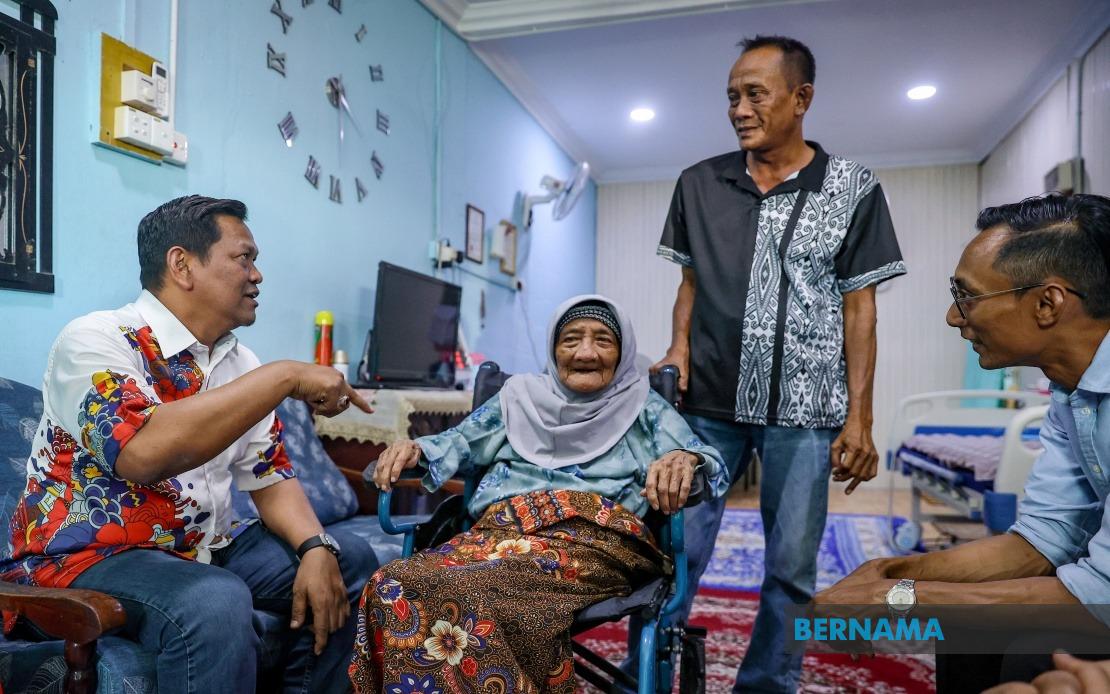
The MADANI Government is reinforcing its commitment to the Ziarah Kasih initiative, a targeted welfare programme designed to deliver direct financial and material support to vulnerable Malaysians. Abdullah Izhar Mohamed Yusof, political secretary to the Communications Minister, underscored the administration's dedication to this outreach effort during a community engagement event in Mersing on June 23, framing the initiative as integral to Malaysia MADANI's overarching commitment to prioritising citizen welfare and strengthening government-people relationships.
Ziarah Kasih operates through a structured identification process coordinated between the Department of Information and Komuniti MADANI, ensuring that assistance reaches those facing genuine hardship. Rather than relying on generic welfare distribution, the programme targets specific vulnerable populations identified through government networks, allowing administrators to tailor support to individual circumstances. This targeted approach reflects a strategic pivot toward personalised welfare delivery, particularly benefiting elderly citizens, persons with disabilities, and low-income families facing acute financial strain.
The programme's emphasis on regular implementation signals the MADANI administration's view of welfare as an ongoing government function rather than episodic charitable activity. By formalising Ziarah Kasih as a scheduled intervention, policymakers aim to create predictability for vulnerable households while maintaining visible government presence in communities across Malaysia. This approach carries particular significance in rural constituencies such as Mersing, where informal economies and limited social safety nets often leave marginalised populations underserved by conventional welfare mechanisms.
During the Jiwa@Komuniti MADANI Sembang Santai World Cup Edition event, officials distributed contributions and healthcare equipment to elderly residents, demonstrating the programme's practical implementation. These tangible interventions—combining financial transfers with medical supplies—acknowledge that vulnerability often stems from intersecting challenges: income insufficiency, health complications, and caregiving burdens that exhaust household resources. Healthcare equipment provision is particularly significant, as it reduces dependency on costly medical services while enabling families to manage chronic conditions more effectively at home.
Hamdan Abd Latif, 71, exemplifies the complex vulnerabilities the programme targets. A retired firefighter incapacitated by a 2011 fishing accident that preceded his planned retirement, Hamdan subsequently underwent brain tumour surgery before suffering a stroke. His wife Meriam Abd Wahab, 66, has assumed full-time caregiving responsibilities, forgoing her sewing income to provide essential support. For this household, Ziarah Kasih assistance directly alleviates the financial pressure created by lost income and elevated care expenses, preventing poverty deepening despite medical crises.
Meriam's sacrifice illustrates a broader phenomenon affecting Malaysian households: unpaid care work disproportionately borne by women, often resulting in economic vulnerability for entire families. When primary caregivers abandon employment to support incapacitated relatives, household income typically contracts sharply while care-related expenses—medications, equipment, dietary requirements—simultaneously increase. Government assistance programmes like Ziarah Kasih partially offset this double squeeze, though they rarely fully compensate for lost income or the opportunity costs of foregone careers.
Zainon Ibrahim's case demonstrates how caregiving burdens extend across generations. At 91, Zainon receives support from her son Jamaluddin Ismail, 64, who departed the workforce two years prior to provide full-time care. The family structure—with siblings contributing alongside the primary caregiver—reflects traditional Malaysian kinship patterns, yet this arrangement places substantial economic strain on middle-aged caregivers who sacrifice peak earning years. Jamaluddin's decision to exit employment represents a deliberate trade-off between financial security and familial obligation, a choice that government assistance can partially mitigate.
The psychological dimension of targeted assistance warrants consideration. Both Hamdan and Zainon's families expressed gratitude, suggesting that direct government recognition of their circumstances carries significance beyond monetary value. In societies where dignity and social standing intertwine with economic independence, welfare programmes delivered through personal engagement—rather than impersonal bureaucratic transfers—may generate different psychological outcomes. The Ziarah Kasih model's emphasis on direct ministerial engagement and personalised assistance potentially reinforces perceptions of government care and social inclusion among recipients.
For Malaysian policymakers, the Ziarah Kasih model offers insights into welfare delivery efficiency. By combining departmental coordination with targeted identification, the government potentially reduces bureaucratic drag while improving coverage of genuinely vulnerable populations. However, the programme's long-term sustainability depends on adequate funding allocations and genuine regularisation rather than sporadic interventions. Without institutionalised resource commitments, even well-intentioned initiatives risk deteriorating into occasional public relations exercises.
The programme's regional implications extend beyond Malaysia's borders. Several Southeast Asian governments have experimented with community-based welfare delivery, yet sustained political commitment often falters when governments change or fiscal pressures intensify. Malaysia's explicit commitment to regularly implementing Ziarah Kasih, coupled with institutional mechanisms for beneficiary identification, potentially establishes a replicable model for neighbouring countries seeking to strengthen social protection systems while maintaining fiscal discipline.
For vulnerable Malaysian households, Ziarah Kasih represents tangible acknowledgment that government responsibility extends beyond general policy frameworks to direct intervention in individual hardship. Yet the programme's scale and resource intensity remain undisclosed, raising questions about coverage limitations and whether assistance adequately addresses underlying structural vulnerabilities. As Malaysia's demographic profile shifts toward an ageing population with declining extended family support systems, welfare programmes targeting elderly citizens will assume increasing importance in national social policy discussions.

