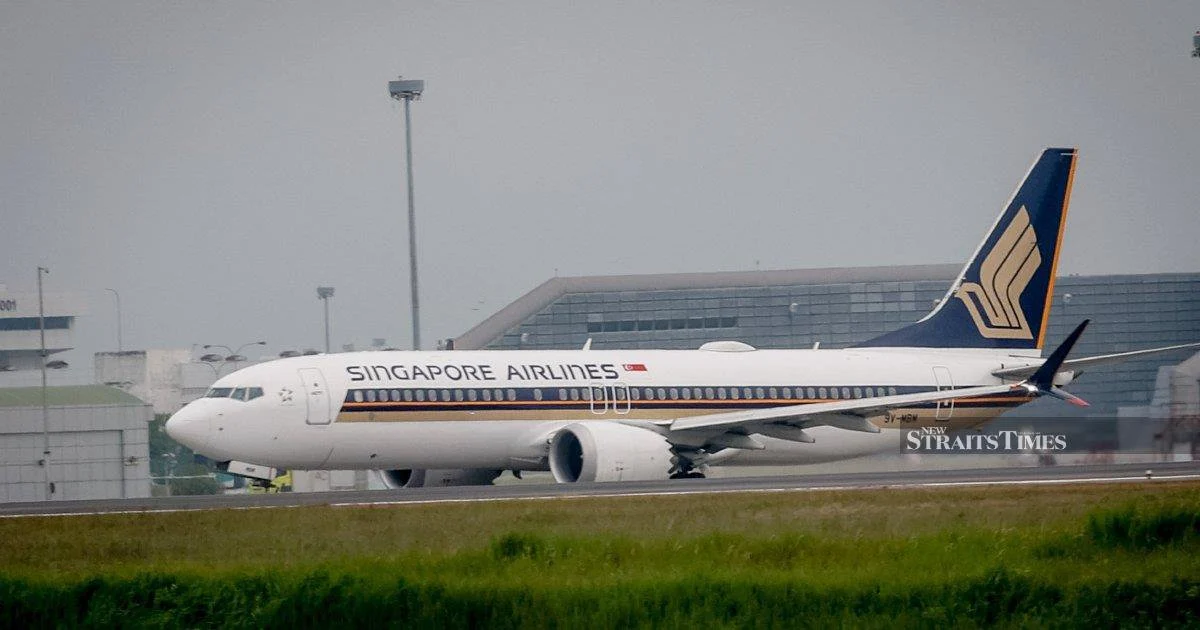
Malaysia Airports Holdings Bhd (MAHB) has issued a statement clarifying the circumstances surrounding a recent Singapore Airlines (SIA) incident, confirming that the aircraft's tyre problem originated during its departure phase from Changi Airport rather than occurring after the flight landed at Kuala Lumpur International Airport (KLIA). The operator's intervention was prompted by initial reports that may have suggested the fault developed following the aircraft's arrival in Malaysia, a distinction that carries implications for understanding maintenance responsibilities and operational procedures across both aviation authorities.
The incident, which unfolded last Sunday, has drawn attention to the technical protocols that both airlines and airport operators follow when dealing with equipment anomalies during flight operations. By pinpointing the exact moment the tyre problem manifested—during the Singapore departure sequence—MAHB's statement establishes a clear timeline that helps clarify the sequence of events and determines which jurisdiction's maintenance teams would have been responsible for initial assessment and any necessary corrective action.
This clarification carries particular relevance for passengers, aviation professionals, and regulatory bodies across Southeast Asia, where the busy air corridor between Singapore and Malaysia handles some of the region's highest traffic volumes. Understanding where technical issues originate helps travellers and industry observers appreciate the robustness of fault-detection systems and the cooperation required between neighbouring aviation hubs to maintain safety standards.
The distinction between when a problem occurs versus when it is discovered represents an important detail in aviation safety culture. Issues that develop during takeoff and climb phases can sometimes remain undetected until ground crews perform post-landing inspections, making the clarification valuable for public comprehension of how modern aircraft monitoring systems operate. MAHB's intervention suggests that initial media coverage may have created confusion about the problem's origin, prompting the airport operator to set the record straight for accuracy and clarity.
Singapore Airlines, one of Asia's most respected carriers with a stellar safety record spanning decades, operates under rigorous maintenance standards that apply to all phases of flight. The airline's fleet undergoes comprehensive checks both before departure and after landing, creating multiple layers of oversight designed to catch potential issues before they compromise passenger safety. The tyre incident, while notable enough to warrant public clarification, did not result in any reported injuries or significant disruptions to airport operations.
The cooperation between MAHB and Singapore Airlines in managing and transparently communicating about the incident reflects the professional standards expected at major regional aviation hubs. Both organisations have strong incentives to maintain confidence in their safety systems, and public clarity about the circumstances of technical issues contributes to that objective. The rapid deployment of clarification by MAHB indicates the operator's commitment to accurate reporting and stakeholder communication.
For Malaysian aviation stakeholders and travellers, such incidents serve as reminders of the meticulous systems in place across the ASEAN region's airports. KLIA, as one of Southeast Asia's busiest and most sophisticated aviation facilities, handles hundreds of daily aircraft movements with incident rates far below global averages. The airport's ground crews and maintenance personnel are trained to the highest international standards, backed by equipment and procedures that meet or exceed specifications from aviation authorities in Malaysia, Singapore, and globally.
The KLIA-Changi corridor represents a crucial link in Asia-Pacific aviation connectivity, with tens of thousands of passengers traversing this route daily on multiple airlines. Maintaining the confidence of both carriers and passengers in the safety and reliability of this connection depends partly on transparent communication when technical issues arise. MAHB's proactive clarification contributes to that broader objective by addressing potential misconceptions quickly and definitively.
This incident also highlights the importance of precise technical communication in an era where information spreads rapidly across social media and news platforms. Initial reports that lacked specificity about the problem's origin could easily generate unnecessary concern among frequent flyers or potential passengers. The airport operator's statement demonstrates awareness of how crucial accuracy is in managing public perception and maintaining traveller confidence.
Going forward, the episode underscores the value of coordination protocols between airlines, airport operators, and civil aviation authorities across borders. When issues occur on international flights, multiple parties have legitimate interests in understanding exactly what happened, where, and why. Transparent communication that clearly establishes responsibility and corrective action contributes to the entire aviation ecosystem's integrity and public trust.
The broader context of this incident fits within Southeast Asia's aviation sector, which has achieved an increasingly impressive safety record despite dramatic growth in passenger traffic over the past decade. Incidents like the SIA tyre issue, when handled professionally and communicated transparently, actually strengthen confidence by demonstrating that sophisticated detection and reporting systems are functioning as intended. MAHB's intervention exemplifies this professional approach.

