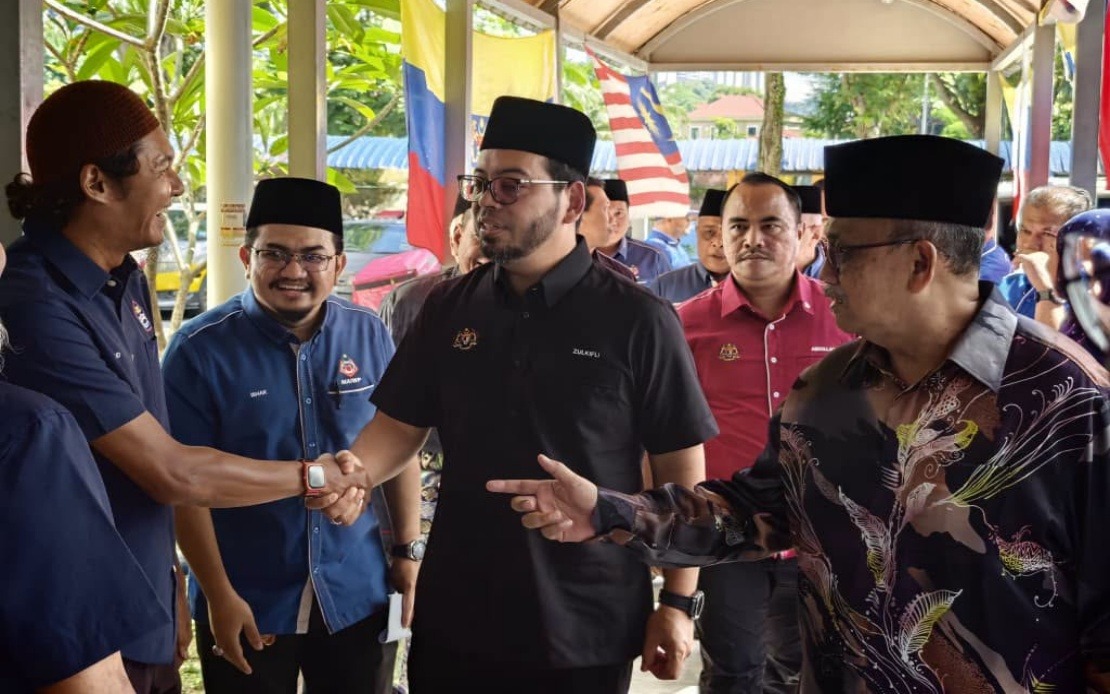
The Federal Territories Islamic Religious Council (MAIWP) has taken a strategic step to modernise its welfare delivery infrastructure by inaugurating the Zakat Distribution Centre (PAZA) Batu branch at Jalan Pelangi 10, Taman Pelangi, in the capital. The facility represents an institutional evolution in how Islamic charitable funds reach vulnerable populations across Kuala Lumpur's federal territories, reflecting broader efforts to enhance service accessibility for residents who depend on zakat assistance.
According to Minister in the Prime Minister's Department (Religious Affairs) Senator Dr Zulkifli Hasan, the establishment of PAZA Batu signals a commitment to transforming zakat distribution from a transactional service into a holistic community engagement platform. The centre's design prioritises speed, comfort and accessibility, addressing longstanding challenges in delivering welfare aid efficiently. Beyond serving as a conventional service counter, the facility functions as a community hub through which MAIWP can deploy targeted welfare interventions and build stronger relationships with populations requiring financial support.
The timing of this initiative reflects MAIWP's growing ambition to scale its operations. As of June 23, the council had channelled RM505.6 million through 38 distinct assistance schemes and human capital development programmes across the federal territories. This diverse portfolio indicates a nuanced approach to welfare administration, moving beyond emergency relief to encompass skills development and long-term economic empowerment. The new Batu branch positions MAIWP to expand this reach further while managing the operational complexity of coordinating multiple assistance streams.
The opening ceremony itself demonstrated MAIWP's commitment to immediate community benefit. The distribution of 50 food baskets valued at RM100 each provided tangible support to recipients during the launch event, anchoring the centre's purpose in concrete action rather than ceremonial formality. This immediate welfare deployment underscores how MAIWP views new facilities—as instruments for accelerating aid delivery rather than merely centralising administrative functions.
The subsequent "Ziarah Kasih" courtesy visit programme extended the centre's impact beyond formal service delivery mechanisms. By conducting home visits to zakat recipients within the Batu parliamentary constituency, particularly those residing in the Pekan Batu People's Housing Scheme (PPR), MAIWP demonstrated recognition that effective welfare administration requires understanding the lived conditions of aid recipients. Such outreach efforts help identify gaps in existing support systems while building institutional trust with vulnerable communities who may hesitate to navigate formal channels independently.
For Malaysian readers, this development carries broader significance regarding how Islamic religious institutions are modernising their social welfare function. The zakat system represents one of Islam's foundational commitments to economic redistribution, yet its implementation varies considerably across Malaysia's various state and federal territories. MAIWP's approach—combining modern facility design, diverse assistance schemes and community-oriented outreach—offers a model that other religious councils may consider adapting.
The Batu branch's location in an established residential area with significant lower-income housing reflects strategic placement based on community demographics. Taman Pelangi and the nearby PPR are densely populated areas where residents face genuine financial constraints, making them logical candidates for concentrated zakat distribution. This geographic targeting ensures that facilities address populations with the greatest demonstrated need rather than distributing resources evenly across territory.
The emphasis on accessibility deserves particular attention in the Malaysian context. Many vulnerable residents lack sophisticated knowledge of welfare bureaucracy or sufficient time to navigate complex application procedures. By creating a dedicated modern centre designed around recipient convenience, MAIWP reduces friction in the aid-access process. This matters considerably because administrative barriers often prevent eligible individuals from claiming support they legitimately deserve, inadvertently widening inequality even when funding exists.
The centre's integration of welfare distribution with broader community engagement reflects international best practices in social protection delivery. Rather than treating zakat distribution as a one-time transaction, MAIWP appears to be building platforms for sustained dialogue with communities. This approach enables the council to tailor programmes more responsively, identify emerging needs and foster recipient agency rather than passive dependence.
Looking forward, the PAZA Batu opening raises important questions about scaling this model across Malaysia's diverse Islamic institutions. The federal territories represent a particularly complex administrative landscape where MAIWP coordinates services across multiple constituencies. Success in Batu could stimulate interest among state-level Islamic authorities in establishing comparable facilities, potentially creating more cohesive national zakat infrastructure. Such coordination would strengthen Malaysia's broader social safety net at a time when economic uncertainties affect many households.
The RM505.6 million distributed through MAIWP programmes represents substantial capital flowing into vulnerable communities, yet this figure also suggests significant ongoing need. The 38 assistance schemes suggest segmented targeting—different programmes likely serve distinct populations such as orphans, the elderly, students or families facing temporary hardship. This differentiation enables more precise resource allocation but creates administrative complexity that modern facilities like PAZA Batu are designed to manage efficiently.
Ultimately, the Batu centre exemplifies how religious institutions can leverage institutional resources and legitimacy to address contemporary welfare challenges. For Malaysian residents in the federal territories seeking zakat assistance, the new facility promises reduced waiting times, improved information access and more dignified service delivery. For MAIWP itself, this expansion demonstrates institutional capacity to respond to growing demand for welfare services in an increasingly economically stressed urban environment.

