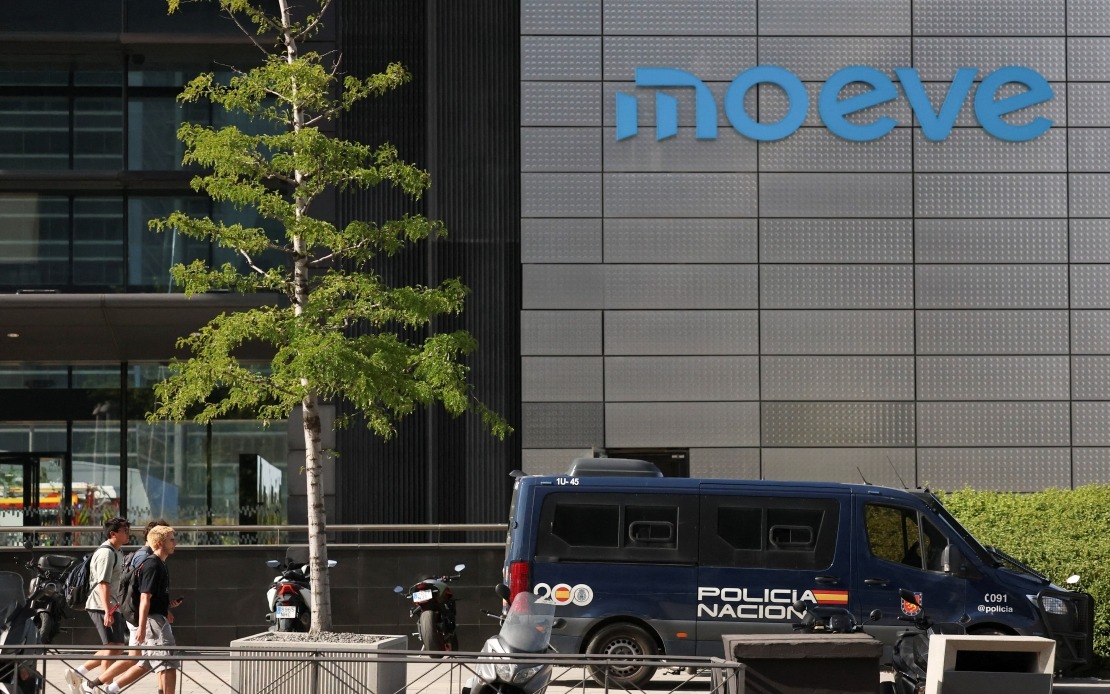
A significant fire erupted at Torre Moeve in Madrid on Tuesday afternoon, triggering an immediate evacuation of the Spanish capital's second-tallest office tower. The incident, which generated thick plumes of smoke visible across the city skyline, highlighted the rapid response capabilities of Madrid's emergency services and underscored the importance of building safety protocols in high-rise structures across Europe.
According to Spanish national broadcaster RTVE, the blaze followed an explosion inside the building occurring at approximately 5:00 pm local time. The Spanish government delegation in Madrid later confirmed that the fire originated on the 25th floor, a level housing technical equipment and systems critical to the tower's operations. The origin point suggests the incident may have involved mechanical or electrical systems rather than general office areas, a distinction that becomes significant when assessing risks in commercial properties of comparable height and function.
Authorities acted swiftly following the explosion and fire outbreak. Building management initiated a precautionary evacuation, ensuring all occupants cleared Torre Moeve as firefighting crews mobilised to the scene. The Madrid City Council's fire service worked methodically to suppress the flames, eventually declaring the fire extinguished and subsequently undertaking a thorough interior inspection to verify the building's safety and identify any residual hazards or structural concerns.
The incident resulted in minimal human casualties, a testament to the effectiveness of emergency procedures and the speed with which personnel vacated the premises. While two workers required medical attention for mild smoke inhalation and a passerby sought treatment for anxiety-related symptoms, all three individuals were assessed and discharged at the scene without requiring hospital admission. This outcome contrasts sharply with historical incidents at comparable European skyscrapers, where fire-related emergencies have occasionally resulted in serious injuries or fatalities.
Torre Moeve stands as a prominent fixture in Madrid's commercial landscape, and the incident raises broader questions about the maintenance and safety systems installed in Spain's highest office buildings. The explosion preceding the fire warrants detailed investigation into whether mechanical failure, electrical malfunction, or another trigger was responsible. Such scrutiny becomes particularly relevant for Southeast Asian cities like Kuala Lumpur, Singapore, and Bangkok, which house similarly tall and densely occupied structures that must contend with tropical climates and comparable operational pressures.
The visibility of smoke plumes across Madrid indicated the scale of the fire during its peak, yet the absence of widespread damage or injury suggests that structural integrity remained sound and that building systems performed as designed. Modern skyscrapers incorporate multiple fire suppression systems, compartmentation, and evacuation routes precisely to prevent catastrophic outcomes when incidents occur. The Torre Moeve response demonstrates these engineered safeguards functioning effectively under real-world conditions.
For international observers monitoring workplace safety standards, the incident underscores the importance of regular maintenance and inspection protocols for technical floors within high-rise buildings. Equipment rooms, server facilities, and mechanical spaces generate considerable heat and electrical demand, creating conditions where fires can develop rapidly if maintenance lapses or equipment failures occur. The fact that the fire originated from technical rooms rather than occupied office spaces suggests that proper housekeeping and preventive maintenance contributed to limiting the incident's scope.
Emergency response in Madrid proceeded without coordination difficulties or communication breakdowns, reflecting the maturity of Spain's disaster management infrastructure. The rapid declaration of the fire as extinguished and the systematic building inspection that followed indicate professional handling of a potentially serious incident. Such responses become benchmarks against which other municipalities measure their own emergency preparedness, particularly in regions where rapid urbanisation has created concentrations of tall buildings requiring coordinated fire response capabilities.
The incident concluded without significant disruption to broader Madrid operations or long-term damage to Torre Moeve's functionality. For occupants and businesses within the building, the experience provided practical confirmation that evacuation procedures work as intended and that emergency services can respond decisively to threats. Going forward, a detailed investigation into the explosion's cause will likely yield findings shared across European property management networks, contributing to continuous improvement in safety practices across the continent's skyscraper stock.

