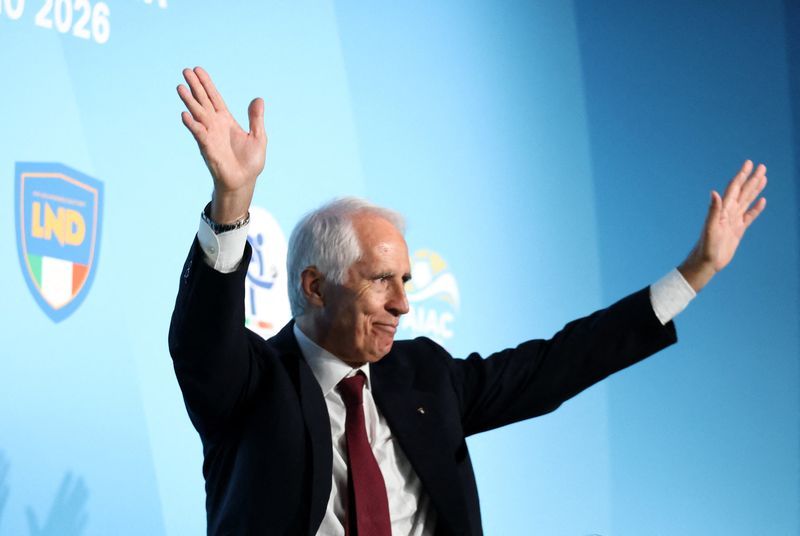
Giovanni Malago has assumed control of Italian football at perhaps its lowest point in four decades, winning election as president of the Italian Football Federation on Monday with a commanding 68.58% of the vote. The 67-year-old businessman steps into the role following the resignation of his predecessor Gabriele Gravina, whose tenure ended in acrimony after Italy's shock failure to secure World Cup qualification through the playoff stage against Bosnia & Herzegovina in April. The setback represents an extraordinary collapse for a nation that has won four World Cups, and marks the second consecutive tournament that the Azzurri will miss—a situation that has triggered deep soul-searching across Italian sport and society.
Malago arrives at the Italian Football Federation fresh from successfully overseeing the Milano Cortina Winter Olympics in February, a role that drew widespread commendation for efficient management and operational excellence. His background as a former head of the Italian National Olympic Committee, combined with experience as a futsal player, provides him with understanding of both administrative structures and sporting culture. He defeated rival candidate Giancarlo Abete decisively at the federation assembly in Rome, signalling strong backing from delegates to pursue his reform agenda. The scale of support suggests recognition across Italian football that fundamental change is necessary to arrest the organisation's decline.
The magnitude of the crisis confronting Malago cannot be overstated. Beyond the World Cup qualification failure, Italian clubs have simultaneously imploded in European competition, with none reaching the latter stages of continental tournaments. This dual collapse—at both national team and club level—has created a perfect storm that observers describe as the worst period for Italian football in 40 years. The psychological impact extends beyond statistics; the failure has provoked widespread outrage among supporters and intervention from politicians, reflecting how deeply football is woven into Italian national identity. Fans and commentators have questioned whether the structures, philosophies, and talent development systems that once produced world-beating teams remain fit for modern competition.
When accepting his position, Malago demonstrated awareness of both the burden and opportunity before him. He emphasised that although expectations are extraordinarily high, he does not approach the challenge with fear but rather with clear understanding of the responsibilities involved. He framed the federation's role not merely as an administrative body but as a source of inspiration for the nation, describing football as Italy's largest social institution. This perspective suggests he recognises that revival requires more than tactical adjustments or managerial changes—it demands cultural transformation and reconnection with what made Italian football a global force.
Among Malago's most pressing immediate tasks is appointing a new men's national team coach to replace Gennaro Gattuso, who resigned in the aftermath of the Bosnia & Herzegovina defeat. This decision will prove crucial in determining the federation's direction and philosophy going forward. The choice of manager will signal whether the federation intends to pursue a rebuilding path emphasising youth development or instead seeks an experienced mentor to stabilise the programme quickly. Either approach carries distinct risks and opportunities, and the decision will influence Italian football's trajectory for years to come.
Beyond the immediate managerial vacuum, Malago has identified youth development as requiring comprehensive overhaul. This diagnosis aligns with concerns previously raised by prominent figures including former striker Roberto Baggio, who have consistently warned that Italy's system for nurturing young talent has become inadequate for competing at the highest level. The infrastructure that once reliably produced technically gifted players with strong tactical discipline has apparently failed to adapt as modern football has evolved. Rebuilding this pipeline represents perhaps the most critical long-term investment Malago must champion, as the federation cannot rely on established stars to carry the programme indefinitely.
The federation must also accelerate preparations for Euro 2032, which Italy will co-host alongside Turkey. Hosting a major tournament provides both opportunity and pressure—the home advantage could prove invaluable if a competitive team is constructed, yet failure to perform credibly on home soil would compound existing reputational damage. This timeline creates a defined target for Malago's rebuilding efforts, concentrating attention on specific objectives rather than allowing the programme to drift aimlessly through a multi-year reconstruction.
Malago's election remarks conveyed an appreciation for historical context without becoming imprisoned by it. He explicitly stated that Italy's roots and football heritage must not become sources of nostalgia or burdens that constrain present ambitions, but rather should serve as inspiration for future success. This framing suggests he recognises the psychological challenge facing a nation accustomed to excellence now confronting sustained mediocrity. He called for the federation to demonstrate courage, ambition, and humility—qualities that suggest recognition that Italy must learn from failure while rebuilding confidence systematically.
The outgoing Gravina, who led the federation since 2018, offered a notably candid reflection on his tenure at the assembly, stating he should have departed earlier. This acknowledgement underscores how the World Cup qualification failure became inevitable rather than aberrational, suggesting systemic problems had been accumulating for several years before finally manifesting in decisive rejection by the international football community. The admission indicates that even federation leadership had become aware of deepening dysfunction but failed to implement remedial action with sufficient urgency.
For Malaysian and Southeast Asian observers, Italy's predicament offers instructive lessons about the dangers of organisational complacency and the speed with which sporting dominance can erode. While Asian football programmes operate in a different context with distinct resources and competitive environments, the fundamental principle remains: sustained excellence requires continuous investment in youth systems, forward-thinking strategic planning, and willingness to reform outdated structures. Italy's four World Cup triumphs created an institutional culture that may have become resistant to necessary evolution, suggesting that even traditionally successful federations must remain vigilant against stagnation.
Malago's elevation to the federation presidency represents both a clear break with the previous leadership and potentially a turning point for Italian football. However, his success will ultimately be measured not by rhetoric about change but by concrete improvements in the national team's competitive performance and the development of emerging talent. The next several years will determine whether his appointment proves to be the catalyst for Italian football's resurgence or merely marks another chapter in the programme's continuing decline.

